

[For Seniors] Popular Karaoke Songs That Everyone Can Enjoy Together


Some elderly care facilities may incorporate karaoke as a recreational activity, don’t you think?
For older adults who enjoy singing, karaoke can be one of the highlights.
So this time, we’ll introduce “Recommended Karaoke Songs for Seniors”!
Singing can help relieve stress, and pronouncing lyrics with your mouth open also serves as a form of oral exercise.
What’s more, it allows people to reminisce about the era when the songs were popular.
Recalling the past provides a healthy level of stimulation for the brain and can help keep it active, which may aid in dementia prevention.
Enjoy a fun time with these recommended karaoke songs for seniors!
- Ranking of popular songs for senior citizens
- [For Seniors] Crowd-Pleasers! A Collection of Classic Karaoke Songs
- [For Seniors] Songs Everyone Can Sing Together! A Roundup of Recommended Crowd-Pleasers
- [For Seniors] Winter songs you'll want to hum along to. A collection of classic tunes recommended for BGM and recreational activities
- [Recommended for people in their 70s] Songs that get everyone excited. Songs you’ll want to sing at karaoke.
- [For Seniors] Let’s Have Fun Together! Introducing Uplifting, Energizing Songs
- [For Seniors] Recommended Songs for Care Activities and Events! Crowd-Pleasers That Bring Joy
- [For Seniors] Have Fun and Relieve Stress! Introducing Dances Everyone Can Enjoy Together
- Easy-to-sing songs recommended for women in their 70s: A collection of classic hits perfect for karaoke
- [For Seniors] Spring Songs You'll Want to Hum: Feel the Season with Nostalgic Classics
- Songs to Enjoy with Women in Their 90s: A Collection of Karaoke Crowd-Pleasers
- [For Seniors] Beloved songs to sing in December: heartwarming moments with nostalgic kayōkyoku and children’s songs
- [For Seniors] Introducing recommended songs to give on Respect for the Aged Day
[For Seniors] Popular Karaoke Songs Everyone Can Enjoy (21–30)
Lingering Snowkaguya hime

“Nagori Yuki” is a song by the folk band Kaguyahime, written by Shozo Ise.
Because Iruka’s 1975 cover became a huge hit, many people may think of it as Iruka’s song.
From its release to the present day, it has been covered and passed down by countless artists.
It could be called a Japanese classic that feels both nostalgic and fresh.

You like whisky, don’t you?Ishikawa Sayuri

Sayuri Ishikawa’s song conjures the image of a grown-up, tranquil scene—lingering over a glass at a bar late at night.
Released in 1991 under the name SAYURI, the track was created as a commercial song for Suntory’s Crest 12-year-old whisky and marked a striking departure from her enka image, embracing a full-on jazz and mood-kayō flavor.
Composed by Makoto Sugii, its refined atmosphere—born from string arrangements and vocals that deliberately forgo enka-style embellishments—harmonizes beautifully with lyrics that feel as if they’re spoken across a bar counter.
Since 2007, it has been revived as the theme for commercials for Kaku-bin and has continued to be covered by many artists, including The Gospellers and Hanaregumi.
Though it presents a different kind of difficulty than enka, why not surrender yourself to its chic vibe and enjoy singing it with ease?
[For Seniors] Popular Karaoke Songs That Get Everyone Excited (31–40)
Tsugaru Strait – Winter SceneIshikawa Sayuri
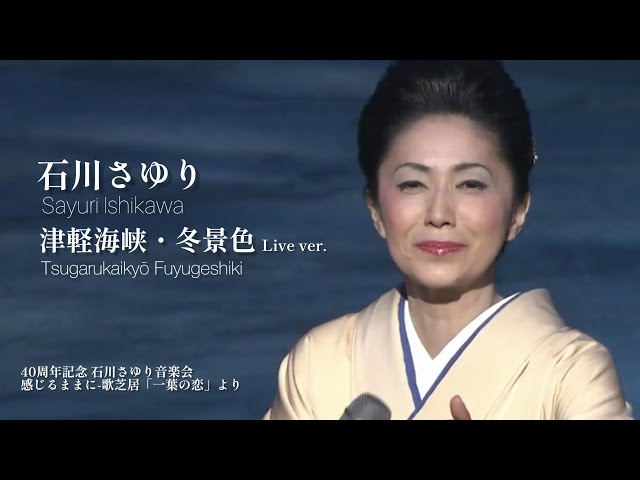
Sayuri Ishikawa shines with a commanding presence in the enka world.
Her powerful rendition of “Tsugaru Strait—Winter Scene” is a beloved song not only among people from Tsugaru but across all of Japan.
It’s rich with enka-specific techniques—like kobushi (melodic turns) and distinctive rhythmic phrasing—and packed with dramatic highlights.
Using her richly expressive singing as a model, it’s a classic enka number you’ll want to deliver in karaoke with powerful kobushi.

Ringo OiwakeMisora Hibari

Hibari Misora’s “Ringo Oiwake” is one of the songs that older adults find familiar.
The lyrics, which sing of the scenery and memories of Tsugaru, evoke a sense of nostalgia.
Released in 1952, it’s a classic loved by many.
Singing it together with seniors also serves as a good mouth exercise.
Thinking about the meaning of the lyrics while singing can help stimulate the brain.
It can spark conversations about memories, so why not include it in your karaoke selections? Let’s all sing together and enjoy a heartwarming, fulfilling time.
The Bride of SetoKoyanagi Rumiko

One of Rumiko Koyanagi’s signature songs, released in 1972 and set in the Seto Inland Sea.
As the title “Bride of Seto” suggests, it’s perfect for listening while thinking of a distant hometown or while savoring the scenery and travel atmosphere of Seto.
It’s a classic that could be called the heart of the Japanese people, and many listeners may find that it stirs a deep sense of nostalgia.
cherry blossomMoriyama Naotaro

With the arrival of spring, this is one of Naotaro Moriyama’s signature songs that you can’t help but hum.
It overlays the beauty and transience of falling blossoms with life’s turning points, expressing a heartfelt wish for farewells to dear friends and hopes for reunion.
The piano melody and clear vocals resonate deeply; released as a single in March 2003, it’s also included on the acclaimed album “In Search of New Spices.” Many may remember that a rearranged version was used as the theme song for the October 2019 drama “Sh同期のサクラ” (Sakura, My Boss).
This melody, beloved across generations, is perfect for grandparents and grandchildren to sing together.
Why not spend a heartwarming moment picturing scenes of cherry blossoms?
Blue Coral ReefMatsuda Seiko

Seiko Matsuda’s songs are known for their beautiful vocals and refreshing atmosphere.
This work is a love song set on a tropical beach, with memorable, romantic lyrics.
Released in July 1980, it was a major hit that reached No.
2 on the Oricon charts.
It was also used in a Glico ice cream commercial.
With a melody that’s easy for older listeners to enjoy, singing it at karaoke might bring back happy memories.
Why not have everyone sing it together, overlapping it with memories of youthful summers?