

Debut song of an enka singer

Speaking of enka, it has long been cherished as the music of the Japanese heart, beloved by people of all ages.
It is also a genre that has produced countless star singers.
This time, we’re featuring the debut songs of such enka performers.
You can even catch glimpses of the fresh, early sides of singers who are now considered living legends.
- Debut songs of enka singers in the 2000s
- Popular Enka Singers Ranking [2026]
- [1980s] A roundup of debut songs by enka singers
- [2026] A roundup of female enka singers in their 60s: Artists who support Japanese enka
- Cool masterpieces of enka, the heart of Japan
- A roundup of hit enka songs from the Heisei era
- [Enka] A special feature on male singers in their 40s: enka artists you can’t afford to miss right now
- A roundup of male enka singers who represent the Showa era
- Classic enka songs you’ll want to sing at karaoke: recommended popular tracks
- Great enka masterpieces and hit songs of the 1970s
- Great enka masterpieces and hit songs of the 1990s
- [Female Singers Edition] The face of New Year’s Eve! Enka singers who appeared on the Kōhaku Uta Gassen
- [Enka] A special feature on male singers in their 20s. Glamorous charm.
Debut songs by enka singers (11–20)
If it were you, seagull,Jinno Mika

Kamino Miki’s debut single, “Kamome Omae Nara,” released in March 1984, features lyrics by Minoru Torii and music by Shosuke Ichikawa.
The lyrics, which read like a conversation with a seagull, are striking, evoking scenes of a port town and feelings of setting off on a journey.
While it carries the characteristic melodic turns of enka, its folk-tinged, approachable arrangement makes it easy to sing even for newcomers to enka.
In her debut year, Kamino won numerous newcomer awards, including the Newcomer Award at the 3rd Megalopolis Kayō Festival.
Breakup loveWakayama Kazusa

Released by Nippon Columbia in April 1984, this song is an enka ballad with lyrics by Toshio Arakawa and music by Takashi Miki.
Depicting a heartrending farewell with deeply emotional vocals, it won the Special Jury Prize at the Yokohama Music Festival and became the starting point of Kazusa Wakayama’s career as a singer.
The song carefully portrays the psychology of a woman who accepts the parting yet still clings to lingering attachment.
Miki’s signature melody, emphasizing lyricism, and Wakayama’s nuanced, expressive phrasing are a perfect match.
Anyone who has experienced the pain of heartbreak will surely find solace in this song.
A woman’s life waits for no one.Chō Hoyūki

A debut single released by Apollon in June 1985.
Through the figure of a woman clinging to the man she loves, it portrays the resolve and heartbreak of a woman who lives for love.
As the title suggests, the lyrics capture the urgency and passion of a fleeting chance at love within life’s limited time.
After making her debut with this song, Yuki Nagaho won the Newcomer Award at the All Japan Cable Broadcasting Awards in 1987.
She went on to produce hits such as “Shinobi-gawa” and “Ho no Ji-gasa,” and in 1994 she also performed at NHK’s Kōhaku Uta Gassen.
between menKoda Shin
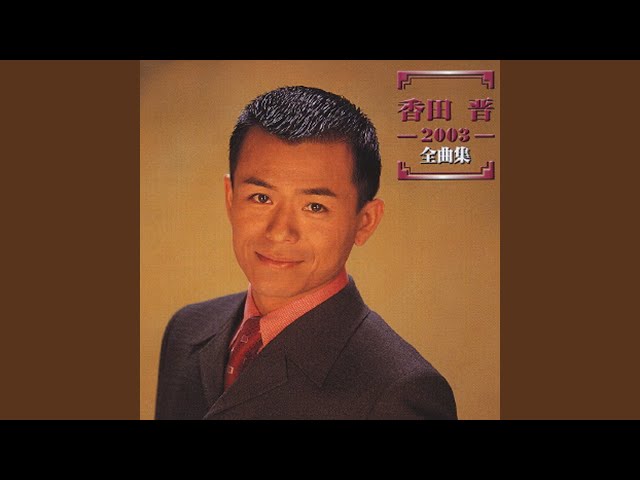
After three years of apprenticeship as an in-house disciple of composer Toru Funamura, this was Shin Koda’s debut single, released in June 1989.
With lyrics by Tetsuro Hoshino and composition by his mentor Funamura, the piece is a hardboiled enka that portrays bonds between men and the spirit of duty and compassion.
It won the New Artist Award at the 31st Japan Record Awards.
With a warmly human vocal delivery, it powerfully sings of the resolve and friendship of working men.
While rooted in classic enka, its distinctive style also hints at a folk-like storytelling approach, leaving a strong impression at the time.
Highly recommended for those who want to feel the fervor of Showa-era enka.
Even if love diesYashiro Aki

I think her debut song was “Namida Koi,” wasn’t it? But it turns out there was a legendary debut song.
Yashiro says she can never forget the joy of finally having her own song during the tough days of touring the provinces (dosa-mawari).
Still driven by the desire to gain recognition, she took on the All-Japan Kayō Championship, won ten consecutive weeks, and claimed the Grand Prix.
From there, she became a star in no time.
Women’s FestivalIchikawa Yukino

Her debut was quite a while ago, in 1993, when she was 17.
Her mentor was the late Shosuke Ichikawa, and she took her stage surname, Ichikawa, from him.
Even though her talent was recognized, she never became widely known to the general public, and at one point she took a break from singing and worked part-time at a tempura restaurant.
In recent years, she has appeared on variety shows and the like, and her name recognition has increased significantly.
Debut songs by enka singers (21–30)
Kanazawa Nostalgia SongMatsubara Takeshi

His major-label debut single is “Kanazawa Bōkyōka,” but during his indie days he released “Tabi no Owari ni” in 2002 under the name Takeshi Komatsubara.
As an enka singer, he did something rare nowadays by steadily performing street shows across various parts of Ishikawa Prefecture, which led to his professional debut opportunity.
He is known for his beautiful voice, promoted with the catchphrase “Miracle Crystal Voice.”