

Legendary enka songs that fire up the crowd. A song catalog of enka picks you won’t go wrong with at karaoke.


For those who think, “When I go to karaoke, I want to hype up the room with enka, but I don’t know what to sing,” and for anyone who wants to surprise their coworkers, friends, or family by singing something different than usual—this is a must-read! In this article, we’ll introduce a lineup of classic enka songs that are guaranteed to get the crowd going.
We’ve picked not only upbeat tracks and songs that are fun for call-and-response, but also well-known enka standards.
Use this as a guide when choosing your next karaoke setlist.
- [Showa Era] A Collection of Enka Hits: Timeless Classics Loved Across Generations
- Classic enka songs you’ll want to sing at karaoke: recommended popular tracks
- [Recommended for people in their 70s] Songs that get everyone excited. Songs you’ll want to sing at karaoke.
- [2026] Representative Famous Enka Songs: A Compilation of Classic Favorites [Beginner-Friendly]
- Cool masterpieces of enka, the heart of Japan
- [For Beginners] Recommended Enka Masterpieces for Karaoke — Male Singers Edition
- [For Women] A roundup of enka songs that can score high in karaoke
- [Enka] Songs that are easy to sing even for those who are tone-deaf [Female singers edition]
- [For Seniors] Songs Everyone Can Sing Together! A Roundup of Recommended Crowd-Pleasers
- A roundup of hit enka songs from the Heisei era
- [Men] Enka Songs That Can Score High in Karaoke
- A classic enka song with a festival theme. A lively and bustling tune.
- [For Women] Masterpiece Enka Songs with a High Degree of Difficulty
Classic enka songs that fire up the crowd. A catalog of enka picks you won’t fail with at karaoke (21–30)
I’m going to Tokyo.Yoshi Ikuzo

Enka singer Ichi Ikuzō, known for his wide-ranging musicality from comic songs to songs in a female voice and heart-wrenching ballads.
Unusual for an enka singer, he also has the side of a singer-songwriter, and his original songs, for which he writes both lyrics and music, are full of creativity and have remained beloved across generations.
Speaking of Ikuzō Yoshii’s masterpieces, it has to be “Ora Tokyo sa Iguda,” doesn’t it? While it has elements typical of enka, it features many spoken-style parts, so the overall difficulty is on the lower side.
As a comic song, it really gets the crowd going, so be sure to add it to your repertoire.

Izakayaitsuki hiroshi, kinomi nana

The duet song Izakaya by Hiroshi Itsuki and Nana Kinomi was released on October 25, 1982.
The song depicts a one-night encounter between a man and a woman who happen to sit next to each other at an izakaya.
They neither ask each other’s names nor share personal stories, yet it portrays a stylish scene of the two spending time together at the izakaya until the next morning.
Even after all these years since its release, it remains a highly popular duet choice for karaoke, so be sure to try singing it as a male-female pair.
Marionette Fallen into the Eternal Swampokamoto kota
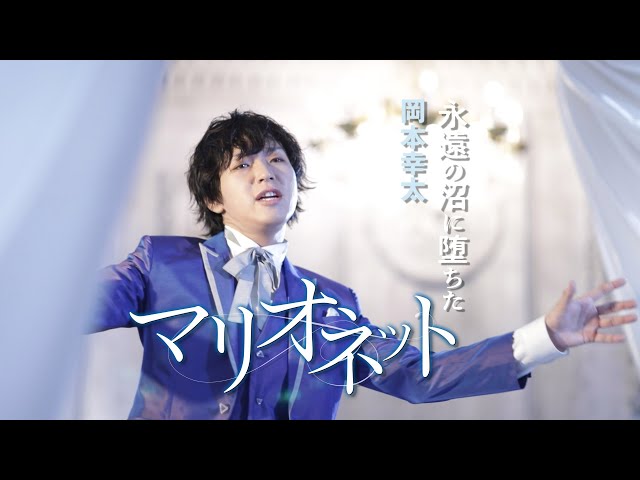
A passionate kayō-pop song performed by Kota Okamoto.
Released in September 2025 as his third single, with lyrics penned by Junretsu’s Kazuyoshi Sakai.
It portrays an irresistible world of love that will captivate you after just one listen.
While expressing intense feelings for the other person in rhythmic words, it also conveys a subtle sense of loneliness, drawing you into its compelling, story-rich depth.
Be sure to listen closely!
Life is full of ups and downs.Shimakura Chiyoko

Chiyoko Shimakura is a grand figure in the enka world, beloved by many fans for her rich expressiveness and vocal prowess.
Her signature song “Jinsei Iroiro” (“Life Has Its Ups and Downs”), released in 1987, is a piece that sings of the complexity and beauty of life.
The song delicately depicts a range of emotions—sorrow and joy, setbacks and hope—experienced throughout one’s life.
Its deeply resonant message and Shimakura’s powerful vocals have given courage and hope to countless listeners.
It was once featured in a Gatsby commercial as well, and remains a popular song widely known across generations.
Your path of gloryTendō Yoshimi

Yoshimi Tendo, a songstress who represents Osaka.
Discovered by Takajin Yashiki, she rose to public prominence.
Her vocal ability and expressive power are truly top-class, yet she has an approachable personality that has long endeared her to many enka fans.
Her hit number “Anta no Hanamichi” is a prime example.
Among her works, it’s one of the brightest, so it’s sure to get the crowd going.
This song features the distinctive twisting kobushi (melismatic ornamentation) characteristic of the Kawachi Ondo style, but since most of the ornamentation involves shifts of only two or three notes, you won’t encounter the complex kobushi heard in Tsugaru folk songs.
Instead, it calls for the powerful delivery typical of Kawachi Ondo.
As long as you can keep your pitch in check, it’s by no means a high-difficulty piece, so consider adding it to your repertoire.
Festival MamboMisora Hibari

Hibari Misora’s classic “Omatsuri Mambo.” While this song falls under the enka category, it shares many elements with J-pop, and among Misora’s works, it’s one of the easiest to sing.
Its vocal range is somewhat broad at mid1 C to hi C, but the pitch movement isn’t very drastic, so overall it’s arranged to be easy to sing.
However, the tempo is relatively fast at BPM 120, so you’ll need decent articulation.
Even so, there are no highly demanding enka-style embellishments like complex kobushi, so it’s fair to say the song still firmly maintains its singability.
It’s a very lively, feel-good number that really gets the crowd going, so consider adding it to your repertoire.
Osaka ShigureMiyako Harumi

Harumi Miyako is an enka singer known for her powerful vocals, often referred to as the “Harumi-bushi,” which leave a strong impression.
If you’re familiar with enka, you’ve surely heard of her.
While her songs are generally considered to be quite challenging, there are also some catchy ones among them.
One I especially recommend is Osaka Shigure.
Compared to her typical style, which features growling, shout-like vibrato, this song uses more high-pitched kobushi (ornamental turns), so it doesn’t demand as much sheer power.
At the same time, the melody itself is bright, making it both easy to sing and a crowd-pleaser.