

[For Women’s Choir] A Curated Selection of Moving Recommended Works & Female-Voice Choir Arrangements [2026]


Choral singing weaves beautiful harmonies across multiple parts.
There are many wonderful masterpieces in choral music that are moving not only to sing but also just to listen to.
In this article, we’ve gathered recommendations especially for women, focusing on works for women’s chorus, pieces suited to female vocal ranges, and arrangements.
We’ve also picked out J-pop hit songs arranged for choir, so if you’re new to choral singing or part of a group just starting out, it might be a good idea to begin with familiar songs before moving on to more traditional choral repertoire.
Enjoy the lovely harmonies and spend some time that fills your heart!
- Ranking of Popular Choral Songs [2026]
- Upbeat Choral Pieces: A Curated Selection of Energetic Works Perfect for Choir Competitions and School Events!
- Ranking of Beloved Hit Songs Among Women [2026]
- [Choral Songs] Recommended for High School Students! A Comprehensive Showcase from Classics to the Newest J‑Pop
- [2026] Let's Sing at the Chorus Competition! A Roundup of Recommended Western Songs
- [Choral Songs] Recommended for cultural and school festivals! Classic choir pieces & the latest popular songs
- [50s] Popular Song Ranking by Generation [2026]
- Happy Song Rankings [2026]
- A Must-See for Middle and High Schoolers! Recommended Free-Choice Songs for Choir Competitions Catalog
- Fun Song Rankings [2026]
- [Choral Songs You Can Sing in English] Recommended English Songs for Choirs [2026]
- [Elementary School Chorus Songs] A comprehensive showcase from moving masterpieces to the latest hit tunes!
- [2026] Dance and Choreography Songs That Will Liven Up Events: Fun Performance Ideas Recommended for Women
[For Women’s Choir] Handpicked, Heart-Stirring Recommended Works & SSA/SSAA Arrangements [2026] (1–10)
Wish ~This Wish~NEW!Ikuta Erika

This is a number sung by Erika Ikuta, who voices the heroine in the Japanese version, featured as a song in the film Wish, released in December 2023 to commemorate Disney’s 100th anniversary.
It has become widely beloved as a tie-in song that colors a pivotal scene in which the heroine’s powerful wish reaches the stars and sparks a miracle.
The charm of this piece lies not only in its strength, but in its delicate expression of an emotional gradation—from prayer-like gentleness and inner uncertainty to a steadily solidifying resolve.
Its grand melody, fusing elements of contemporary pop and musical theater, seems perfectly suited to supple female harmonies.
It’s an emotional choral work we recommend for moments when you want to face your own heart, look ahead, and take a step forward.
Early Spring OdeNEW!Sakushi: Yoshimaru Kazumasa / Kyoku: Nakata Akira

A quintessential Japanese song, with lyrics by Kokubungakusha scholar Issho Yoshimaru and music by Akira Nakata.
Included in the third volume of New Songs published in February 1913, it remains a beloved classic today.
In lyrical language, it depicts scenes from a time of year when it is spring by the calendar yet winter’s chill still lingers, as well as the yearning hearts awaiting the arrival of spring.
Broadcast on NHK’s Minna no Uta and cherished across generations, the piece beautifully harmonizes the elegant melodies of Western music with the delicate sonorities of the Japanese language.
As a choral work, its harmonious beauty shines, making it a perfect choice for women seeking a calm piece that evokes the changing of the seasons.
Miracle of LifeNEW!Libera

This piece carries a warm message that people are connected at heart and never truly alone.
Crafted to resonate with the profound themes of a Japanese drama, it captivates with its translucent multi-part harmonies and beautiful melody.
Sung by the boy soprano group LIBERA, with composition by Takatsugu Muramatsu, it is included on the Japan-release album issued in April 2011.
It gained attention as the theme song for NHK’s Drama 10 “Madonna Verde” and was also featured as the Christmas commercial song for Universal Studios Japan.
The progression in which various voices overlap and gradually transform into a grand harmony is deeply moving.
It is a song we highly recommend for women’s choirs who want to savor a rich, resonant sound.
[For Women’s Choir] Handpicked Heart-Stirring Recommendations & Selected Treble Choir Arrangements [2026] (11–20)
KiteNEW!Yonezu Kenshi

This is a smash hit that set a record of 911,000 copies sold in its first week in 2020, and it drew major attention for being performed by Arashi.
Kenshi Yonezu handled everything from lyrics and composition to arrangement, and it was created as the “NHK 2020 Song.” While based on a classic J-pop ballad style, the addition of a grand orchestral arrangement gives it a sense of scale that evokes hope for the future.
It features an approachable melody and a warm, relatable message, and it’s a piece that fully showcases supple, beautiful harmonies characteristic of female voices.
When sung together with united hearts, it delivers deep emotion to both listeners and performers alike.
SoranjiNEW!Mrs. GREEN APPLE

This is a ballad whose grandeur of melody brings the sanctity of life and profound feelings for loved ones straight to the heart.
The song powerfully voices the value of persevering through any hardship and the dignity of being human.
It embraces past scars as proof of the paths we’ve walked, carrying a forward-looking message that fixes its gaze on the future with hope.
Created by Mrs.
GREEN APPLE, it was released as a single in November 2022.
It was written as the theme song for the film “From LAGERI with Love,” which premiered in December of the same year.
Sung with supple female harmonies, the song’s tenderness and strength shine even more brightly.
It is a piece we hope choirs who wish to sing with one heart, filled with thoughts for those they hold dear, will take on.
Stand AloneNEW!Sakushi: Koyama Kundo / Sakkyoku: Hisaishi Joe
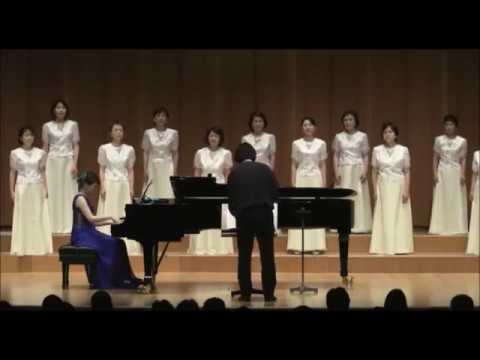
A captivating piece whose melody blends nobility and gentleness, evoking the sweep of grand history.
It portrays inner emotions such as the pride and quiet resolve of individuals living through turbulent times, as well as hope and prayer.
Its beauty is further elevated by supple, feminine harmonies.
Included on the original soundtrack for the NHK Special Drama “Saka no Ue no Kumo,” released in November 2009, the song features lyrics by Kundo Koyama and music by Joe Hisaishi.
Reflecting the drama’s expansive worldview, this work is perfect for new beginnings like life’s turning points and graduations.
Recommended for those seeking a song to unite hearts and sing together with cherished companions.
Hymn to the EarthNEW!Sakushi: Oki Atsuo / Sakkyoku: Sato Makoto

A choral work filled with profound gratitude and prayers to Mother Nature, beloved as a staple at graduation ceremonies and choral competitions.
It is the final movement of a cantata composed in 1962 by lyricist Atsuo Ōki and composer Makoto Satō, and choral enthusiasts will recognize it from the recording included on the album “Tsuchi no Uta / Wakai Gasshō: Makoto Satō Works II,” released in February 1987.
It was also included in the reissued album “Nihon Gasshōkyoku Zenshū: Tsuchi no Uta / Makoto Satō Sakuhinshū” in October 2005.
Characterized by its weighty, overlapping harmonies, it offers the sensation of a collective voice resonating like a single grand instrument.
It also accommodates supple female chorus lines, making it a beautiful number recommended for those marking life’s milestones or seeking to share a deep sense of accomplishment with their companions.