

[2026] Easy Enka Songs for Karaoke: Recommended Picks — Women Singers Edition

This may seem sudden, but do you ever sing enka at karaoke?
As you know, enka is a uniquely Japanese genre that has enjoyed steadfast popularity since the Showa era, and it’s very popular at karaoke, too.
These days, enka is attracting attention not only from older listeners but also from younger audiences.
Still, many people may feel, “I want to try singing it at karaoke, but it seems difficult…”
In this article, we introduce classic enka songs by female singers that are relatively simple and easy to sing, even though many enka numbers are technically challenging.
We’ve also covered easy enka recommendations for male singers in another article, so be sure to check that out as well!
- [For Beginners] Recommended Enka Classics for Karaoke — Women Singers Edition
- [For Women] A roundup of enka songs that can score high in karaoke
- 【2026】Difficult Enka Songs to Sing — Women Singers Edition
- [2026] Easy-to-Sing Enka: From Classic Masterpieces to Recent Hits [Female Singers Edition]
- [2026] Easy Enka Songs Recommended for Karaoke – Male Singers Edition
- [2026] A roundup of female enka singers in their 60s: Artists who support Japanese enka
- [Enka] Songs that are easy to sing even for those who are tone-deaf [Female singers edition]
- [2026] Representative Famous Enka Songs: A Compilation of Classic Favorites [Beginner-Friendly]
- [2026] Amazing if you can sing them! Enka Masterpieces [Women Singers Edition]
- [2026] Recent hit enka songs: must-watch popular kayō tracks
- Enka songs that are easy for men to sing: a roundup of tracks to try at karaoke
- Classic enka songs you’ll want to sing at karaoke: recommended popular tracks
- [Enka First Year] A Collection of Easy-to-Sing Songs by Yoko Nagayama [2026]
[2026] Easy Enka Songs Recommended for Karaoke – Female Singers (31–40)
Adonis (Amur adonis)Kobayashi Sachiko

Fukujusō, with lyrics by Tetsurō Hoshino—who also provided classics like Yuki Tsubaki and Nakase Yagatte Kono Yarō—was released in 1989 as a single by Sachiko Kobayashi and performed that same year on Kōhaku Uta Gassen.
Many people likely still remember Kobayashi appearing in a sumptuous costume themed “Tennyo of the 21st Century.” The song has the atmosphere of a classic, wistful enka number, so anyone who has grasped the basic techniques of enka should be able to sing it without trouble.
True to the genre, the melody frequently moves between low and high notes; especially for beginners, it’s a good idea to create clear contrasts in your delivery as you sing.
snow camelliaKobayashi Sachiko

Yukitsubaki is one of Sachiko Kobayashi’s signature songs and holds great significance in her career as it was her first single after becoming independent from her agency.
The lyrics were written by the master Tetsurō Hoshino—his first single with her since “Mō Ichido Dake”—at Kobayashi’s own request, and she delivers a stirring performance of a grand, classic enka.
It’s also extremely popular for karaoke, so many enka fans are likely to belt it out at karaoke.
As mentioned, it’s a quintessential enka number, so techniques like kobushi (melodic turns) and vibrato appear, but the overall range is average, with no standout high notes or extended long tones.
Therefore, anyone who has a grasp of enka fundamentals should be able to sing it without difficulty.

Only youkawanaka miyuki

Miyuki Kawanaka’s classic “Anata Hitosuji.” While Miyuki Kawanaka performs songs across a wide range of styles, her gently rendered enka pieces, in particular, are highly acclaimed.
One of the most singer-friendly aspects of this song is, above all, the slender vocal tone.
It’s not frail, but in the sections where she projects, she tightens her throat, so you won’t find the vocal production especially difficult.
Most of the ornamental notes (kobushi) that appear are vibrato-based as well, making this song easy to sing in that respect too.
Be sure to add it to your repertoire.

Lantern flowerkawanaka miyuki

Released in 1996 and a long-running hit, “Chochin no Hana” is one of Miyuki Kawanaka’s signature songs of the 1990s, with lyrics by Yu Aku and music by Hiroshi Madoka.
With lanterns and sake as motifs, Kawanaka’s clear, beautiful voice shines as she carefully sings of life’s joys and sorrows without making it overly sad.
The slightly wistful chorus carries a kayōkyoku flavor and is very easy to remember, and since the overall range isn’t very wide, it’s a song that even beginners to enka will find relatively easy to sing.
Rather than emphasizing the typical enka kobushi ornaments, practice producing a delicate yet lustrous vibrato.
Two-person sakekawanaka miyuki

Miyuki Kawanaka’s classic “Futari Sake” is distinguished by its warm, memorable melody.
It’s an orthodox enka piece imbued with a sense of melancholy.
As with typical enka, the challenging kobushi ornament appears multiple times; however, roughly a third of these are not pitch-bending turns so much as kobushi that apply vibrato.
Because this type of kobushi is far easier than the regular kind, the song can definitely be considered an easy one.
Do add it to your repertoire.
[2026] Easy Enka Songs Recommended for Karaoke – Female Singers (41–50)
Anemone flaccida (nirinsō; literally “two-flowered anemone”)kawanaka miyuki
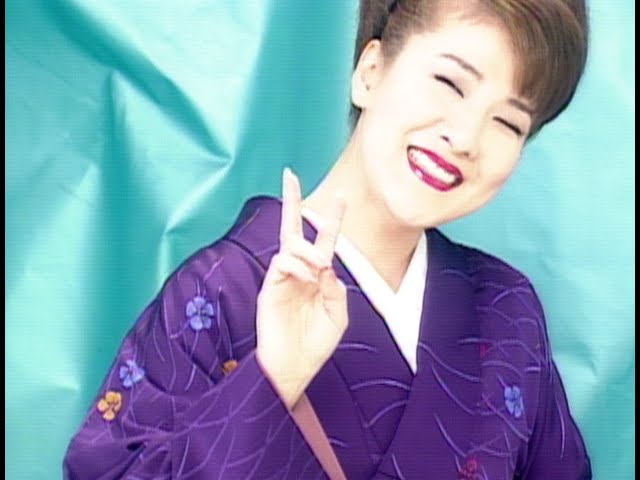
Among Miyuki Kawanaka’s songs, “Nirinsō” stands out as one of the most well-known, with sales reaching one million copies.
Kawanaka herself released an album titled “Shiawase Enka,” and it’s fitting that “Nirinsō” is the first track—its bright, upbeat tone is distinctive and seems to symbolize the “sunny” side of enka, which expresses the full spectrum of life’s emotions.
For enka fans, it needs no introduction, and it’s also immensely popular at karaoke, so there’s no need for excessive commentary.
For beginners, however, practicing this song can be a great way to learn fundamental enka techniques like vibrato and kobushi.
If the high notes are tough, adjust the key to suit your voice, study the wonderful lyrics, and sing with feeling.
A beautiful day for lifekawanaka miyuki

From her debut, Miyuki Kawanaka has been known for her distinctive, rich voice, and lately that voice has gained even more power and presence.
As a result, she’s been releasing more forceful songs as her career progresses.
One recommendation is Jinsei Biyori, released in 2024.
It features a powerful delivery with effective shouts.
While executing the shouts can be challenging, the song has few long sustained notes and doesn’t use rapid melismatic ornamentation (kobushi), so for those familiar with enka, it should be relatively easy to sing.