

Recommended karaoke songs that are easy for high school girls to sing

I think many people go to karaoke and always end up singing the same songs, or overlap with friends’ choices and don’t know what to sing.
Some people aren’t very confident at karaoke to begin with and struggle to choose songs that are easy to sing.
For those people, this article will introduce a variety of songs that are easy for high school girls to sing.
Of course, what counts as “easy to sing” varies from person to person, but I’ve selected songs that, overall, are easy to sing without straining your voice, are widely known, and are likely to get everyone excited.
I hope this helps anyone who’s unsure about what to pick at karaoke!
- Even if you’re tone-deaf, it’s okay! Easy karaoke songs for women
- Classic and popular songs recommended for high school girls
- Karaoke songs that are easy to sing, even for those who aren’t confident at singing, recommended for teenage girls
- Recommended for teenage girls! Easy-to-sing karaoke songs
- [For Teenage Girls] Songs That Score High Easily at Karaoke [2026]
- Aim for a high score! A collection of easy-to-sing karaoke songs recommended for high school students
- A roundup of karaoke songs perfect for teenage girls
- [For Teen Girls] Popular Karaoke Songs That Are Easy to Sing
- A must-see for low-voiced women! Popular songs that are easy to sing at karaoke
- [High School Students] Karaoke Songs That Are Easy to Sing: Ranking [2026]
- Great for karaoke song selection! Recommended easy-to-sing songs for Gen Z women
- Karaoke songs that are easy and fun for high school students to sing
- [For Women] Easy-to-Sing and Crowd-Pleasing Karaoke Songs
Recommended for high school girls: Easy-to-sing karaoke songs (31–40)
1000 daysnozomi

Singer-songwriter Noshi, a female artist known for her wide musical range—from comic-song style to classic pop.
Her track “1000 Days,” released in 2025, features moving lyrics that sing about the three years of high school.
The vocal range is slightly broad at mid1E to hiE, with the low notes being comparatively low for a women’s song, so there isn’t much room to lower the key.
However, the melodic rises and falls are relatively gentle, and there are many break points, so finding a comfortable personal tone in the falsetto and mixed-voice sections will be the key to singing it well.

Magical Syndromeyama

The special MV theme song for “Magical Chiikawa,” titled “Magical Syndrome,” was released as a digital-only single on October 22, 2025.
The music video is also available on YouTube, featuring elements related to Chiikawa and receiving high praise from viewers.
The vocal range of “Magical Syndrome” might be a bit high, but since it’s basically sung in falsetto, if you can produce a light tone, you should be able to get proper frontal resonance and find the pitch more easily! To activate that resonance between the eyebrows, use humming.
This humming is crucial—if you tense up and force your throat, you won’t be able to stay on pitch.
Start at a volume so soft it’s almost only audible to you.
Once you get used to humming, try alternating between humming and singing; if you can sing with the same consistent sensation, you’ve got it!

I love youSuiyōbi no Campanella

This is the second opening theme for the TV anime Ranma 1/2.
Because the lyrics prioritize catchy wordplay, including mahjong terms, you’ll need to learn the rhythm and wording, but once you lock into the groove it’s very easy to sing! The key itself isn’t high, so it’s recommended for people who like rap-style songs or aren’t comfortable with big, belted melodies.
When singing, focus on listening to the bouncy backbeat—you’ll find your body naturally moving with it.
The combination of Shihou from Wednesday Campanella on vocals and a Chinese-inspired vibe is a perfect match, so be sure to enjoy the music video as well!
Spring Dayaimyon

Among Aimyon’s songs, “Harunohi” is particularly easy to sing in the original key.
I even had a male student who tackled it in the original key! The song itself is a bit long at about five and a half minutes, and once the singing starts it’s nonstop, but it’s widely known across all ages and genders, so it works well for karaoke.
That nonstop singing part can be a bit tough.
If you’re mindful of your breath timing and where to place accents, it becomes easier to sing without running out of breath.
Also, since the structure builds sequentially—A verse → B verse → chorus—it’s important to consciously add a little more energy to each phrase.
Right before the chorus, the high notes are the key: imagine sprinting up a staircase and project your voice firmly.
Give it a try!
Happy electrificationpoppu shinanai de

The band ‘Pops Shinanaide’ is known for their music that emphasizes a unique worldview.
They’re recognized for electronic-style composition, and their sound—mechanical yet fantastical and dreamlike—has earned high acclaim.
Among their songs, the one I especially recommend is ‘Kōfukuna Tsūden’ (Happy Conduction).
Because vocalist Ayako Kamegai has a high timbre, the song might seem high overall, but its range is actually very narrow, so anyone can sing it easily if they adjust it to a suitable key.
Recommended for high school girls: Easy-to-sing karaoke songs (41–50)
The Story of the Wind and MeAdo
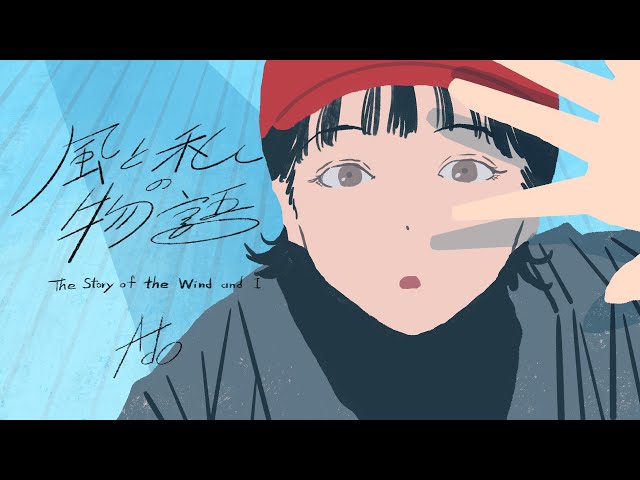
It’s a very dynamic song created as the theme for the film “The Silent Service: Great Battle in the Arctic Ocean,” with lyrics and composition by Hiroji Miyamoto and arrangement by Mafumafu.
Also, it features hardly any of Ado’s signature intense shouts or high tones; since much of the singing sits in the low to mid range, it’s a song you can fully enjoy in your natural voice.
When you listen, you can really feel Miyamoto’s distinct style, and the scenes come to mind as if he himself were singing.
For the A and B verses, imagine singing quietly as if speaking, and then let it explode in the chorus to bring out the song’s strengths.
There are spots that use falsetto and breathy ad-libs, so be mindful of diaphragmatic breathing to maintain your breath control.
Mutual loveaiko

Aiko often has songs that span a wide range from low to high notes.
In the new song “Sōshi Sōai,” the key range looks wide at G#3–C#5, but the actual sung range is lower than you might expect.
The B4 range is used in the chorus and elsewhere, but for most women, that pitch should come out naturally without much effort.
Rather than a “cheerful!” vibe, it’s a song that strongly conveys “bittersweet emotion,” so it’s one you can sing with a calm tone.
When you actually try singing it, you may find many phrases where the pitch drops at the end of the melody lines, which can make intonation tricky for some.
It’s true that moving from low to high can be easier if you have momentum, but going from high to low is very difficult to land accurately.
Try singing lightly while sustaining your breath all the way to the end.