

[For Women] Easy-to-Sing and Crowd-Pleasing Karaoke Songs


When you go to karaoke with everyone, don’t you sometimes wish for “songs that are easy to sing” or think, “Since I’m singing anyway, I want to pick songs that get everyone hyped”? Lately, though, it feels like there are more and more songs with very high notes or big jumps in pitch.
Even so, lots of people still want to liven up karaoke with trending hits! So this time, we’ve picked out karaoke tracks that really get the crowd going—especially ones that are easy to sing and fun to know even if you just listen along.
There are plenty of the latest songs, so be sure to check them out!
- [Karaoke] A roundup of songs that are easy for women to sing!
- Karaoke songs that are easy to sing even with a low voice (for women in their 30s)
- Great for karaoke song selection! Recommended easy-to-sing songs for Gen Z women
- [Karaoke] A Special Feature on Vocaloid Songs That Are Easy for Women to Sing!
- Recommended for millennial women who aren't confident singers: easy-to-sing karaoke songs
- A must-see for low-voiced women! Popular songs that are easy to sing at karaoke
- Even if you’re tone-deaf, it’s okay! Easy karaoke songs for women
- If you’re unsure what to pick, you should definitely sing these! Recommended songs by female artists for karaoke
- [Recommended for women in their 30s] Popular and latest songs that are easy to sing at karaoke
- Songs to Help Women Sing Better: Practice Tracks for Improving at Karaoke
- Karaoke That Gets Everyone Excited: Women’s Rankings [2026]
- Easy-to-sing songs recommended for women in their 20s with low voices | Also great for getting a good reaction at karaoke!
- Karaoke songs that get the party going at mixers—recommended for women
[For Women] Easy-to-sing, crowd-pleasing karaoke songs (21–30)
Give me a ShakeMAX
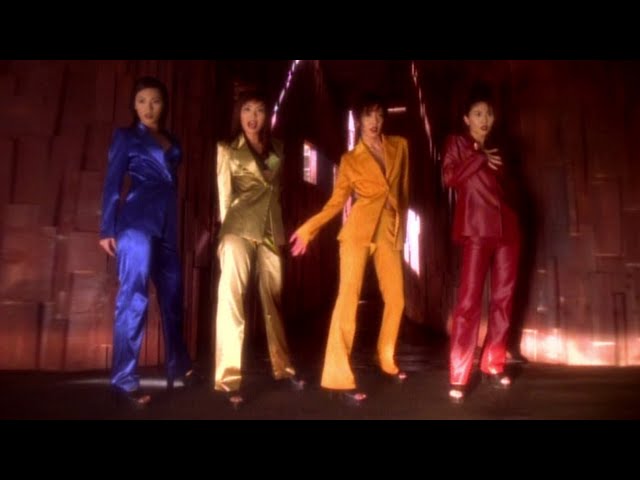
Give me a Shake, a masterpiece of Japanese Eurobeat released in 1997.
It’s a famous song by MAX, needless to say, and it also incorporates elements of Black music, which were still rare in Japanese pop at the time.
Despite that, the vocal line is very easy to sing.
While the range is wide—mid1D to hiF—there are few long notes, and the melodic movement is very gentle.
The tempo also has some breathing room, so as long as you keep the groove in mind, it’s a song that will come together quite well.

My RevolutionWatanabe Misato

My Revolution, released in 1986.
It was a huge hit especially among people in their 50s, wasn’t it? I’m sure there are many who’d say, “This song is my youth!” It’s easy to get into the rhythm and fun to sing, but the range is wider than you might expect—from E3 to F5—and the pitch span shifts suddenly between the verse, pre-chorus, and chorus, so watch out for that! Right before the chorus, make sure your throat doesn’t close; keep it well open.
If you make a surprised face, your facial muscles lift and your throat opens up, too! Try singing the chorus in that state, focusing on resonance rather than just pushing your voice.
Keep the airflow steady so the inside of your mouth vibrates.
Once you lock into the lively rhythm, it becomes much easier to sing—so go all in and enjoy singing it with energy!

[For Women] Easy-to-Sing and Hype-Up Karaoke Songs (31–40)
breakfastMrs. GREEN APPLE

Released on June 4, 2025 and used as the theme song for Fuji TV’s “Sun! Shine,” the track centers on themes of “new beginnings,” “hope,” and “starting over.” It’s the kind of song that makes you feel refreshed and helps reset your mood.
The vocal range is fairly wide at C3–F#5, but if you’re comfortable with falsetto, it should be relatively easy to sing.
The overall rhythm has a bouncy feel, so try lightly singing while keeping time with your hands up and down like “1-2-1-2,” and generally aim your hands upward as if you’re watching a live performance.
Moving your whole body in the same way will also make it easier to sing.
Since the transitions between chest voice and falsetto are clearly defined in this song, you’ll be fine as long as you commit to your voice without hesitation!
ALL I WANTHirate Yurina

Yurina Hirate’s iconic track “ALL I WANT.” Yurina Hirate rose to fame as the center of Keyakizaka46, and she is now active as a solo artist.
She has projected a cool image since her idol days, and this work lets you savor that cool vocal style.
Overall, the song has a very narrow range, and most parts can be sung in the lower-mid to mid register.
The vocal line has a Heisei-era hip-hop-influenced pop feel, with gentle pitch movement, so even those who aren’t confident in their singing abilities should be able to handle it without issue.
CRAZZZYAooo

CRAZZZY, released exclusively via digital distribution on September 30, 2025.
The lyrics and composition were handled by Tsumiki from NOMELON NOLEMON, and the song really showcases Tsumiki’s signature style.
While CRAZZZY has a relatively fast tempo, the rhythm stays steady, so once you lock into the tempo, you’ll definitely be able to sing it well.
The vocal range sits in the mid to slightly high register, so either adjust the key to a comfortable range or keep your resonance forward in your head to project without straining your throat.
As long as you’ve got groove and momentum, you can make it sound cool! I’m a fan of this artist too, so if you want more tips for singing it, I’d be happy to give you advice!
Something like “happy”Sabasusutā

This song was released on New Year’s Day 2025 and was used in au’s commercial song for the “Santaro Series: Everyone, Let’s Happy!” segment.
You probably remember hearing it over the New Year.
As the title suggests, it’s a positive, emotional anthem that stands up to unfair kinds of happiness.
It’s a slightly up-tempo band track, so you’ll want to lock into the rhythm.
The vocal range shouldn’t be too high.
Even for those not used to karaoke, it’s in a key that many women will find easy to sing.
Above all, it’s all about feeling.
I recommend singing boldly without hesitation!
Magical Syndromeyama

The special MV theme song for “Magical Chiikawa,” titled “Magical Syndrome,” was released as a digital-only single on October 22, 2025.
The music video is also available on YouTube, featuring elements related to Chiikawa and receiving high praise from viewers.
The vocal range of “Magical Syndrome” might be a bit high, but since it’s basically sung in falsetto, if you can produce a light tone, you should be able to get proper frontal resonance and find the pitch more easily! To activate that resonance between the eyebrows, use humming.
This humming is crucial—if you tense up and force your throat, you won’t be able to stay on pitch.
Start at a volume so soft it’s almost only audible to you.
Once you get used to humming, try alternating between humming and singing; if you can sing with the same consistent sensation, you’ve got it!