

A classic Showa-era kayōkyoku song sung by a female vocalist. A nostalgic tune passed down through the years.

When you think of the Showa era, it was the golden age of kayōkyoku (Japanese pop).
Countless songs by both male and female artists were released, and many timeless classics are still loved today.
In this article, we’ll focus on songs by female singers from among those masterpieces.
We’ve selected not only the massive hits of the time but also many tracks that continue to enjoy enduring popularity across generations.
Take this opportunity to savor them—sing along or simply listen—as you reminisce about those days.
- [Nostalgic Hits] Smash Hits with the Showa Generation! Classic and Popular Songs Sung by Female Vocalists
- [Revisited] A roundup of popular and classic Showa-era songs that are trending now [2026]
- [2026] Recommended karaoke songs for women in their 70s: from enka to Showa-era pop
- Heart-touching, tear-jerking masterpieces from the Showa era
- Famous songs we’d like women in their 50s to sing (by age group)
- Recommended for women in their 60s! Easy-to-sing Japanese karaoke songs
- Cool songs from the Showa era. Masterpieces from Showa that shine with sensuality, passion, and rugged charm.
- [2026] A roundup of female enka singers in their 60s: Artists who support Japanese enka
- [For Seniors] Popular Kayōkyoku: A Collection of Classic Songs Perfect for Karaoke and Background Music Selection
- [Songs from the Showa Era] Introducing classic tracks that are easy to sing at karaoke.
- When you can’t decide what to sing at karaoke: Easy-to-sing classic hits from the Showa era
- Thrilling to Cool Showa-Era Tunes! Classic Songs from Female Singers and Artists of the Showa Period
- Iconic and popular songs sung by female artists: great cover versions
Classic Showa-era kayokyoku hits sung by female vocalists. Beloved nostalgic songs passed down through generations (1–10)
See ya.Naoko Ken

Naoko Ken, who is also active as a comedienne, released “Abayo” in 1976.
It became her biggest hit, reaching No.
1 on the Oricon Singles Chart and earning numerous awards, including the Vocal Performance Award at the 18th Japan Record Awards.
It’s also notable as the first song that Miyuki Nakajima, who wrote both the lyrics and music, ever provided to an artist other than herself.
The lyrics themed around parting and the characteristically melancholic sound typical of Nakajima leave a strong impression.

At the tavernEri Chiemi

Chiemi Eri, known as a “prodigy since Hibari Misora,” released Sakaba nite (At the Bar) in 1974.
Although it peaked at No.
22 on the Oricon charts, it became a long-selling hit.
It’s a track where you can fully appreciate the rich vocals and technique she cultivated singing jazz at U.S.
military camps, and the lyrics—about a lonely woman drinking alone at a bar after a broken romance—are deeply affecting.
It’s a classic that has been covered by many enka singers, including Sayuri Ishikawa, Yoshimi Tendo, and Fuyumi Sakamoto, so be sure to give it a listen.
Everyone in a dreamTakada Kyoko

The single “Minna Yume no Naka” was released in 1969 by Kyoko Takada, the second vocalist of The Mikes, led by Mike Maki.
It was her first work under her solo name, earning her the New Artist Award at the 11th Japan Record Awards and her debut appearance at the 20th NHK Kouhaku Uta Gassen.
The song poignantly depicts the beloved who appears in a dream and fades away as the dream ends.
It has also been covered by Koji Tamaki and Saori Yuki, so be sure to give it a listen.
Classic Showa-era kayōkyoku masterpieces sung by female vocalists. Beloved nostalgic songs passed down through the years (11–20)
Blue Light Yokohamaishida ayumi

Ayumi Ishida’s Blue Light Yokohama was released in 1968.
The song has become a local anthem for Yokohama, and for people from the city it’s about as familiar as the children’s song Red Shoes.
Incidentally, she made her first appearance at the 20th NHK Kōhaku Uta Gassen in 1969 with this song.
Also, Kyōhei Tsutsumi, who composed it, won the Composer’s Award at the 11th Japan Record Awards.
You can tell how highly it was regarded at the time!

Drinks for twoAzusa Michiyo

“Futari de Osake o,” released by Michiyo Azusa in 1974, features a bouncy rhythm centered on the theme of adult romance.
Her husky, rich vocals make you feel relaxed and at ease as you listen.
By the way, she also appeared with this song on the 25th NHK Kōhaku Uta Gassen.
She has many other classics as well, such as “Konnichiwa Akachan” and “Melancholy.” Each song has its own distinctive flavor, so definitely give them a listen!
Keiko’s Dream Opens at NightFuji Keiko
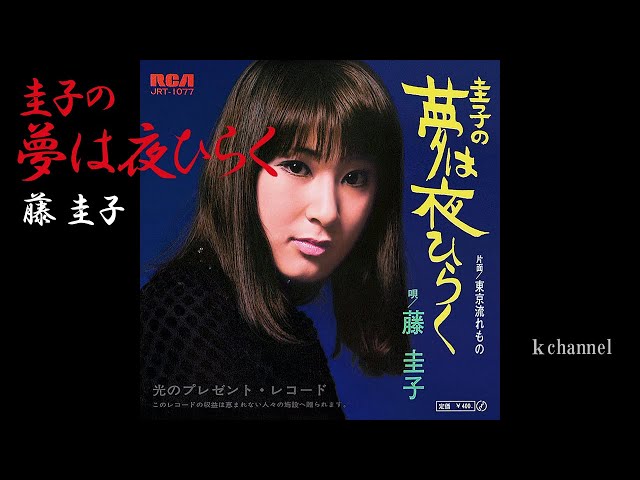
Keiko’s Yume wa Yoru Hiraku is a captivating song released in 1970 that showcases Keiko Fuji’s dark, moody aesthetic.
Starting at a very slow tempo, her rich, husky low voice grips you from the intro.
The lyrics, which feel like a sorrowful reflection on one’s life, can easily bring you to tears.
By the way, this song is based on Mari Sono’s 1966 release Yume wa Yoru Hiraku.
Since then, it has been loved and performed by many artists over the years.
hopeKishi Yoko

“Hope” is a single released in 1970 by Yoko Kishi, who was one of Japan’s leading chanson singers.
It reached No.
2 on the Oricon Singles Chart and earned her the Vocal Performance Award at the 12th Japan Record Awards.
The song was originally composed for a musical starring Chieko Baisho, but it was reportedly never recorded because it was too long.
Kishi’s version was used in a segment of the variety show “Matsuri da! Wasshoi!” and also served as the entrance march for the 43rd National High School Baseball Invitational Tournament.