


When you think of the Showa era, it was the golden age of kayōkyoku (Japanese pop).
Countless songs by both male and female artists were released, and many timeless classics are still loved today.
In this article, we’ll focus on songs by female singers from among those masterpieces.
We’ve selected not only the massive hits of the time but also many tracks that continue to enjoy enduring popularity across generations.
Take this opportunity to savor them—sing along or simply listen—as you reminisce about those days.
- [Nostalgic Hits] Smash Hits with the Showa Generation! Classic and Popular Songs Sung by Female Vocalists
- [Revisited] A roundup of popular and classic Showa-era songs that are trending now [2026]
- [2026] Recommended karaoke songs for women in their 70s: from enka to Showa-era pop
- Heart-touching, tear-jerking masterpieces from the Showa era
- Famous songs we’d like women in their 50s to sing (by age group)
- Recommended for women in their 60s! Easy-to-sing Japanese karaoke songs
- Cool songs from the Showa era. Masterpieces from Showa that shine with sensuality, passion, and rugged charm.
- [2026] A roundup of female enka singers in their 60s: Artists who support Japanese enka
- [For Seniors] Popular Kayōkyoku: A Collection of Classic Songs Perfect for Karaoke and Background Music Selection
- [Songs from the Showa Era] Introducing classic tracks that are easy to sing at karaoke.
- When you can’t decide what to sing at karaoke: Easy-to-sing classic hits from the Showa era
- Thrilling to Cool Showa-Era Tunes! Classic Songs from Female Singers and Artists of the Showa Period
- Iconic and popular songs sung by female artists: great cover versions
Classic Showa-era kayokyoku hits sung by female vocalists. Beloved nostalgic songs passed down through generations (1–10)
A Good Day to Set Out on a JourneyYamaguchi Momoe

Momoe Yamaguchi, a star who retired at the height of her popularity, had her biggest hit with “Ii Hi Tabidachi” (“A Good Day to Travel”).
Released as a single in 1978, it reached No.
3 on the Oricon Singles Chart and sold one million copies, achieving million-seller status.
Written and composed by Shinji Tanimura, the song was originally created as a campaign song for the then-JNR (Japanese National Railways).
Its Japanese-style melody is beautiful, and the evocative lyrics are wonderful as well.
In 2003, it was also used in a JR West campaign and has even been featured as the onboard chime on the Shinkansen.

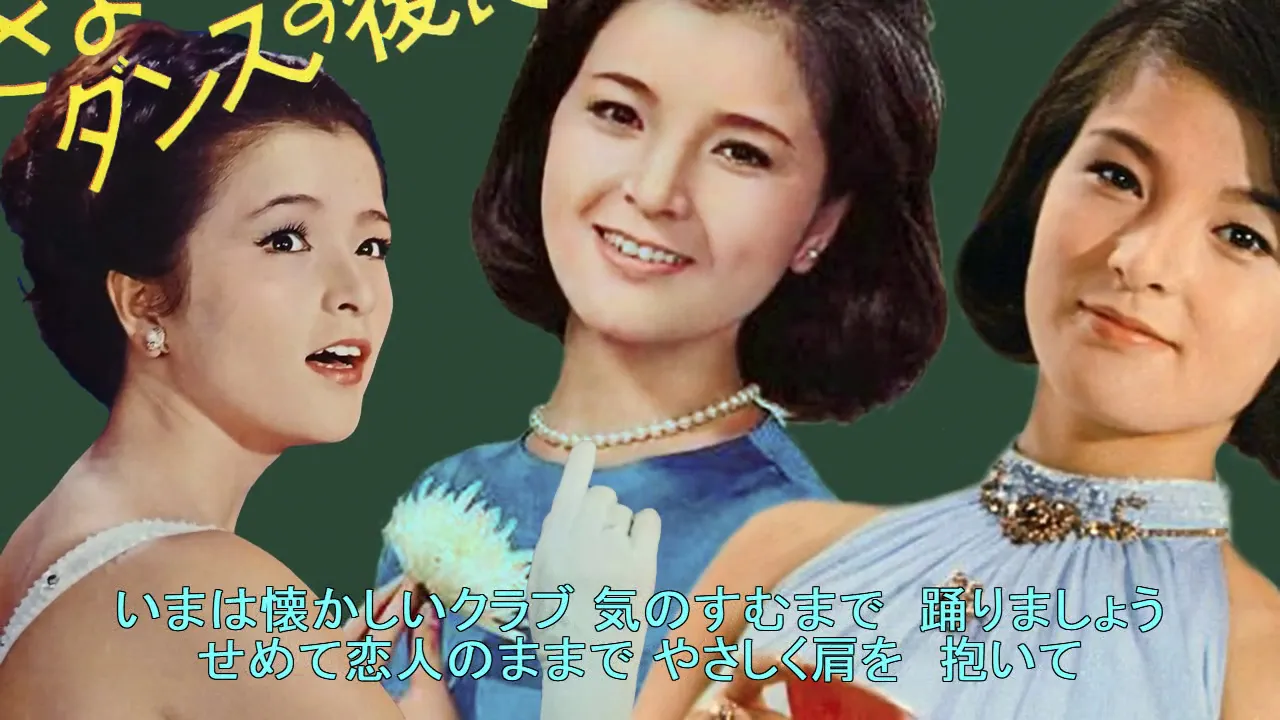
Goodbye Comes After the DanceBaishō Chieko

The single Sayonara wa Dance no Ato ni, released in 1965 by actress Chieko Baisho—well known from the film series It’s Tough Being a Man (Tora-san)—marked her work as a singer.
Selling over 1.5 million copies and becoming a million-seller, it earned composer Hirooki Ogawa the Composition Award at the 7th Japan Record Awards.
The song was later used as an insert song in Studio Ghibli’s Only Yesterday, and a remake was produced in 1990 as the theme song for the drama Last Dance.
Its rumba rhythm is lively, and the piano interlude is really cool.
Drops of LoveItō Yukari

Yukari Ito is known for popularizing pop music in the 1960s, when it was still unfamiliar to many Japanese listeners.
Among the songs she worked on, Kois no Shizuku drew attention for its distinctive vocals that seem to blend enka with pop.
The title is said to refer to tears, and the song portrays the sorrow of a woman after a heartbreak.
It’s undeniably melancholic, yet part of its appeal lies in lyrics that also convey a sense of sentiment and even humor.

Song of the Four SeasonsSeri Yoko

Yoko Seri’s “Shiki no Uta” (Song of the Four Seasons) is a cover of a song written and composed by lyricist Toyohisa Araki in the 1960s.
While Seri’s 1976 release of the cover is particularly famous, the song has also been covered by a wide range of artists across genres and generations, including Hiroshi Itsuki, Tsutomu Aragaki, and Rimi Natsukawa.
When people of different generations gather for year-end and New Year events or other occasions, it might be fun to compare which artist’s version each person remembers.

Forbidden LoveMoriyama Ryoko

“Forbidden Love” is Ryoko Moriyama’s ninth single, released in 1969.
It became her first million-selling hit and reached No.
1 on the Oricon Singles Chart.
In interviews, Moriyama has said that “Forbidden Love” is the song she feels most attached to, and that it was the track that awakened her professional consciousness as a singer.
With its somewhat exotic sound, it showcases a different side of Moriyama’s appeal compared to her earlier works.
Rainbow-colored lakeNakamura Akiko

Since her debut in 1965, Akiko Nakamura has created numerous classic songs that have colored the times.
Among the most memorable—also marking her first appearance on the NHK Kōhaku Uta Gassen—is “Niji-iro no Mizuumi” (Rainbow-Colored Lake).
Set to a wistful melody, the song asks what happiness in life truly is.
This universal theme is surely one reason it continues to be cherished across generations.
Although it went unreleased on CD for many years and was even called a “legendary hidden gem,” it is now available in physical form.
Rainy MidosujiŌyō Fifi

Faye Wong, known for signature songs like “Love Is Over,” is a well-known singer.
“Rain on Midosuji” was her debut single, released in 1971.
This song is a local tune that sings of romance along Midosuji in Osaka City.
Those from the Kansai region may find it especially familiar.
The lyrics mention various place names in Osaka, so listeners from Osaka in particular may find a flood of memories returning when they hear it.
If you get the chance, why not use this song as a conversation starter?