

[2026] Recommended Japanese karaoke songs for men in their 50s


Company parties, local class reunions, family gatherings… If you’re a man in your 50s, you probably get plenty of chances to go to karaoke, right?
At times like that, do you ever find yourself unsure what to sing?
“I can’t really sing recent songs…” “Even if I go with older songs, I don’t know which ones are good…” If that sounds like you, this article will introduce karaoke songs recommended for men in their 50s!
Focusing on hits from the ’80s to the early ’90s, we’ve carefully selected classic karaoke staples and songs that women will think, “I’d love to hear him sing this!”
Use this as a guide for choosing your next songs!
- For Men in Their 50s: No Worries If You’re Tone-Deaf! A Curated Selection of Easy-to-Sing Karaoke Songs
- [2026] Japanese karaoke songs that get men in their 50s pumped up
- Recommended Japanese Music Artists and Popular Song Rankings for Men in Their 50s [2026]
- Coming-of-age songs for your 50s: heart-thumping × heartwarming classics and popular tracks [2026]
- [For People in Their 50s] Ranking of Easy-to-Sing Karaoke Songs [2026]
- Karaoke Popularity Ranking by Generation [50s] [2026]
- Karaoke songs for men in their 40s: a curated selection of hit tracks women want to hear!
- [2026] Crowd-Pleasing Songs Recommended for People in Their 50s: A Collection of Nostalgic Classics
- [For People in Their 50s] Karaoke Songs That Get the Crowd Going: Ranking [2026]
- [For Men in Their 40s] A Collection of Songs That Score High at Karaoke [2026]
- Good songs recommended for people in their 50s: classic and popular J-pop tracks.
- Popular Japanese songs among men in their 60s: recommended masterpieces and classic tracks
- Uplifting songs recommended for men in their 50s
[2026] Recommended Japanese karaoke songs for men in their 50s (81–90)
ff (fortissimo)HOUND DOG

HOUND DOG is a rock band that gained popularity with its masculine vocals.
The band’s vocalist, Kohei Otomo, continues to appear on variety shows and the like, so he’s fairly well known even among younger audiences.
The song I’d like to recommend is ff (Fortissimo).
It’s HOUND DOG’s biggest hit, featuring a powerful and straightforward melody.
While this track is often associated with belting, its highest note is hi A, so it’s not extremely high.
However, the lowest note is mid1 D, which can make it hard for people with higher voices to lower the key.
If you drop the key too much, the energy in the A-melody section can suffer, so it’s best to sing it in a way that allows you to hit the hi A parts as much as possible.

MELODYFukuyama Masaharu

It was released in 1993 as Masaharu Fukuyama’s seventh single.
The song was used in a Lotte gum commercial and became his second entry into the Top 10 on the charts.
It is said to be the first song he produced with the intention of creating a hit single.
With this song, he made his first appearance on NHK’s 44th Kōhaku Uta Gassen.
Promise of SunflowersHata Motohiro
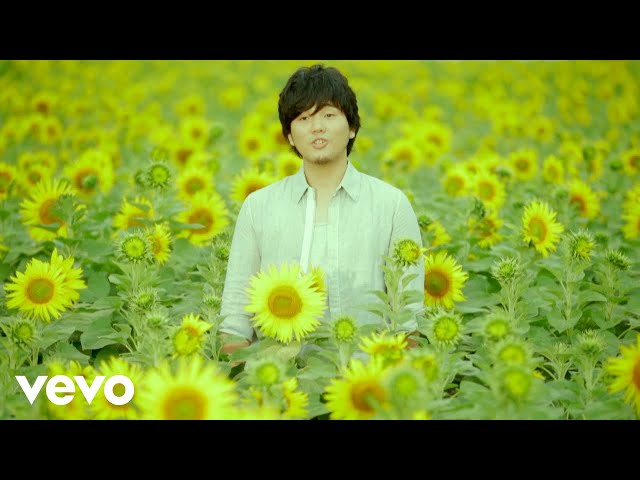
This song is popular across a wide range of ages, from children to adults, partly because it was the theme song for the 3DCG animated film STAND BY ME Doraemon.
“Himawari no Yakusoku” is a single by Motohiro Hata, released in 2014.
If you usually sing only familiar karaoke songs or tracks from the artists you’ve known for years, this highly recognizable song is a safe choice for any karaoke occasion.
It’s also a number that’s especially popular with children and women.

Romantic Flightkome kome CLUB

This is Kome Kome Club’s 10th single, released in April 1990.
It was used as the CM song for JAL’s Okinawa travel “JAL STORY Summer Rikyu Campaign” in 1990.
Just by listening, you can picture the beautiful summer scenery of Okinawa—it’s a track brimming with a refreshing vibe! As of November 2023, many people in their 50s likely heard this song in real time.
The vocal melody sits in a range that’s easy for most people to sing, so you can hum along casually.
For the higher notes in the chorus, try placing the sound toward the upper palate inside your mouth; it gives your tone a bit of sparkle, which I think helps recreate the original song’s freshness in karaoke.
Give it a try!

Under the Big Onion ~ Distant Feelingsbakufū suranpu

It was released in 1989 as Bakufu Slump’s 15th single.
The song title “Tamanegi” (Onion) refers to the giboshi ornament on the roof of the Nippon Budokan, and it’s a bittersweet love song.
It was used in a Cosmo Oil TV commercial and as the theme song for the Shochiku film “Battle Heater,” and it was also performed at the 40th NHK Kōhaku Uta Gassen.
Paradise GalaxyHikaru GENJI

A classic song that emphasizes the importance of dreams and imagination.
Released by Hikaru GENJI on March 9, 1988, it topped the Oricon charts.
Written and composed by ASKA, its lyrics are striking for their unique worldview.
Their roller-skate performances also drew attention.
The song garnered numerous honors, including the 30th Japan Record Award.
If you sing it at karaoke, focus on its message that resonates with adults who may have started to forget their dreams.
It’s a track that lets you share a sense of nostalgia with people of the same generation.
[2026] Recommended Japanese karaoke songs for men in their 50s (91–100)
Eternal, unchanging loveOda Tetsurō

It was released in 1992 as Tetsurō Oda’s solo single.
It is his only work to reach No.
1 on the Oricon charts, and it was used in Otsuka Pharmaceutical’s Pocari Sweat commercial.
This famous song was written for his older brother, who became a shut-in and died at 29 from a heart attack caused by side effects of the medication he was taking.