

Easy-to-sing karaoke songs: Classic picks for women in their 40s


What songs do you choose when you go to karaoke for a second round after a work party or when you get together with friends? If it’s been a while since you last sang, you might wonder, “Can I still sing the songs I used to back then?” or “Which songs can I sing comfortably without straining my voice?” In this article, we’ll introduce plenty of songs that women can sing comfortably and enjoy at karaoke.
From tracks that are easy to match in key to heartfelt ballads, we’ve selected a wide range—add them to your repertoire for your next karaoke outing!
- [For People in Their 40s] Karaoke Songs That Are Easy to Sing: 2026 Ranking
- [Women in Their 40s] Even If You’re Tone-Deaf, You Can Sing! Karaoke Songs That Fit a Woman’s Vocal Range
- [Karaoke] A roundup of songs that are easy for women to sing!
- Famous songs we’d like women in their 40s to sing, by age group
- [2026 Edition] Karaoke Songs That Will Get the Crowd Going—Perfect for Women in Their 40s
- [Calling all low-voiced women in their 40s!] Songs that are easy to sing at karaoke
- A must-see for low-voiced women! Popular songs that are easy to sing at karaoke
- [For Women in Their 40s] A Collection of Songs That Score High at Karaoke [2026]
- Cool If You Can Sing! Popular Karaoke Songs Recommended for Women
- Popular Japanese songs among women in their 40s: recommended classics and standard hits
- Karaoke songs that are easy to sing even if you’re not confident in your pitch (for women in their 50s)
- [Recommended for women in their 30s] Popular and latest songs that are easy to sing at karaoke
- Uplifting songs recommended for women in their 40s
Karaoke Songs That Are Easy to Sing [Classic Picks for Women in Their 40s] (131–140)
Angel’s RestHisamatsu Fumina

Fumina Hisamatsu is a female singer who gained popularity for her musical style that incorporates glam rock and soft rock into J-pop.
She has a slightly low, full-bodied voice, and is known for vocals as robust as those of male rock singers.
Among her songs, the one I especially recommend is Tenshi no Kyūsoku (Angel’s Rest).
If you’re a rock fan in your late 40s, you might have listened to it back in the day.
While the song is notable for its powerful melody, it sits mostly in the low-to-mid range and has a narrow vocal range, making it a piece that doesn’t depend heavily on the singer’s specific timbre.
Consider adding it to your repertoire.

We are!kitadani hiroshi
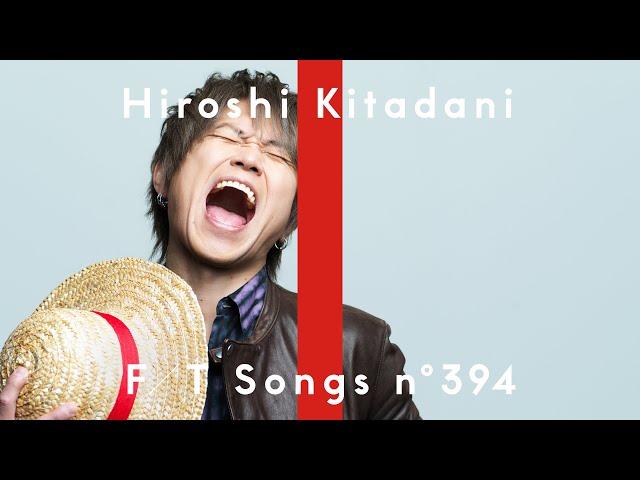
ONE PIECE is a series that’s always at the forefront of the anime scene, constantly generating buzz.
It has produced many theme songs, but when you hear ONE PIECE, the first one that comes to mind is probably “We Are!” The biggest charm of this song is, without a doubt, its grand vocal line.
The singer, Hiroshi Kitadani, is a vocalist who excels in the lower register as well, and in JAM Project he handles the overall low parts and even death growls.
The richness created by those low tones is truly impressive and perfectly captures the spirit of adventure.
LOVE MachineMōningu Musume.

Morning Musume, the group that energized the early-2000s idol boom, is often surprisingly underestimated, but their songs are musically quite fascinating and incorporate underground influences from the time.
Among them, “LOVE Machine” is a remarkable work that distills funk and disco into techno and pop.
While rooted in Black music, the vocal lines retain a J-pop-style catchiness and are sung within a narrow range throughout.
Even women with lower voices should be able to sing it without issue.
sunflowerAdo

Sunflower, Ado’s single released in July 2025 as the theme song for the TBS drama “18/40: If It’s the Two of Us, Dreams and Love Too.” Ado is known for her high-tone voice and powerful shouts, but those elements are restrained in this work.
That said, the vocal range spans from mid1 G# to hi D#, which is by no means narrow, and the pitch movement is fairly dynamic.
It’s best to thoroughly learn the vocal line in advance before attempting it.
BEACONDREAMS COME TRUE

For women in their 40s, wouldn’t it be fair to say that DREAMS COME TRUE is the most popular music duo? They have many classic songs, but among them, the one I’d recommend as easy to sing even for the tone-deaf is “BEACON.” This is a relatively new track that was released in July 2025 as the theme song for the drama “The Great Pursuit: Tokyo Metropolitan Police Department SSBC Violent Crimes Unit.” The song marks a return to a late-’90s to early-2000s style, resulting in a wistful yet nostalgic melody.
In particular, the bass line features a nostalgic effect you don’t hear much in contemporary J-pop.
As for the vocal line, it has a relatively narrow range for a DREAMS COME TRUE song; while it includes many long tones, the overall pitch movement is gentle.
LOVE LOVE LOVEDREAMS COME TRUE

LOVE LOVE LOVE, a famous song by DREAMS COME TRUE released in 1995.
If you’re a woman in your 40s, you’ve probably heard it at least once.
The song’s vocal range is mid1 F# to hi C#, which is relatively narrow for a DCT track.
The tempo is very relaxed, and the melodic movement is gentle, so as long as you’ve memorized the vocal line well, you’re unlikely to go off pitch.
However, because the slow tempo leads to more long notes, it’s advisable to master diaphragmatic breathing to maintain stable vocal production.
BELIEVEMISIA

For more recent listeners, MISIA is probably strongly associated with being a classic, orthodox diva, but for women in their 40s, doesn’t she evoke more of an R&B singer image? Among her songs from that era, the one I especially recommend is BELIEVE.
Although the chorus features a high-pitched phrase with quite dramatic pitch jumps, most of the rest sits in the low-to-mid range.
Since there are repeated falsetto passages, if you’re not comfortable with head voice, try lowering the key before you tackle it.