

Attractive songs recommended for women in their 40s: Karaoke tracks that are popular with men

Women in their 40s are often busy with family and work and may not have been to karaoke for a long time.
When it finally comes time to go, some might think, “I don’t even know what to sing!” You might worry that chasing too many songs from younger generations isn’t quite right, but going all-in on oldies might not feel right either—and there’s the concern about how the men you’re with will react.
Here, we’ll introduce a mix of songs, both new and old, with a slight focus on what tends to go over well with men.
There are probably songs you listened to a lot in your youth, or ones from a different generation that still stayed with you.
But in the end, I hope you find songs that you can sing comfortably and enjoyably—without worrying too much about what others think!
- Famous songs we’d like women in their 40s to sing, by age group
- [For Women] Attractive Songs That Appeal to Men in Their 40s
- [2026 Edition] Karaoke Songs That Will Get the Crowd Going—Perfect for Women in Their 40s
- Songs That Attract Women in Their 40s: A Curated Selection of Male-Vocal Tracks That Women Love!
- [For women in their 30s] Karaoke songs that are popular with men
- [Women in Their 40s] Even If You’re Tone-Deaf, You Can Sing! Karaoke Songs That Fit a Woman’s Vocal Range
- [Calling all low-voiced women in their 40s!] Songs that are easy to sing at karaoke
- [40s] Karaoke Popularity Ranking by Generation [2026]
- Tear-jerking songs recommended for women in their 40s: classic and popular Japanese tracks
- Easy-to-sing karaoke songs: Classic picks for women in their 40s
- Famous songs we’d like women in their 50s to sing (by age group)
- Love songs recommended for women in their 40s: classic and popular Japanese hits
- [Karaoke] A roundup of songs that are easy for women to sing!
Attractive songs recommended for women in their 40s: Karaoke tracks that are popular with men (41–50)
go for it!DREAMS COME TRUE

DREAMS COME TRUE is a duo supported by people of all generations, not just those in their 40s.
Because their music is rooted in Black music, many of their songs are challenging, but of course there are also simpler ones.
The one I recommend is go for it!.
While the melody is somewhat unconventional, the vocal range is narrow and there are no sudden jumps in pitch, making it one of the easiest DREAMS COME TRUE songs to sing.
Definitely consider adding it to your repertoire.

Azure RabbitNoriko Sakai
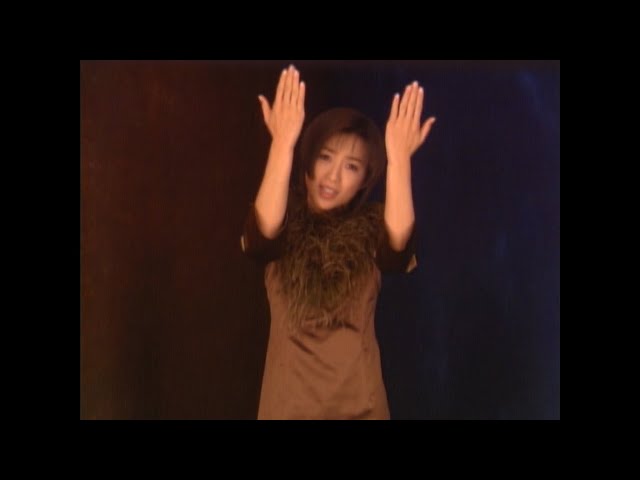
Noriko Sakai’s signature song “Aoi Usagi” (“Blue Rabbit”).
Although it’s classified as pop, the vocal lines are infused throughout with the essence of Showa-era kayōkyoku.
Because Noriko Sakai’s voice is so clear, people tend to assume it’s a high-pitched song, but the actual vocal range is quite narrow, so even women with lower voices can sing it without issue.
However, since many sections call for pronounced vibrato, be mindful of producing steady vibrato with solid support in the mid to lower-mid range.
Consider adding it to your repertoire.
Moon DropsRUI (Shibasaki Kou)

A signature song by Kou Shibasaki that delicately portrays a heartrending love.
Used as both an insert song and the theme song for the film “Yomigaeri,” it generated major buzz upon its release in January 2003.
It debuted at No.
14 on the Oricon Singles Chart and later reached No.
1, becoming a huge hit with sales of around 830,000 copies.
Over a quiet, gentle melody, Shibasaki’s soft vocals mourn a lost love, resonating deeply with listeners.
The lyrics compellingly express the bittersweet feelings of a woman in love.
Sing it at karaoke, and those around you will surely relate and the mood will rise.
HeroAmuro Namie

A rousing cheer song by Namie Amuro that powerfully sings of the “courage” and “hope” needed at every stage of life.
Released in July 2016 as NHK’s broadcast theme for the Rio de Janeiro Olympics and Paralympics, it captured the hearts of a wide audience—from athletes to the general public.
When she made a special appearance at the 68th NHK Kohaku Uta Gassen in 2017, her stunning performance set a remarkable peak viewer rating of 48.4%.
If you choose this song when enjoying karaoke with someone special, you’ll surely share a moment of true connection.
FACEglobe

Produced by Tetsuya Komuro, this signature globe track brilliantly fuses sophisticated electronic sounds with KEIKO’s expressively rich vocals.
Familiar as the theme song for the Fuji TV drama “Their Marriages,” it powerfully resonates with listeners as it portrays one’s inner self and ways of facing others.
Released in January 1997, it sold over 1.3 million copies, making it globe’s best-selling single after “DEPARTURES.” It’s also included on the album “FACES PLACES,” which became a massive hit with over 3 million copies sold.
For many who discovered the song alongside the drama during their youth, it’s the perfect classic to sing a bit coolly at karaoke while reminiscing about those days.
STARSNakajima Mika

Mika Nakashima burst onto the music scene in 2001 like a comet, captivating many with her voice.
Her debut song, which launched her career, is a grand ballad running over six minutes, evoking a heartrending wish entrusted to the stars in the night sky and a faint hope for the future.
Crafted by a star-studded team—Yasushi Akimoto, Daisuke Kawaguchi, and Keiichi Tomita—the sound is both refined and expansive, truly breathtaking.
Released as a single in November 2001, the song became a major hit as the theme for the drama “Injured Love Song,” in which Nakashima herself appeared, reaching No.
3 on the Oricon charts.
It’s a piece you’ll want to sing slowly and with feeling, along with your memories from that time.
If you sing it at karaoke, those emotions from back then are sure to come rushing back.
A gentle feelingChara

Chara, a female singer-songwriter who gained popularity for her distinctive musicality.
Many women in their 40s might have been fans of hers, right? Among her songs, the one I especially recommend is Yasashii Kimochi.
It’s a track that balances both a gothic feel and cuteness.
The vocal range is on the higher side at mid2 A# to hi D#, but the overall span is relatively narrow.
Using breath-based techniques such as hiccups can instantly elevate the quality, so try singing while referencing her breathing style.