

[2026 Edition] Karaoke Songs That Will Get the Crowd Going—Perfect for Women in Their 40s

For people now in their 40s, their youth was right in the middle of the CD boom and karaoke craze of the 1990s to early 2000s! Many of the massive hits tied to TV dramas and commercials were undoubtedly sung by countless people at karaoke.
In this article, we’ve picked out karaoke songs that are sure to get the party going—perfect for women in their 40s to sing! Hits from what could be called the golden age of J-POP are still popular among younger generations in the 2020s, so these are timeless classics anyone can sing.
The next time you go to karaoke to refresh yourself from busy days of work or parenting, be sure to use this article as a reference.
- [Women in Their 40s] Even If You’re Tone-Deaf, You Can Sing! Karaoke Songs That Fit a Woman’s Vocal Range
- Famous songs we’d like women in their 40s to sing, by age group
- Songs Men Want Women to Sing at Karaoke: Irresistible Tracks [2026]
- Easy-to-sing karaoke songs: Classic picks for women in their 40s
- Karaoke That Gets Everyone Excited: Women’s Rankings [2026]
- [40s] Karaoke Popularity Ranking by Generation [2026]
- Recommended for women in their 50s! A curated selection of classic and popular karaoke hits that will get the crowd going
- Uplifting songs recommended for women in their 40s
- Attractive songs recommended for women in their 40s: Karaoke tracks that are popular with men
- [2026] Crowd-Pleasing Songs Recommended for People in Their 50s: A Collection of Nostalgic Classics
- [Calling all low-voiced women in their 40s!] Songs that are easy to sing at karaoke
- Popular Japanese songs among women in their 40s: recommended classics and standard hits
- [For Women in Their 40s] A Collection of Songs That Score High at Karaoke [2026]
[2026 Edition] Songs That Women in Their 40s Will Want to Sing! Crowd-Pleasing Karaoke Hits (171–180)
appearsHamasaki Ayumi

If you came of age in the late 1990s to early 2000s, there’s a good chance you looked up to Ayumi Hamasaki as a role model.
In Japan’s music scene, she ranks first among female solo artists in total CD sales, and with her charismatic presence—including her fashion—she sparked the “Ayu” boom.
Many of her songs feature soaring high tones one after another, which might make some people feel hesitant about singing them.
For those people, we recommend “appears,” released in 1999.
Compared to her other tracks, its melody has fewer wide interval jumps, so even those with lower voices will find it easier to sing at karaoke if they adjust the key.
Love MySelfIS:SUE

A work distinguished by its heartwarming, retro pop-dance melody and lively humming vocals.
While fully drawing out the charm of IS:SUE, it delivers a universal message about valuing your true self.
Released as a digital single in February 2025, it garnered attention as the lead track for their third single.
It’s a song with a gentle strength that gives you a quiet push forward when your heart wavers or you feel stuck.
This piece will resonate with those standing at a crossroads of choice or about to embark on a new beginning.
senpainozomi

Noshi’s work, which portrays a bittersweet relationship with an older woman, is a captivating song told from the viewpoint of a junior who is drawn to yet bewildered by a senior exuding composure and allure.
Subtle nuances of complex emotions—sweet temptation and inner conflict, jealousy and possessiveness—are delicately expressed.
Released in August 2023, this track showcases the sharp insight and sensibility unique to Noshi, who is currently gaining attention especially among Gen Z.
It’s a perfect song for those who want to sing their heart out with emotion at karaoke.
vexing lipsTakahashi Mariko

Mariko Takahashi has remained popular since the 1970s.
She’s an exceptionally long-running artist who stayed at the forefront into the 1990s.
Because of that, I think even women in their 40s are quite familiar with her songs.
Among her works, the one I especially recommend is Hagayui Kuchibiru (“Frustrated Lips”).
It’s a striking piece featuring vocals influenced by Showa-era kayōkyoku and the distinctive synth sounds of the early ’90s.
In this song, the chorus reaches the highest notes, but it stays within the mid-to-high range overall, and the long sustained notes only appear in the lower register.
As a result, it’s a very singable tune for women with lower voices.
Pink sighTakahashi Mariko
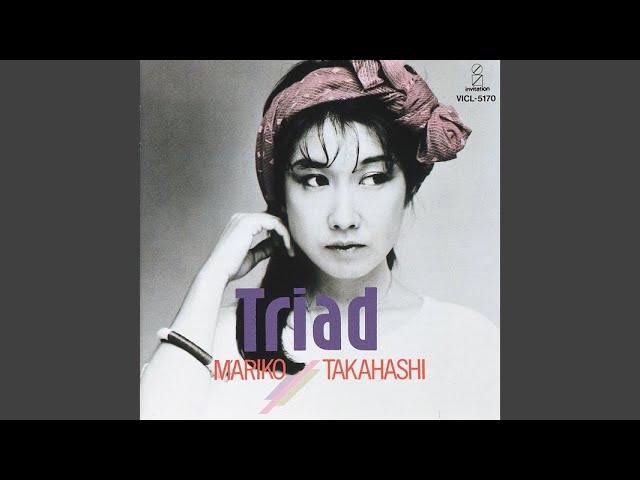
It is a masterpiece that fuses an exotic, Mediterranean-like atmosphere with an urban, sophisticated sound.
The song dreamily portrays a woman who blossoms like a flower when embraced by her lover, expressing both the beauty and the fragility of love.
Mariko Takahashi’s delicate yet powerful vocals further deepen the work’s unique world.
Released in May 1984 as the commercial song for Sanki’s “Camellia Diamond,” it was also included on the album Triad.
Highly acclaimed—including winning the Lyrics Award at the 26th Japan Record Awards—it became a long-running hit.
With a quiet mood that hints at hidden passion, this is a perfect track for spending peaceful moments with someone special.
[2026 Edition] Karaoke Songs That Will Get the Crowd Going—Perfect for Women in Their 40s (181–190)
GLAMOROUS SKYNANA starring MIKA NAKASHIMA

In the late 1990s, the song that took the world by storm as the theme for the film NANA is that famous track sung by Mika Nakashima.
With lyrics by the original creator Ai Yazawa and composition by HYDE of L’Arc〜en〜Ciel, the song was released in August 2005 and immediately topped the Oricon Weekly Singles Chart.
It held the top spot for two consecutive weeks, marking a first for Nakashima.
An up-tempo rock number with a punk flavor, it was also used as a song by the in-film band BLACK STONES.
The lyrics, which question the repetition of everyday life and depict a decision to leap into a new world, are sure to resonate with many.
It’s a perfect track when you want to get the energy up at karaoke.
Moon DropsRUI (Shibasaki Kou)

Released on January 15, 2003, “Tsuki no Shizuku” is a ballad released under the name RUI, the character played by Kou Shibasaki in the film “Yomigaeri,” conveying the movie’s emotion just as it is.
The song reached No.
1 on the Oricon charts and became a major hit, selling approximately 830,000 copies.
Its quiet, gentle melody is layered with Shibasaki’s soft vocals, mourning a lost love, resonating deeply with listeners.
Sing this song at karaoke, and those around you will surely relate and the mood will lift.