
Recommended Japanese pop songs for karaoke for men in their 40s


Has karaoke turned into nothing but a work obligation?
Singing with your boss or coworkers is important, but going to belt out your favorite songs with close friends or your partner feels amazing.
That rush you get the first time you sing a favorite song—while saying, “I don’t remember the lyrics at all!”—is the real charm of karaoke, isn’t it?
So this time, we’re introducing popular karaoke songs chosen by people in their 40s!
- Karaoke songs for men in their 40s: a curated selection of hit tracks women want to hear!
- [40s] Karaoke Popularity Ranking by Generation [2026]
- Songs popular among men in their 40s. Timeless classics that bring back memories.
- [For Men in Their 40s] Easy-to-Sing Karaoke Songs and Guaranteed Crowd-Pleasers
- [Men in Their 50s, Gather Up!] Classic Karaoke Crowd-Pleasers & Easy-to-Sing Hits
- Even if you’re tone-deaf, it’s okay! Easy karaoke songs for men in their 40s
- A roundup of songs for men in their 30s to sing [’90s–’00s tracks]
- Songs That Attract Women in Their 40s: A Curated Selection of Male-Vocal Tracks That Women Love!
- Attractive songs recommended for women in their 40s: Karaoke tracks that are popular with men
- [For People in Their 40s] Karaoke Songs That Are Easy to Sing: 2026 Ranking
- [For men in their 40s] That nostalgic song you can enjoy at karaoke!
- Recommended for men in their 30s: Karaoke songs that were a hit back in the day
- [Spring Songs Recommended for People in Their 40s] Relive Your Youth! A Selection of Nostalgic Tracks
Recommended Japanese pop karaoke songs for men in their 40s (41–50)
TSUNAMISazan Ōrusutāzu

Known as a masterpiece that likens the pain of heartbreak to a tsunami, this work is a moving love song celebrated as one of Southern All Stars’ signature pieces.
It’s a gem of a ballad that expresses the sorrow of losing someone dear through a grand melody, fully showcasing Keisuke Kuwata’s exceptional songwriting and composing talent.
Released in January 2000, it topped the Oricon weekly charts and won the Japan Record Award the same year.
It was also selected as the theme song for the popular segment “Mirai Nikki III” on the TV program “U-nan no Hontoko!,” becoming a classic beloved across generations.
As a heartwarming song that offers comfort to those carrying the pain of losing someone special, it’s also highly recommended for karaoke.
Goodbye to sorrowanzenchitai

A love ballad by Anzenchitai that captivates with its rich, deep bass tones and emotional vocals.
Centered on parting and renewal, it gently sings of the bittersweetness of love and the hope that follows.
Koji Tamaki’s profound voice resonates to the depths of the heart, conveying both compassion for the other person and the strength to stay by their side.
Released in June 1985, it topped the Oricon charts, marked the band’s first appearance at the 36th NHK Kōhaku Uta Gassen, and won the Gold Award at the 27th Japan Record Awards.
It’s a song that quietly gives you a push when you’ve gone through a farewell with someone important and are ready to take a new step forward.
Nameless PoemMr.Children
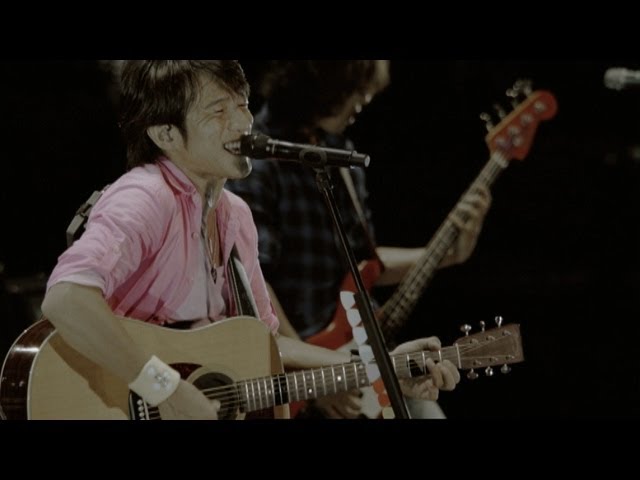
Mr.Children, popularly known as “Misuchiru,” have a massive hit song called “Namonaki Uta” (“A Nameless Song”).
It was used as the theme song for the Fuji TV drama “Pure,” so some men in their 40s who watched the show at the time may remember it.
The song features tongue-twister-like lyrics, and many people probably recall memorizing that part perfectly for karaoke.
Since Misuchiru are popular across generations, you can’t go wrong choosing this song for karaoke.

I want to hug you.Mr.Children

Mr.
Children, who have produced many hit ballads since the ’90s, are an artist everyone in their 40s knows when getting together for karaoke.
In particular, many people likely feel a special connection to “Dakishimetai” (I Want to Hold You).
It’s a relaxed ballad in a key that’s easy for the average male singer, so take your time and sing it with feeling.

Tiger & DragonCRAZY KEN BAND

It’s become a highly message-driven song that blends his distinctive character with his singing voice.
This is a great opportunity to try layering your own voice and recording it.
If you sing it well, turn it into a video and show your friends, or add a simple accompaniment and upload it to a video site—it’s fun!
TRAIN-TRAINZa Burū Hātsu

The Blue Hearts’ classic “TRAIN-TRAIN” was a long-running hit from the 1980s into the early 2000s.
True to the Blue Hearts’ style, this track is a passionate punk rock song characterized by its raw sound.
You might expect it to be hard on the throat vocally, but it actually sits within a relatively narrow range of mid1 G# to mid2 F#.
The vocal line itself isn’t complex; however, starting from the second verse, it incorporates a slightly spoken delivery, which brings subtle pitch variations compared to the first verse.
Because this spoken-like quality isn’t a purely musical pitch change, be sure to carefully learn it by ear.

Linda LindaZa Burū Hātsu

The Blue Hearts’ classic “Linda Linda.” It’s an indispensable song when talking about Japanese punk rock.
Its intense vibes often lead to misunderstandings, but in fact the vocal line is surprisingly gentle and the range isn’t very wide.
Since it sits in the low to mid range, anyone can sing it comfortably with the right key adjustment.
However, the low notes in the verse (A-melo) are fairly low, so don’t lower the key too much just because the chorus and the B-melo feel easy to sing.