

Useful for song-title shiritori! Songs with titles that start with “ga”

I’ll introduce songs whose titles start with “ga.”
When it comes to words that begin with “ga,” examples include “glass” (garasu), “girl” (gāru), and “ganbaru” (to do one’s best).
There are actually plenty of songs that use such words in their titles, too.
“Ga” can be a bit tricky to come up with in word games like shiritori.
But with this article, you’ll be fine even if “ga” comes up in song-title shiritori!
Use this article as a reference and have fun with word games, karaoke, or creating a new playlist.
- Summary of Vocaloid songs with titles that start with “Ga” (が)
- Songs with titles starting with 'Ka'
- Songs with titles that start with 'gi'
- Songs with titles that start with “ge”
- Songs with titles that start with “Go”
- A Compilation of Vocaloid Songs Whose Titles Start with “Gi”
- Songs with titles that start with “Gu.” Great for your karaoke selection!
- Songs that start with “Pa.” Great for game hints or making playlists!
- Compilation of Vocaloid songs with titles starting with 'Ge'
- Songs with titles that start with “Na.” A hint for shiritori!
- Vocaloid songs that start with “Gu.” Packed with lots of popular tracks!
- Songs with titles that start with “Su.” A collection of tracks useful for shiritori.
- Collection of Vocaloid songs with titles starting with “Go”
Handy for song-title shiritori! Songs with titles that start with “ga” (41–50)
Gabuchilapix

An aggressive electro track that pummels you with high-speed beats.
Produced by lapix, who is also active in the BEMANI series, its music video was released in September 2025.
This is lapix’s first work featuring Kasane Teto as the vocalist.
Their signature Hi-Tech sound explodes into a sharp, high-density flood of audio that’s insanely addictive! The ferocious worldbuilding—baring its fangs and lunging by pure instinct—is electrifying, and before you know it, you’ll be completely hooked.
When you want to go full adrenaline and dance like crazy, surrender yourself to this torrent of sound!
girlfriendŌe Senri

A recut single from the debut album “WAKU WAKU,” released in August 1983.
It’s a signature early track by Senri Oe that sings of the bewilderment toward a classmate who suddenly became grown-up and beautiful, along with the bittersweet stirrings of first love.
The poetic lyrics—so characteristic of Oe, likening a wavering heart between two people to the wind—tighten the chest.
Arranged by Kenji Omura, the sparkling pop sound accentuates both the radiance and the poignancy of youth.
Listening to this piece may make you feel a touch of nostalgia, as if flipping through a school-days photo album.
Perfect for nights when you want to sink into a sentimental mood.
Glass BoyKinKi Kids

KinKi Kids’ classic hit “Glass no Shōnen.” The song was composed by singer-songwriter Tatsuro Yamashita, and if you listen closely, you can definitely hear his signature style in places.
The track is notable for its soaring vocals, but the range is fairly narrow—mid1 E to mid2 G—so as long as you set the key appropriately, it’s easy to sing for both men and women.
The melody has a somewhat retro Showa-era feel, so if you’ve mastered vibrato, it will significantly elevate the quality of your performance.

Good luck!Utakata Pātīzu

It has a somewhat anime-like style, and the fresh, easy-to-listen-to phrases really stick with you! The melody line is simple and catchy, but since the tempo is relatively fast, you’ll be set as long as you can groove with the song.
Because there’s call-and-response in the A section, I think you can learn it without getting confused if you follow the lyrics from the start.
Also, it suits the song better to sing the high notes in the chorus lightly rather than belting them.
Aim to relax while keeping the rhythm with your body! Since it’s an idol-style song, lifting your facial muscles into a smile alone helps you relax.
After that, try singing without forcing it, with the image of letting the voice come out lightly in front of your eyebrows.

GIRLS feat. ohashiTrioMichael Kaneko
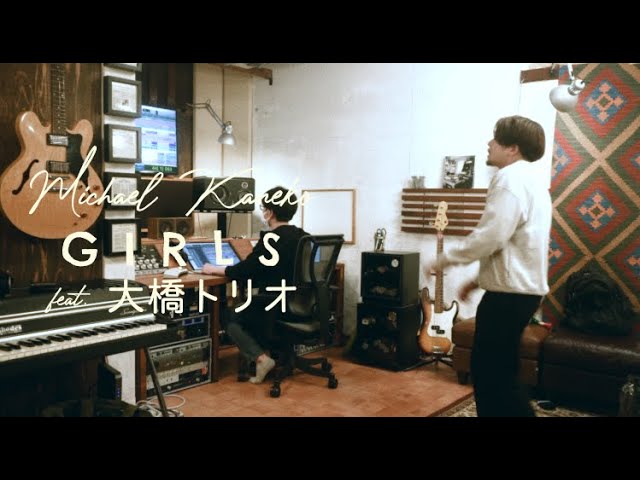
It’s a track with a light, groovy feel and an urban, sophisticated sound that’s a pleasure to listen to.
It’s a collaboration between Shonan-born singer-songwriter Michael Kaneko and Ohashi Trio.
The lyrics charmingly portray a man getting giddy after meeting a woman at a bar, along with the exchanges of the friend watching over him.
The song was released in May 2022 and was later included on the album “The Neighborhood.” The key-change section—added at Ohashi Trio’s suggestion—significantly heightens the song’s dramatic quality.
How about giving it a spin when you want a breather or as a companion for an evening stroll?
Bring it on!Shishiro Botan

Released in September 2025 to celebrate VTuber Shishiro Botan’s birthday, this track is a powerful dance number that puts electro sounds front and center.
Produced by Camellia, who also worked on her debut song, it blends ultra-fast beats with aggressive synths to pull listeners straight into a whirlwind of excitement.
An energetic piece that’s perfect for cranking your mood to the max.
GIRL TALKAmuro Namie

A stylish R&B number by Namie Amuro that sings about the irreplaceable time spent with easygoing friends.
The candid conversations that only women can share are depicted like a scene from an overseas drama.
Released in October 2004 as her 28th single, the song also became familiar as the CM track for Mandom’s LUCIDO-L.
From the dazzling strings in the intro to the transition into a groovy beat, the sound still makes your heart dance today.
Whether you play it on a drive with friends or on a quiet night when you want to relax alone, it might bring back that sparkling feeling from back then.