

![[Must-See for Beginners] How to Start Learning Piano on Your Own: A Clear, Step-by-Step Guide!](https://media.ragnet.co.jp/img/1200__png__https://www.studiorag.com/files/2025/05/1db6bdca6f771bac82760068d17715e5.webp)

“I want to casually play my favorite songs on the piano!” Many people watch piano performance videos on social media or listen to their favorite pianists and think, “I want to be able to play too,” but don’t know where to start.
In this article, we clearly explain how beginners can get started with piano playing—from choosing an instrument and sheet music to how to structure your practice.
We’ll also share ways to practice efficiently in short pockets of time, even if you’re busy with work.
Use this as a helpful guide going forward!
- Recommended for piano beginners! 10 sheet music picks that adults can enjoy too
- Basic fingerings for piano beginners
- Advantages and Disadvantages of Learning Piano on Your Own
- A must-see for piano beginners! Recommended training videos that are great for basic practice
- [Must-See for Beginners] How to Start Learning Piano on Your Own: A Clear, Step-by-Step Guide!
- [For Piano Beginners] 7 Tips to Move Your Fingers the Way You Want
- Self-Study Piano Lessons! A Complete Introduction to Easy and Recommended Sheet Music for Adults
- [For Piano Beginners] Play Right Now with Free Sheet Music! A Roundup of Recommended Practice Pieces
- How to play piano accompaniment using simple chords
- [Piano Etudes] Recommended for Beginners! A Curated Selection of Easy, Playable Pieces
- [Piano Beginners] J-POP That Looks Hard but Is Surprisingly Playable [2026]
- How can a beginner pianist learn to play chords easily?
- [Beginner] Recommended for adult piano beginners! Beautiful & stylish piano pieces
What should beginner pianists prepare? Start with choosing an instrument!
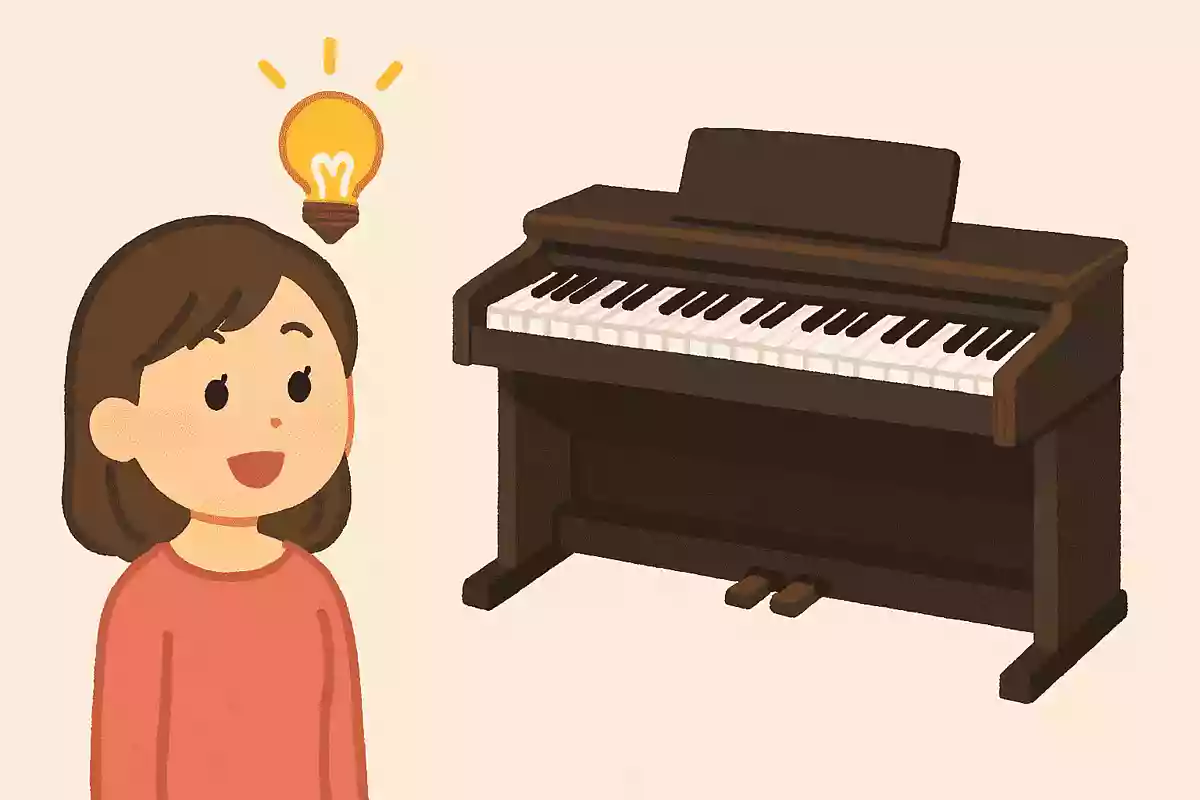
The first thing beginners who are about to take on the piano should do is prepare their instrument.
You have three options: an acoustic piano, a digital piano, or a keyboard.
Each has its own features, advantages, and disadvantages, so use the points we’ll introduce to choose the instrument that best suits you.
Having the instrument right in front of you will surely boost your motivation to practice piano even more!
Acoustic piano (upright or grand)
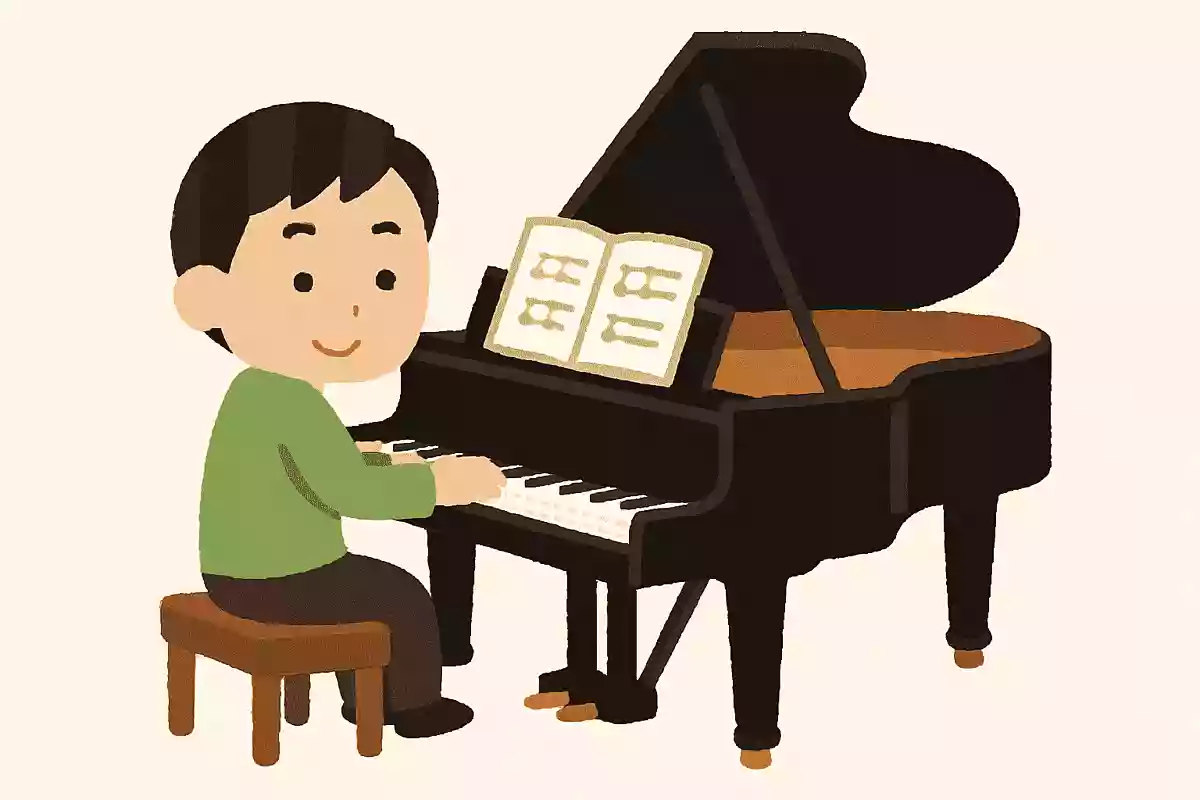
An “acoustic piano” refers to either a vertical upright piano or a horizontal grand piano.
When you press a key, a hammer inside the piano strikes the strings, causing them to vibrate; those vibrations are transmitted to the soundboard, which amplifies the resonance to produce a beautiful tone.
The beauty of its timbre is overwhelmingly more captivating than that of digital pianos or keyboards.
However, drawbacks include the high cost—ranging from several hundred thousand to several million yen—and the difficulty of installation due to housing conditions such as noise concerns for neighbors and floor load capacity.
Because it is the so-called “real piano,” it’s perfect for those who want to play classical repertoire, seriously develop piano technique, or perform on stage at recitals.
digital piano
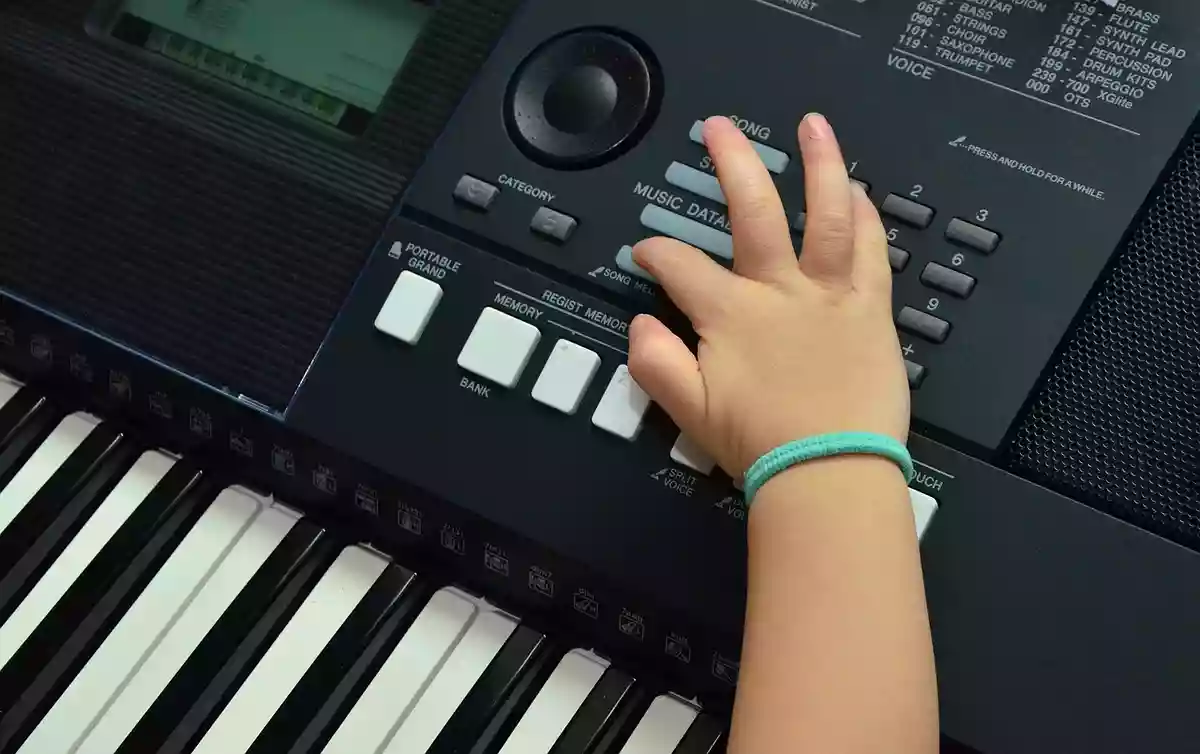
cdn.pixabay.com
An “electronic piano” is, literally, an instrument that electronically reproduces the sound of a piano.
There are models that run on AC power, batteries, or both.
Compared with acoustic pianos, they’re a great value, with prices starting from just a few thousand yen.
In the past, many models had a light touch that lacked a satisfying feel, but with ongoing improvements, many models now offer a touch that’s remarkably close to an acoustic.
Some models also include attractive features that acoustics don’t have, such as a silent function that lets you play through headphones without sound leaking out, one-touch recording, and the ability to enjoy ensemble playing by streaming downloaded audio via Bluetooth.
If you want to make the most of built-in features for enjoyable practice at home, or you plan to practice late at night, why not choose an electronic piano?
keyboard
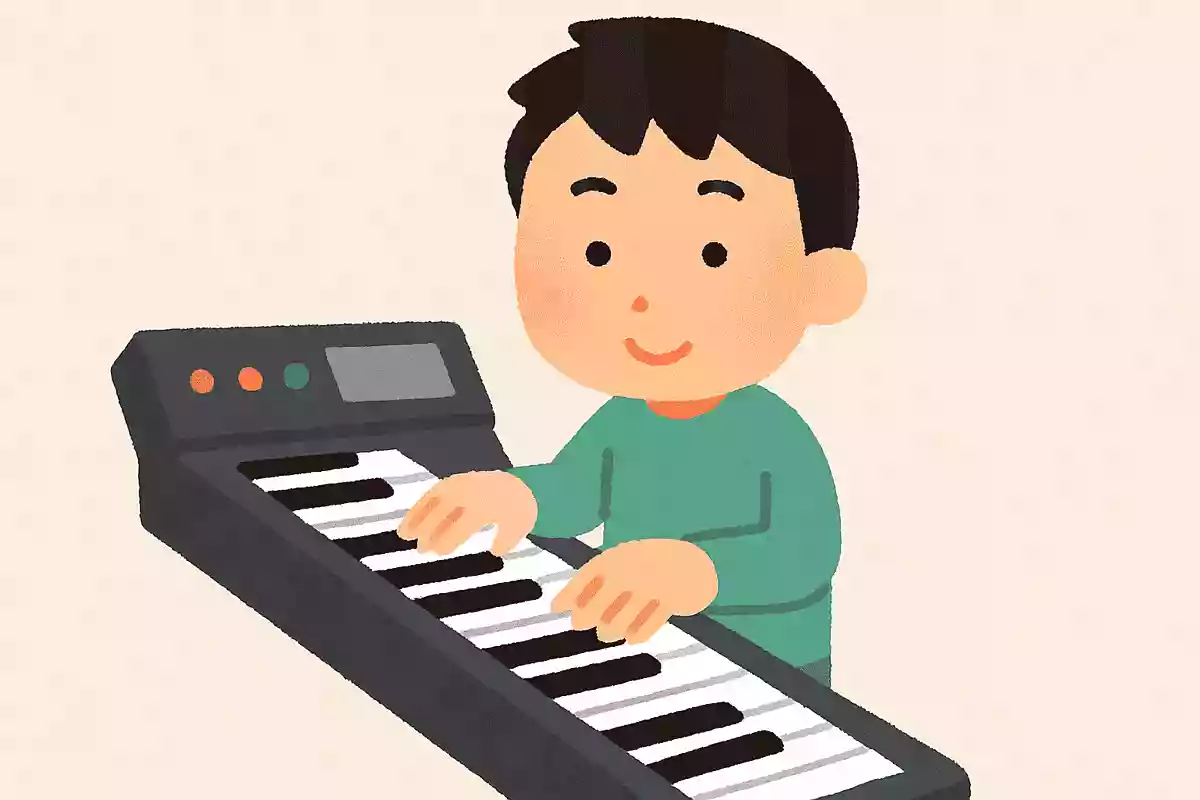
A “keyboard” is a keyed instrument that lets you enjoy a variety of tones—not just piano, but also strings, winds, percussion, and more—at the touch of a button.
Many models are affordably priced, and since they’re just the keybed and are lightweight, they’re easy to move around.
If you prefer to store the instrument away and only set it on a table when you practice, a keyboard is a perfect fit.
However, when buying a keyboard, pay attention to the number of keys! Acoustic pianos and digital pianos generally have 88 keys, but many keyboards are compact, with 32 or 61 keys being common.
When you go to play with both hands, you may find you don’t have enough keys.
To avoid ending up unable to play the pieces you want because your instrument doesn’t have enough keys, think it through carefully before making your purchase!
What should piano beginners practice first? How to choose sheet music based on your goals
Once you’ve got your instrument ready, the next step is choosing sheet music! You might wonder, “It says beginner level, but can I play it even if it’s my first time?” or “Is it unrealistic to learn only the songs I like?” It’s normal to feel uncertain when picking your first sheet music.
From here, we’ll introduce three key points to help you choose.
Of course, it’s also a great idea to select materials based on each point and use them together! As you read, think about why you want to start playing the piano and what goals you hope to achieve through your practice.
I want to acquire basic techniques.

If you want to learn piano from the basics and eventually tackle more advanced pieces, we recommend finger-exercise materials that teach technique from the ground up.
Collections like Hanon and Czerny, which most piano learners go through at least once, are often perceived as monotonous and boring.
However, precisely because the note patterns are simple, you can focus on hand shape and finger movement without spending much time on reading the score, making them ideal for building a solid foundation.
In addition to standard editions, there are versions that explain detailed practice methods and jazz-style arrangements that help you keep practicing with enjoyment.
Why not choose a score that makes you think, “I could stick with this and have fun!” and give it a try?
I want to develop my sight-reading skills.
If you want to develop the ability to read sheet music and play on your own, the most important thing is to build familiarity by working through a lot of music.
There are many beginner-friendly piano scores available—method books featuring easy, compact arrangements of classical pieces, as well as collections of simplified arrangements of famous Japanese and Western songs that help you build sight-reading skills as you practice.
I recommend starting with a book that includes many songs you already know.
At first, it’s perfectly fine to choose scores that have solfege (do–re–mi) written under the notes.
Gradually, aim to move on from relying on written note names—try playing while referencing the printed note names, then practice by writing them in yourself, and eventually graduate from that phase altogether.
I want to be able to play my favorite songs.

If you have a clear goal like “I just want to be able to play this song!”, it’s perfectly fine to buy the sheet music for that piece from the start.
If the original is too difficult, you can use a simplified arrangement or focus on learning only the most memorable phrases.
There are even people who, inspired by a pianist’s performance, practiced steadily on their own with no prior experience and managed to master Franz Liszt’s La Campanella, known as one of the most difficult piano pieces.
A piece you feel attached to makes it easier to stay motivated, so take the plunge and give it a try!
[Super Busy] Efficiency-Boosting Practice Tips Recommended for Piano Beginners
Consistent practice is essential for improving at the piano! However, it’s not easy to secure several hours of practice every day, is it? So here, we’ll share strategies to boost practice efficiency that allow even busy people—whether with work, housework, or childcare—to keep playing the piano without strain.
Feeling burdened by practice is the biggest obstacle to progress.
Let’s enjoy the time spent at the piano with methods that let you continue without stress!
Make a practice plan
To make the most of short windows of time—like during small breaks, after you get home, or once your family has gone to bed—set a rough plan for what to practice when, and by when you want to be able to play through the entire piece.
It’s best to break your practice into small sections, such as: “Today I’ll be able to play these 8 measures with both hands,” or “Tomorrow I’ll finish practice once I can play this phrase five times without mistakes.” After steadily building up your practice in small steps, it’s also a great idea to set aside a bit more time on a day off to play through the whole piece, or have your family listen to you!