
[Masterpieces Singing the Goddess] A Comprehensive Introduction from Showa-Era Songs to the Latest Hit Tracks

One of the wonders of music is that it can take as its subject not only visible things, but also the sublime and the unseen.
In this article, we’ve gathered Japanese songs with the theme of “goddess” from among the endlessly rich possibilities of music.
There are many words that signify a goddess, such as Aphrodite, Venus, and Muse.
And the term doesn’t only refer to celestial beings—it can also describe someone you love or admire.
So, what kinds of goddesses will appear in the songs we’re introducing this time? We hope you enjoy them as you savor the lyrics.
- [2026] A Collection of Classic and Popular J-Pop Songs About God [Japanese Music]
- Masterpieces that sing about women. Recommended popular songs.
- Masterpieces about girls: recommended popular songs
- Classic songs about women. Recommended popular tracks.
- Popular Japanese songs among women in their 50s: recommended classics and staple tracks
- A collection of cool songs that sound great when sung by women, originally male songs
- Masterpieces that sing of beauty. Recommended popular songs.
- Song of Victory: Iconic Tracks Smiled Upon by the Goddess & Uplifting Cheer Anthems
- Songs women like. Famous and popular Japanese songs.
- [J-Pop] A collection of popular songs with “love” in the title
- A roundup of classic Showa-era kayō songs: a comprehensive introduction to timeless tracks loved across generations.
- A curated selection of stylish songs by Japanese female artists: the allure of sophisticated masterpieces
- Old songs from the Showa to Heisei eras: a collection of timeless classics loved across generations
[Masterpieces Singing Goddesses] A Comprehensive Introduction from Showa-Era Songs to the Latest Hit Tracks (21–30)
Adventures of the GoddessesNagayama Miho

“Megami-tachi no Bōken” (The Goddesses’ Adventure) is Miho Nakayama’s 19th single, released in 1990.
She has recently resumed her entertainment activities and we’ve started seeing her in dramas again, but back then she was truly a top idol and extremely popular.
Monochrome VenusIkeda Satoshi

“Monochrome Venus” is Satoshi Ikeda’s debut single, released in 1986.
The woman he loved is a Venus.
They’ve broken up and he’s trying to forget her, yet he runs into her again… But in her heart, there’s no reflection of him—only a single-hued feeling.
It’s a monochrome world.
Even as the goddess of fortune departs, smile.BugLug

“Even if the Goddess of Fortune Leaves, Smile” is a single released by Buglug in 2015.
The goddess here refers to the goddess of victory.
The song conveys that not only money-wagering gambling but also the gambles of life are included, and that even if you end up with a “loss,” that experience will eventually lead to a “win.”
Dangerous GoddessKATSUMI

“Dangerous Goddess” is KATSUMI’s second single, released in 1990.
Back then, there was a certain jewelry company whose commercials were said to guarantee a hit for any song featured in them, and “Dangerous Goddess” was used as one of those CM tracks, becoming a big hit.
It’s a very quintessential story from the bubble era, isn’t it?
Become a goddessElefanto Kashimashi
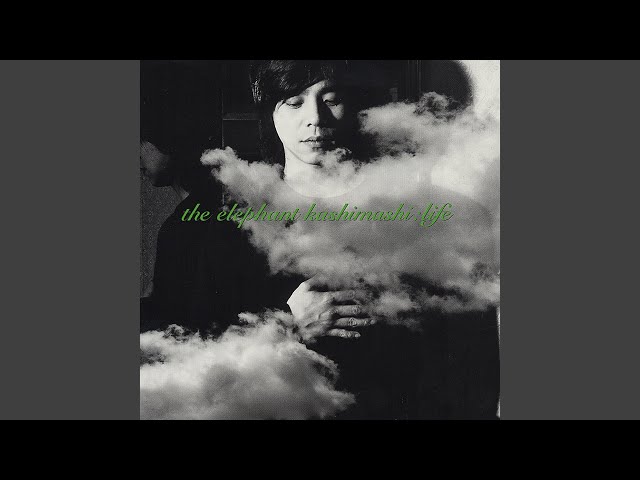
“Become a Goddess” is a song included on Elephant Kashimashi’s 2002 album “Life.” Miyamoto’s love songs feel somehow masculine, rugged, and awkward, which I think really brings out the image of an ungainly man.
But that’s exactly why the lyrics come through so directly.
The song itself is rough-hewn, yet it’s a very beautiful love song.
The Irresponsible GoddessOikawa Mitsuhiro

“Frivolous Goddess” is a track from Mitsuhiro Oikawa’s first album, “Risonron,” released in 1996.
While he’s active as an actor, as a singer he unleashes the full-on Micchi world! In his one-man shows, the song is incredibly erotic—enough to make you swoon.
The lyrics too, but really, you couldn’t pull this off without brimming confidence.
What’s amazing is how effortlessly he does it without it feeling the slightest bit out of place.
goddessSasagawa Miwa

“Megami” is a song included on Miwa Sasagawa’s second album, “Kazuta,” released in 2005.
If one were to be loved so deeply by a single person, how happy would that be? And yet, at the same time, there’s also the fear that comes with being loved that much…
You can sense that duality.