

Old songs from the Showa to Heisei eras: a collection of timeless classics loved across generations

These days, thanks to the widespread use of Spotify and Apple Music, people of all ages can easily listen to a wide variety of songs.
Social media platforms like TikTok have also sparked an increase in older songs becoming revival hits among young people.
In this article, we’ll be showcasing a selection of hit tracks from the Showa and Heisei eras all at once!
There are plenty of timeless masterpieces that haven’t lost their charm, so take this opportunity to give them another listen.
Old songs from the Showa to Heisei eras: A collection of timeless classics loved across generations (1–10)
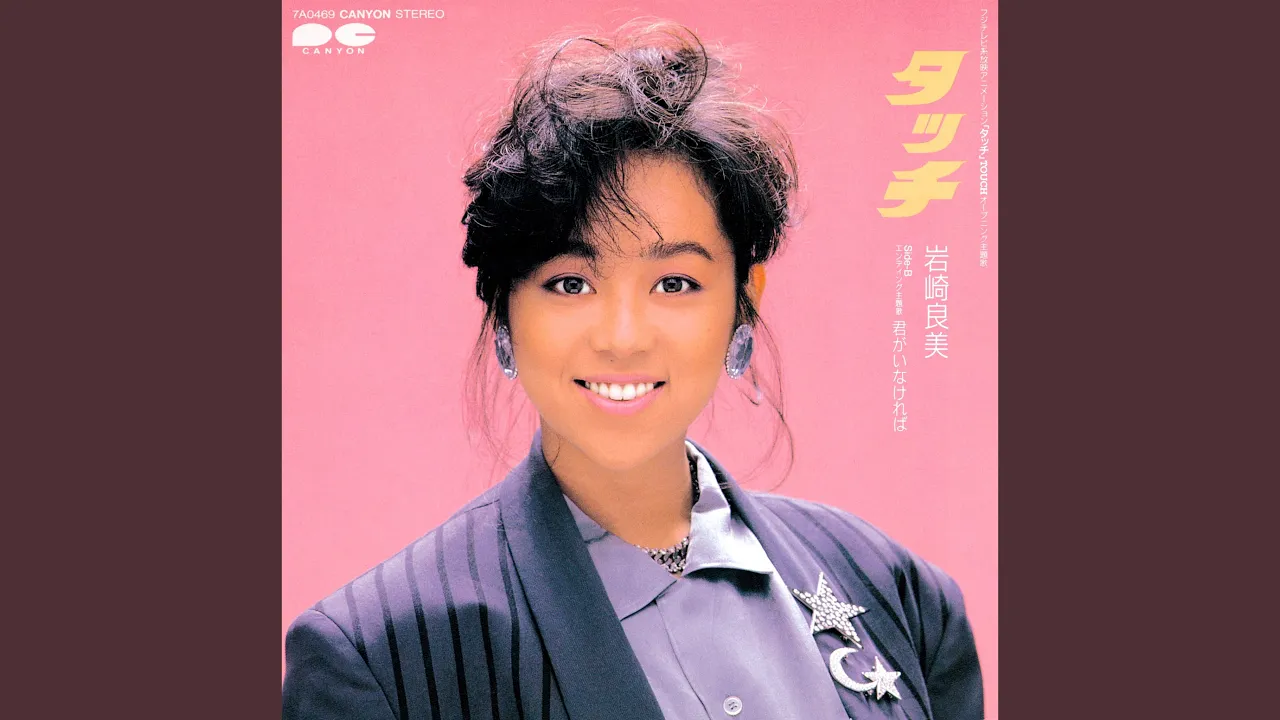
TouchNEW!Iwasaki Yoshimi

Composed as the theme song for a TV anime based on Mitsuru Adachi’s work, this beloved, nationally renowned number continues to be cherished today.
It brilliantly captures, in concise words, the pounding excitement at the start of love and the way two people gradually grow closer.
The driving, rock-inflected band sound pairs exquisitely with Yoshimi Iwasaki’s clear, transparent vocals.
Released as a single in March 1985, it became widely known as the theme song for the Fuji TV–affiliated anime “Touch.” It was a hit that climbed to No.
12 on the weekly charts, and the track became a signature piece of her career.
With an intro that instantly raises the energy, it’s perfect for revving up the crowd in the stands at high school baseball games.
It also comes highly recommended for anyone who wants to bask in refreshing memories of youth.
I’ll wait.NEW!amin

It’s a masterpiece whose quiet emotion and clear harmonies weave a melody you can’t help but be absorbed in.
The feeling of loving someone single-mindedly without any guarantee of being rewarded is portrayed with care, without relying on excessive drama.
The seamless back-and-forth between Takako Okamura and Haruko Kato lends a refined lyricism to the poignancy, resonating deeply in the heart.
This was Aming’s debut single, released in July 1982.
It topped the Oricon year-end chart that same year and earned them a spot on NHK’s Kōhaku Uta Gassen.
Even in later years, it has been used in numerous commercials, including McDonald’s in 2023.
It’s the perfect song for a leisurely moment of tea while soaking in the atmosphere of the Shōwa era.
It’s also recommended when you want a song that gently embraces pure, innocent love.
Wine Red HeartNEW!anzenchitai

Centered around Koji Tamaki, a vocalist who captivates with overwhelming vocal prowess and expressive depth, Anzenchitai is a rock band.
With lyrics by Yosui Inoue and music by Tamaki, this song is a love ballad that sensually yet wistfully depicts a precarious, adult romance.
Its sophisticated, urban melody layered with a whisper-like vocal delivery evokes an ineffable blend of allure and melancholy.
Released in November 1983 as their fourth single, it was later included on the classic album “Anzenchitai II.” The track was featured in a Suntory Akadama Punch commercial and used as the opening theme for the TV drama “Machigaidarake no Otto Erabi” (“Choosing the Wrong Husband”).
The sound, imbued with a chic Showa-era mood, feels perfect for those who want to lose themselves in music late at night, sipping a drink alone.
I LOVE YOUNEW!Ozaki Yutaka

Singer-songwriter Yutaka Ozaki, who won support as a voice representing the loneliness and struggles of youth.
This song is a ballad whose restrained piano melody contrasts with his intense rock image.
Its worldview—evoking the instability of love with no place to go and a desperate urge to escape—is conveyed through his gentle vocals.
Originally included on the album “Seventeen’s Map,” released in December 1983, it was later released as a single in March 1991.
It was also used in JR Tokai commercials and as insert music for the drama “From the North Country.” An enduring love song covered by numerous artists, it’s perfect for a quiet night with someone you love or for those who want to feel the warmth of a bittersweet romance.
240 Million Eyes -Exotic Japan-Gō Hiromi

Though remarkably original for its time, this signature song by Hiromi Go was crafted squarely within the framework of Showa-era hits.
It features a dazzling, visually evocative melody and a grand-scale theme that amplifies the heat of the entire Japanese archipelago and the stirrings of romance.
Released in February 1984 as his 50th single, it was chosen as the campaign song for the final tourism campaign by Japanese National Railways.
With plenty of easy call-and-response moments, it’s a karaoke staple.
Even those lacking confidence in their singing have nothing to fear—once you find a key that suits you, it’s not hard to master.
It’s a song everyone can sing together across generations and really get the crowd going!
Swim! Taiyaki-kunNEW!Shimon Masato

If there’s one nationwide smash hit that represents the Showa era and that everyone’s heard at least once, it has to be this song! It tells a humorous story about a taiyaki, grilled on a hot plate every day, escaping to the sea in search of freedom—yet it ends with a touch of melancholy, giving the piece a strangely captivating charm.
Masato Shimon delivers it with a voice that’s both powerful and unadorned, resonating deeply not only with children but also with adults.
Released in December 1975, it became a massive sensation as an original song for the children’s program “Hirake! Ponkikki,” ultimately selling a total of 4.536 million copies.
It’s a great listen when you want to take a breather and feel just a little bit liberated from the constraints of work and everyday life!
Look up at the stars in the nightSakamoto Kyu

One of the iconic songs of the Showa era, it continues to resonate closely with many people.
The lyrics, which gently depict young people gazing up at the night sky, pursuing modest happiness and their dreams, are especially memorable.
Originally written as the theme song for a 1960 musical, it became a massive hit after Kyu Sakamoto covered it in 1963, earning the Composer’s Award at the 5th Japan Record Awards.
Set against the backdrop of Japan’s period of rapid economic growth, it has been cherished as a song symbolizing the hopes and efforts of young people who worked by day and studied by night.
It’s a track that gives you the courage to keep moving forward no matter what.