

Famous pianists you should listen to at least once. Recommended pianists.


Introducing famous pianists you should listen to at least once!
Even people who aren’t into instrumentals often find themselves listening to piano pieces, right?
Unlike the guitar, the piano isn’t an instrument you run through effects, so its tonal individuality can be hard to distinguish—but that also means it appeals to a wide audience.
Here, we’re introducing professional pianists who command the piano as if it were part of their own bodies!
We’ll feature not only international pianists but also Japanese pianists.
The explanations are quite detailed, so even those who regularly listen to classical music should enjoy this!
Now, please sit back and enjoy!
- Masterpiece Performances: Introducing Japan’s World-Renowned Pianists and Their Iconic Performances
- Masterpieces of classical piano that are too beautiful for words. A gathering of delicate tones that cleanse the soul.
- [Piano Variations] A comprehensive showcase of gem-like masterpieces crafted by great composers!
- It’s so cool if you can play these on the piano! A selection of irresistibly charming masterpieces.
- [2026] Jazz piano masterpieces: from standards to recent favorites
- [Ultra-Advanced] Even challenging for advanced players! A curated selection of highly difficult piano pieces
- Jazz Piano Masterpieces: From Classic Essentials to Contemporary Favorites
- [For Intermediate Players] Challenge Yourself! Recommended Masterpieces That Shine at Piano Recitals
- [J-POP] I want to listen to songs with impressive, beautiful piano tones! Recommended piano cover tracks
- [Obituary] Hôko (Hiroko) Nakamura Passes Away: A Collection of Quotes from the International Pianist
- [Classical] Famous Piano Works | Gem-like Masterpieces You’ll Want to Play at Least Once in Your Lifetime
- Famous jazz musicians. Players who have graced the history of jazz.
- Beginner to Intermediate: Chopin pieces with relatively low difficulty. Recommended works by Chopin.
Famous pianists you should hear at least once. Recommended pianists (71–80)
Maurice Ravel: Piano Concerto in G majorHagiwara Mami
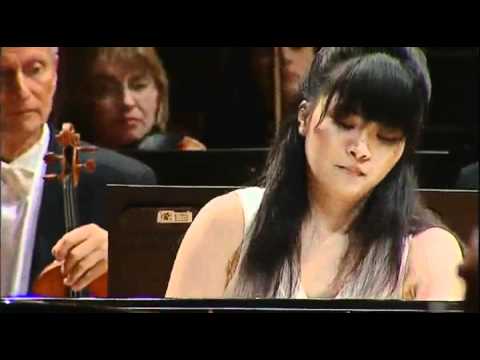
As a female pianist with nationwide recognition, Mami Hagiwara is a world-class performer.
In 2010, at the 65th Geneva International Music Competition—one of the world’s three major competitions—she became the first Japanese winner in history and Geneva’s first winner in eight years.
Here is one of her masterful performances: Maurice Ravel’s Piano Concerto in G major.
Among the pianists introduced this time, she boasts top-tier performance ability.
Take a moment to understand the piece’s challenging passages and listen to this remarkable performance again.

Mily Balakirev: Oriental Fantasy ‘Islamey’Kamei Masaya

The Long-Thibaud International Competition, an international contest held in Paris, is one of the top ten competitions in the world—somewhere around 10th to 8th place in general rankings, perhaps.
Kamei Masaya achieved an excellent result at this Long-Thibaud International Competition.
He’s a pianist known for his rich expressive power.
In this recording of Mily Balakirev: Oriental Fantasy “Islamey,” you can feel both his intensity and his delicacy.
Franz Liszt: Liebestraum No. 3Sorita Kyohei

Kyohei Sorita is a leading Japanese pianist who won second prize at the 18th International Chopin Piano Competition in 2021—the first Japanese pianist in 51 years to achieve this.
For performers, not just pianists, popularity depends not only on skill but also on personality and exposure.
Sorita is the former type: a pianist who has earned popularity through overwhelming ability.
One of his masterful performances is Franz Liszt’s Liebesträume No.
3.
This piece is known for its difficulty in Liszt’s repertoire.
For performers, the key challenge lies in how to shape the long soprano line; Sorita brings out clear contrasts in the music by giving weight to the bass.
Frederic Chopin: Piano Concerto in E minor, Op. 11Kobayashi Aimi

The International Chopin Piano Competition is a highly prestigious contest on a global scale.
While it may fall short of the Tchaikovsky Competition and the like, its authority is undeniable.
The pianist who won fourth place at this Chopin Competition is Aimi Kobayashi.
As a Japanese female pianist, she is unquestionably among the very best in terms of ability.
Her performance of “Frederic Chopin: Piano Concerto in E minor, Op.
11” is a standout, showcasing her mastery of a piece that demands exceptional expressiveness and depth of interpretation.
Frederic Chopin: Variations Brillantes in B-flat major, Op. 12Kawamura Hisako

The music competition held in Germany, the ARD International Music Competition in Munich, is known worldwide, but it does not carry that much prestige specifically for pianists.
That said, the piano category has become more robust in recent years and is steadily gaining authority.
The pianist who proudly took second prize at this Munich competition is Naoko Kawamura.
Her performance of “Frédéric Chopin: Variations brillantes in B-flat major, Op.
12” is a celebrated one, showcasing the delicate touch at which she excels.
Maurice Ravel: Pavane for a Dead PrincessFujita Mao
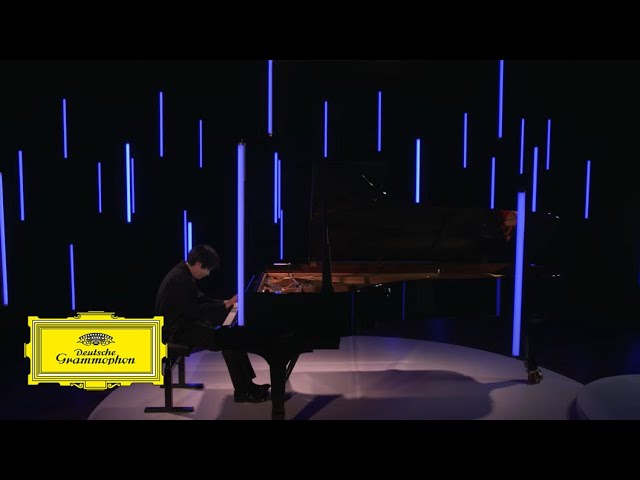
Mao Fujita is one of Japan’s top-tier pianists.
He’s a phenomenal talent who won second prize at the even more demanding International Tchaikovsky Competition, surpassing even the Chopin Competition in level.
Here is one of his outstanding performances: Maurice Ravel’s Pavane pour une infante défunte.
While the piece is at a level that even intermediate players can tackle, there are very few who can perform it with this degree of polish and expressive depth.
If you want to hear the real deal, he’s a pianist you should definitely check out.
Sergei Rachmaninov: Piano Concerto No. 2 in C minor, Op. 18Tsujii Nobuyuki
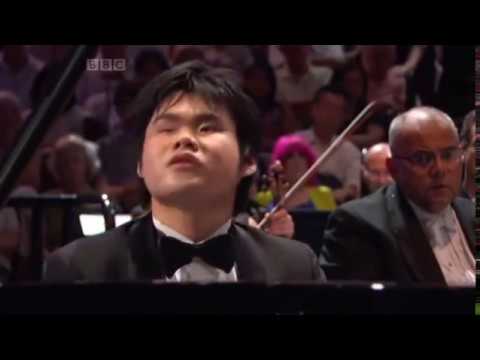
Nobuyuki Tsujii is a pianist who, despite living with the handicap of blindness, performs with such effortless technique that you never sense it—earning him worldwide acclaim.
If you were asked to name a Japanese pianist, many would likely mention him first.
One performance of his I highly recommend is Sergei Rachmaninov: Piano Concerto No.
2 in C minor, Op.
18.
True to Rachmaninov’s style, it features an extraordinary number of octaves, which Tsujii dispatches with ease while adding remarkable depth of expression—proof, indeed, of his genius.