



Upper elementary school students are at an age where they can independently showcase the results of their daily learning at school arts festivals and presentations.
Not only music and choir, but also new performances that highlight each class’s unique character are gaining attention.
Here, we introduce ideas that upper graders can enjoy working on together.
There are plenty of options that make use of expressive skills, such as dance, acrobatics, and acting.
Value the ideas discussed in your class and come up with a unique performance.
Work together creatively and make wonderful, unforgettable memories!
- Recommended performance ideas for elementary school (middle grades) cultural festivals and learning presentations
- [Idea] A roundup of recommended performances for lower grades at school arts festivals and learning presentations
- Hidden talents even elementary school kids can do! A collection of performance ideas that will liven up any event
- [For High School Students] A roundup of recommended attractions for the school festival
- Performances that liven up an elementary school thank-you party! A collection of ideas everyone can enjoy
- Performances for a farewell party for sixth graders: from funny skits to moving ideas
- Grade-level activities that elementary schoolers get genuinely excited about! A collection of ideas that will captivate the entire class
- [Definitive Guide] Performance Ideas for Farewell Party for Third-Years | From Touching to Laugh-Out-Loud Skits
- Hidden talent acts to showcase at school: ideas to liven up the event
- Recommended performances for elementary school thank-you parties: carefully selected games and skits that will liven things up!
- [One-Shot Gag] A roundup of sure-fire skits that will definitely get elementary school kids excited!
- Recommended for upper elementary grades! Exciting indoor recreation and games
- [Elementary School] Fun Committee Ideas! Liven Up Your Class
[For Upper Grades] Performance Ideas for School Plays and Learning Presentations That Inspire Tears and Laughter (1–10)
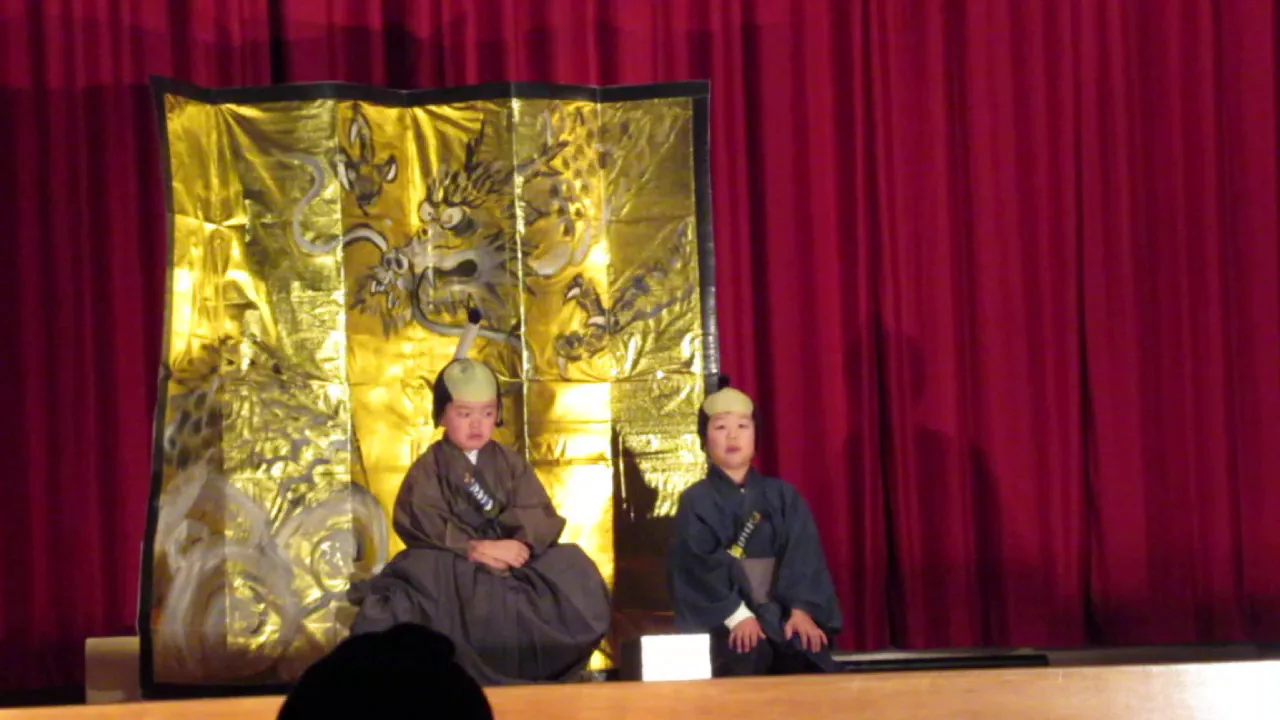
samurai period drama

I don’t think many elementary school kids watch period dramas, but a “period drama” production seems like an idea that would go over very well with grandparents’ generation.
In period dramas, good and evil are clearly defined, so the stories are surprisingly easy for children to follow.
It’s also amusing to see kids play the stereotypical crooked magistrate because of the fun contrast, and they’d probably be thrilled to practice the classic sword-fighting scenes.
Period dramas can be a great chance to learn about history and Japanese culture, so if a regular play isn’t generating much excitement, definitely consider making this your project.

Instrumental ensemble

If your whole class wants to put on a presentation together, how about trying an instrumental ensemble? Those of you in the upper grades have probably done it a few times already, but since this is a special opportunity, try picking a slightly more challenging piece from among your favorite songs.
Of course, the practice will be tough, but the thrill when the music comes together beautifully is truly amazing, and working as a group on a single piece will become a wonderful memory.
It won’t succeed without unity, so I think it will also be a great chance to improve communication.
Clapping Fantasy

Let me introduce a lively performance that uses your own hands: Clapping Fantasy, which is also featured in elementary school music textbooks.
You’ll clap along to the instruments.
Try getting everyone to clap in unison, or split into clapping and non-clapping parts for variety.
The instrument can be a piano, a recorder, or a keyboard harmonica.
You can even swap handclaps for castanets or bells to make it even more fun.
When the clapping and instruments come together, both the audience and the children performing will feel their excitement rise.

English play

From seeing it in class to encountering foreigners in daily life, English has gradually become indispensable, hasn’t it? Among the many ways to learn English, how about focusing on speaking rather than reading and writing by staging a play performed entirely in English? It challenges students to improve both the quality of their acting and the smoothness of their English, testing their ability to handle different tasks at the same time.
For the story, well-known folktales are recommended so everyone is familiar with the plot—then they can notice how the impression changes when it’s presented in English.

Illusion Dance

Do you know about something called the “illusion dance”? It’s where you wear a costume that’s sharply divided into two distinct colors—one color on the right and another on the left—and dance.
You might wonder, what’s the illusion? When your right half and the person next to you’s left half match in color, it makes it look like you’re moving in a very strange way.
Another nice point is that even simple choreography looks like an illusion, so it isn’t difficult.

Letter Song

This is a performance where you create and present a song filled with the many memories you’ve built up over six years of school life and your gratitude to the people who supported you.
Everyone brings memorable episodes and, by crafting lyrics in plain, honest words, you’ll complete a one-of-a-kind choral piece.
There are many challenging aspects—such as accompanying on the piano and fitting words naturally into lyrics—so the most important thing is for everyone to cooperate.
If you decide it’s too difficult to do on your own, you can ask a teacher for help; however, the fewer adults you rely on, the more surprise and emotion you’ll be able to deliver to your audience.
reading drama

Even if you have opportunities to read stories in Japanese class, you probably don’t often read them aloud with feeling.
How about trying a dramatic reading—delivering the story with emotion so the scene comes to life—and presenting it as a performance? You’ll read not only the dialogue but also the narrative parts that convey the situation, so you can try out various techniques.
It’s important to determine whether someone excels at narration or at dialogue and assign roles for the whole piece accordingly.