

[Irish Folk Songs] Surprisingly Familiar Masterpieces and Standards of Ethnic Music

When you think of Irish folk songs, what tunes come to mind?
Many people may know “John Ryan’s Polka” as an Irish tune—the one used in the scene from the film Titanic where Jack and Rose dance in third class.
A hallmark of Irish folk music is the use of traditional instruments such as the uilleann pipes, a type of bagpipe, and the tin whistle.
Plenty of listeners are captivated by the nostalgic timbre of these sounds.
In this article, we’ll introduce classic Irish folk songs—from tracks that make you want to get up and dance to soothing melodies that bring you calm.
- [Celtic Music] Masterpieces of Celtic music. Recommended Irish music
- Famous German Folk Songs | That familiar tune in Japan was actually a German folk song?!
- [2026] The Wonderful Irish: Popular Bands from Ireland
- The miraculous voice that healed the world! Enya, the Irish songstress — Quiz
- [Hymns] Famous hymns and sacred songs. Recommended hymns and sacred songs.
- Polka masterpieces. Recommended popular songs.
- [English Folk Song] A collection of classic British trad masterpieces
- Famous Western songs everyone knows: a roundup of classic tunes you’ve heard somewhere before
- A cappella masterpieces: Recommended songs where beautiful harmonies shine (Western and Japanese music)
- Celtic Woman Popular Song Ranking [2026]
- [Western Music] Bluegrass masterpieces: recommended popular and signature songs
- [2026] A Guide to Country Music: From the Latest Hits to Classic Favorites
- Masterpieces and history of folklore: An introduction to traditional music of the South American Andes
[Irish Folk Songs] Surprisingly Familiar Folk Music Masterpieces and Standards (1–10)
Kerry Reel

In addition to songs, Irish folk music also includes a dance tradition known as Irish dance.
These dances are still popular locally today and are finely categorized into styles such as social dance, step dance, céilí dance, and set dance.
One classic tune often used for Irish dance is “Kerry Reel,” noted for its cheerful, dance-ready melody.
You’ve probably heard this kind of melody at least once in anime or video games.

The Last Rose of Summer

Even just the Japanese title Natsu no Nagori no Bara (The Last Rose of Summer) evokes a melancholy, fleeting, yet profoundly beautiful poetic feeling.
The Last Rose of Summer is a poem written in 1805 by the Irish poet Thomas Moore, a work that has been quoted not only in classical and popular music but also in novels and films across many fields.
In Japan, it was included in the 1884 publication Shogaku Shokashu (III) under the title Kiku (Chrysanthemum), but the opening words of the lyrics, “Niwa no Chigusa” (The myriad plants in the garden), became the song’s title as-is, and that is how it came to be widely known.
As a highly popular Irish folk song, it exists in countless versions, so even if you don’t know the original, you’ve likely had many chances to hear its wistful melody.

Foggy Dew

Irish folk music often features many cheerful tunes, but among them are also heavy and powerful works.
One famous example is “The Foggy Dew.” Centered on the theme of war, its lyrics are quite brutal, depicting fighters who, under a hail of bullets, pledge loyalty to Ireland and continue the struggle to win freedom.
The melody matches this content perfectly—weighty and grand in scope.
If you explore Ireland’s historical background, you’ll be able to appreciate the song’s qualities from a different perspective.
[Irish Folk Songs] Surprisingly Familiar Folk Music Masterpieces and Standards (11–20)
The Lark in the Morning

Irish folk songs include many works about indigenous beliefs and nursery rhymes, but among them are pieces based on messy romantic entanglements and sexual themes.
One such song is “The Lark in the Morning.” It tells the story of a forbidden romance between a ploughboy—a youth who drives a plow with animals—and a maid, and in the end the maid becomes pregnant.
It’s quite a hard-edged love story.
The song has a striking gap between its cheerful melody and its message (haha).
My Darling Asleep

A celebrated piece among Irish folk songs, “My Darling Asleep.” It’s notable for its cheerful melody centered on the violin.
The origin of the piece is full of surprises—apparently, it’s actually themed around “love in bed.” Given how bright and sunny the melody is, that theme is quite unexpected (lol).
That said, it’s still a wonderful love song, so if you want to enjoy an Irish folk ballad, be sure to check it out.
Swallowtail Jig

“Swallowtail Jig,” also known by names such as “The Dancing Master,” is a very famous traditional Irish jig and dance tune.
Jigs are characterized by their structure woven from quick triplet groupings in meters like 6/8, 9/8, or 12/8, creating a uniquely Irish blend of pastoral openness and lively drive that is a joy to listen to.
They are typically performed on instruments commonly used in Irish traditional music, such as the fiddle and tin whistle, but you can find many videos on YouTube featuring a wide variety of instruments, so I hope you’ll enjoy comparing the differences.
Incidentally, “swallowtail” can refer to a swallow’s tail or a swallowtail butterfly, but the reason for this title is unknown.
Whiskey In The Jar
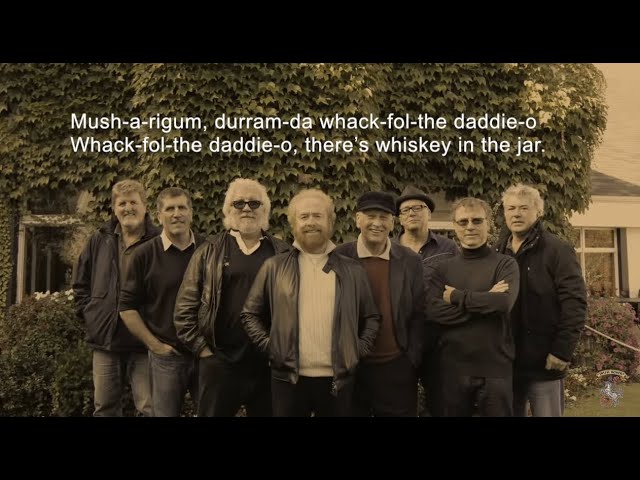
If you enjoy a drink, this is the kind of title that would make you perk up! With a cheerful rhythm and a melody that conjures images of everyone in a pub breaking into a rousing sing-along, ‘Whiskey in the Jar’ is a song whose exact origins are unclear, though it’s said to have already been sung by the 17th century, and by the 1950s it had been recorded by many artists.
It spread worldwide after the late 1960s, when the Irish folk band The Dubliners featured it on their albums and singles, and in 1973 it became a major hit thanks to a cover by Thin Lizzy, the legendary rock band hailed as Irish heroes.
The version by Metallica—the best-selling metal band in the world—was likely based on Thin Lizzy’s cover.
It was included on their 1998 covers collection Garage Inc.
and later released as a single.
As an aside, despite its overflowing party vibe, the lyrics themselves are actually quite dark and dramatic…