

Masterpieces of Japanese fusion—From nostalgic classics to recent recommendations—

Fusion is a hybrid music genre that, while rooted in jazz, blends many elements ranging from rock and world music to electronic music and even classical.
In Japan as well, a fusion boom erupted from the late 1970s to the early 1980s, and bands and artists achieving major commercial success appeared one after another.
This time, we’re focusing on Japanese artists and bands to introduce classic tracks from Japanese fusion.
Please enjoy the brilliance of Japanese fusion—music that has greatly influenced the history of J-pop and features many key figures in the recently buzzworthy genre known as city pop!
- Ranking of popular fusion songs
- Masterpieces of Japanese instrumental music. Recommended instrumental tracks.
- [2026] Recommended Japanese Fusion Bands Summary
- Classic fusion music masterpieces. Recommended staple tracks.
- [Western Music] Classic Jazz Fusion Masterpieces: Recommended Albums You Should Listen to at Least Once [2026]
- [Selected by the pros!] 10 great bassists from the jazz fusion world
- Masterpieces of Japanese fusion—From nostalgic classics to recent recommendations—
- Best City Pop Classics: Recommended Popular Songs [Timeless & Modern]
- [2026] Masterpieces of instrumental music. Recommended instrumental tracks.
- Carefully selected Japanese songs with a Latin flavor! Recommended J-POP brimming with exotic vibes
- A roundup of instrumental fusion bands active in Japan
- The allure of surf music: a supreme healing space lured by the ocean’s tones
- [Japanese Music] Masterpieces of 2000s Pop: A roundup of hit songs from 00s J-POP
Masterpieces of Japanese fusion: from nostalgic classics to recent recommendations (11–20)
Straight to the TopWatanabe Sadao

Sadao Watanabe, also affectionately known as “Nabesada,” is a saxophonist Japan proudly presents to the world.
An indispensable giant in the Japanese jazz scene, Watanabe has released many fusion albums and achieved major commercial success.
The piece featured here, “Straight to the Top,” is a renowned track included on his 1981 album Orange Express, created in collaboration with the world-class jazz-fusion pianist Dave Grusin.
With a rock-solid lineup that includes international musicians like Eric Gale and Marcus Miller, it might not be considered purely Japanese fusion.
Even so, many fans love Watanabe’s superb performance on this track, and countless listeners have been captivated by its supremely romantic and melodious phrases.
Imagine driving along the coast with this song as your BGM—it would feel absolutely incredible!

SOLID DANCEshanbara

As the title suggests, it’s an urban J-pop number built around a solid rhythm section, with flashy late-’80s-style guitar and synth sounds and the distinctive personalities of its two female vocalists—altogether a gem that now also fits neatly within the city pop framework.
Shambara was formed in 1989 by Tetsuo Sakurai and Akira Jimbo—one of Japan’s premier rhythm sections who had been members of Casiopea, a pinnacle of Japanese fusion.
Rather than an instrumental fusion band, the project launched as a group featuring female vocalists.
Unfortunately, they naturally disbanded after releasing just one album, but with popular city pop–adjacent singers Yurie Kokubu and Kaoru Akimoto on vocals, it had the potential to appeal broadly—not only to fusion fans but also to J-pop and city pop listeners.
It appears the album is currently out of print, but a reissue and renewed critical appreciation are much desired.
DunhuangTRIX

A supremely satisfying number that practically declares itself the royal road of fusion! It’s the opening track of TRIX’s 2008 album “STYLE,” created by the ultimate rhythm section: drummer Noriaki Kumagai and bassist Mitsuru Sutoh, who each left what are arguably the pinnacles of Japanese fusion—CASIOPEA and T-SQUARE.
With a touch of oriental flair, it’s a stylish, melodic, and pop-leaning tune that makes for an easy listen even for fusion beginners—a true classic.
Their exceptional chops go without saying, but it’s their signature playfulness that makes it so much fun to hear, and the way they turn phrases that feel like they might have a source into something distinctly their own is just brilliant.
HerculesParachute

When it comes to supergroups in the Japanese fusion scene, PARACHUTE—formed in 1979—is likely the first name that comes to mind.
Assembled from highly skilled young musicians who were drawing attention in Japan at the time, Parachute enjoyed a short initial run from 1979 to 1982 yet earned high acclaim from fusion fans, and they have continued to perform intermittently since the 2000s.
Their track “Hercules,” included on their second album, 6 kinds 6 sizes, released in 1980, is a standout number that frequently appears on best-of compilations and can be considered one of their signature songs.
It exudes an urban atmosphere, unfolding dramatically from a wistful intro—very cool.
It’s irresistible for fans of fusion and AOR, and it’s also great that the song is packed with impactful phrases that set it apart from mood-driven tracks.
HOPEkakukeihō kurabu

From the 1980s to the 1990s, many game music works involved fusion-oriented musicians and artists from progressive rock backgrounds.
It’s fascinating to revisit game music from that era and hear sounds that are straight-up fusion.
With that context in mind, I highly recommend listening to “HOPE,” a classic by Kukeiha Club, the band formed as Konami’s sound team! It’s the title track of their second purely original album—not game music—released in 1993.
Some listeners may feel instantly nostalgic upon hearing it, as it was used as the theme song for the Nippon Cultural Broadcasting radio program “TwinBee PARADISE.” Packed with melodic phrases that would work perfectly as an anime or game theme, it’s a masterpiece that showcases the band’s solid songwriting sensibilities.
Unfortunately, the album is out of print and hard to find, but if you spot it at a used shop, don’t hesitate to pick it up!
City ConnectionHino Terumasa
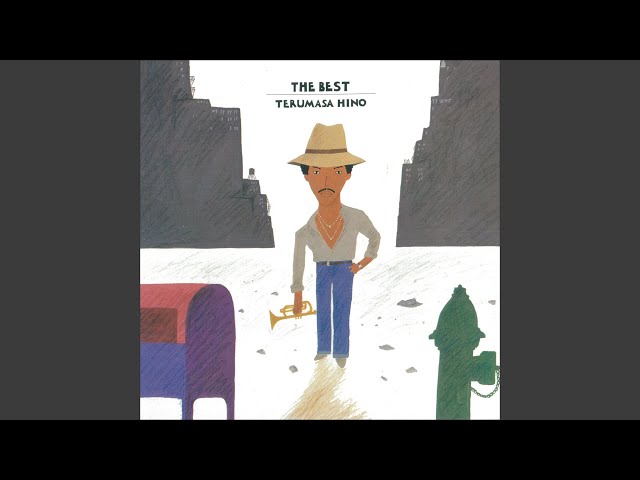
Terumasa Hino, a trumpet and cornet player whose name is etched in the history of Japanese jazz.
His achievements as a musician—such as becoming the first Japanese artist to sign with the prestigious Blue Note Records—are far too great to be summed up in a few lines.
Here, we introduce the title track from his classic 1979 album City Connection, which was also used in a Suntory White commercial.
The piece feels like the very atmosphere of 1970s New York sealed in a vacuum—an essential listen for fans of ’70s fusion, jazz-funk, and soul.
Considering that Hino had already earned high acclaim as a jazz musician even before moving to the United States in 1975, exploring how he ventured into the fusion realm in step with the times may reveal all sorts of new insights.
Masterpieces of Japanese Fusion: From Nostalgic Classics to Recent Recommendations (21–30)
DOMINO LINECASIOPEA

When it comes to Japanese fusion, many people probably think of them: the band Casiopea, formed in 1979.
“DOMINO LINE” is included on their sixth album, “CROSS POINT,” released in 1981.
Its light, brisk rhythm makes it perfect for a drive!
