

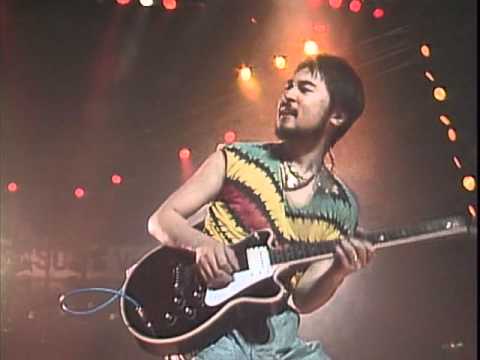

Fusion is a hybrid music genre that, while rooted in jazz, blends many elements ranging from rock and world music to electronic music and even classical.
In Japan as well, a fusion boom erupted from the late 1970s to the early 1980s, and bands and artists achieving major commercial success appeared one after another.
This time, we’re focusing on Japanese artists and bands to introduce classic tracks from Japanese fusion.
Please enjoy the brilliance of Japanese fusion—music that has greatly influenced the history of J-pop and features many key figures in the recently buzzworthy genre known as city pop!
- Ranking of popular fusion songs
- Masterpieces of Japanese instrumental music. Recommended instrumental tracks.
- [2026] Recommended Japanese Fusion Bands Summary
- Classic fusion music masterpieces. Recommended staple tracks.
- [Western Music] Classic Jazz Fusion Masterpieces: Recommended Albums You Should Listen to at Least Once [2026]
- [Selected by the pros!] 10 great bassists from the jazz fusion world
- Masterpieces of Japanese fusion—From nostalgic classics to recent recommendations—
- Best City Pop Classics: Recommended Popular Songs [Timeless & Modern]
- [2026] Masterpieces of instrumental music. Recommended instrumental tracks.
- Carefully selected Japanese songs with a Latin flavor! Recommended J-POP brimming with exotic vibes
- A roundup of instrumental fusion bands active in Japan
- The allure of surf music: a supreme healing space lured by the ocean’s tones
- [Japanese Music] Masterpieces of 2000s Pop: A roundup of hit songs from 00s J-POP
Masterpieces of Japanese Fusion: From Nostalgic Classics to Recent Recommendations (1–10)
ASAYAKECASIOPEA
One of the most renowned and commercially successful Japanese fusion bands, Casiopea’s signature classic is Asayake, also known as ASAYAKE! First released on their landmark second album, SUPER FLIGHT, in 1979, it has remained one of the band’s defining tracks, beloved for decades.
While SUPER FLIGHT itself leans melodic and poppy, Asayake stands out as a true killer tune: its freewheeling slap bass, refreshing keyboard tones, sprightly guitar comping, and dazzling technical guitar solo sound just as vibrant even past the 2020s.
Simply listening conjures images of midsummer blue skies and sea, making you want to head out for a drive.
It’s truly one of the greatest masterpieces in the history of Japanese fusion.

Ancient CapitalDEZOLVE

When it comes to the most promising young bands leading the fusion jazz scene since the 2010s, DEZOLVE surely comes to mind.
All born in the 1990s, the members have been immersed in music since childhood, launched the band in earnest in 2015, and released their major-label debut album, “PORTRAY,” in 2018.
The lead track from that album, “Ancient Capital,” which also has a music video, is a masterpiece woven from the fresh sensibilities of a new generation and outstanding technical prowess.
While grounded in traditional fusion, this piece is distinguished by phrases that use Japanese scales, truly “fusing” diverse musical elements.
If you’re looking for a young fusion band, this is a must-check!
BLUE LAGOONKōsaka Masayoshi

Masayoshi Takanaka is one of Japan’s foremost guitarists, as well as a renowned composer and music producer.
He’s invariably cited as a leading figure among fusion guitarists, but his influence extends beyond genre boundaries, making him indispensable in the history of J-pop.
Blue Lagoon, included on his fifth album JOLLY JIVE released in 1979 during the fusion boom, was issued as a single the following year in 1980 and used in a commercial tie-in, becoming a hit.
It’s a timeless masterpiece that brought Takanaka’s name into living rooms across Japan and has become a setlist staple at his concerts.
True to the album cover, it’s a refreshing number that evokes an endlessly expanding, azure summer sea, and the instantly memorable guitar riff is fantastic.
Perfect for a summer drive—highly recommended!
TRUTHT-SQUARE

It might be one of the most famous instrumental numbers in Japan, transcending the boundaries of fusion.
It’s a quintessential masterpiece that represents T-SQUARE, the pinnacle of Japanese fusion and instrumental bands.
Released in 1987, it’s the title track of their 12th album, TRUTH, which became a huge hit, and it was later issued as a single in 1991.
Chosen as the theme song for Fuji TV’s popular program F1 Grand Prix, it’s such a powerful track that it cemented the association of F1 with “TRUTH” in our minds.
Even if you don’t know F1, it wouldn’t be an exaggeration to say you’ve heard it somewhere at least once.
Its overwhelming melodicism and catchiness, the rock-driven dynamism that could blow away an average hard rock band, and the sense of speed and catharsis that makes you want to start running just by listening—these are qualities only this song delivers.
If you play it while driving, be careful not to press the accelerator too hard!
YOU BABEMatsubara Masaki

Masaki Matsubara supported Japan’s music scene for many years as a studio guitarist, contributing to countless timeless J-pop classics.
A core member of the fusion band PARACHUTE and a prolific solo artist, Matsubara left behind a rich discography.
Among his works, let’s highlight the fusion track “You Babe,” whose romantic phrases feel wonderfully soothing.
The song appears on his 1983 solo album SNIPER and features fellow PARACHUTE member and legendary guitarist Tsuyoshi Kon, who likewise played on innumerable J-pop masterpieces.
The bittersweet, tender melody creates a sophisticated atmosphere tinged with a touch of melancholy—urban, refined, and unmistakably adult.
It’s a quintessential fusion gem worthy of the name.
SUPER SAFARINative Son

As one of the bands that epitomized Japan’s fusion boom of the late 1970s to the 1980s, many of you might recall the name Native Son.
Even if you’re not familiar with the band itself, those who spent their youth back then might feel a wave of nostalgia upon hearing SUPER SAFARI, which was used in a TV commercial for Hitachi Maxell cassette tapes.
Centered around keyboardist Takehiro Honda and saxophonist Kosuke Mine, Native Son’s signature track SUPER SAFARI is a classic fusion number built around an ear-catching, melodious sax phrase, and the tempo change in the latter half that shifts into high gear is just irresistibly cool.
As an aside, the 7-inch single’s jacket is amusing: in a quintessentially fusion-like beach setting, the band members are somehow dressed for winter while performing.
Try hunting it down at your local record shop.
UnicornWatanabe Kazumi

Many who remember those days will recall it as the jingle from Hitachi’s audio brand “Lo-D”! This classic was released in 1980 by Kazumi Watanabe, who made a sensational debut in 1971 as a “17-year-old guitar prodigy” and has since flourished far beyond the boundaries of the jazz-fusion world.
It appears on the 1980 masterpiece album “TO CHI KA,” produced by renowned vibraphonist Mike Mainieri, and was also released as a single.
Both the album and the single were hits, making it not only one of Watanabe’s signature works but also one of the most beloved tracks in the history of Japanese fusion.
Composed by Watanabe himself, the track thrills with technically dazzling yet melodic guitar work, and the vibraphone solo in the latter half is impossibly cool.
The formidable rhythm section—Marcus Miller on bass and Steve Jordan on percussion—locks in tight and elevates the entire performance.