
![[Japanese Style] A roundup of musical instruments long cherished in Japan](https://i.ytimg.com/vi_webp/yr3f5FCIFMI/maxresdefault.webp)

There are countless musical instruments all around the world, but when you focus on specific countries or regions, you may find there are instruments you didn’t even know existed.
Conversely, as you look into it, you might be surprised to discover, “Wait, did that instrument actually originate from that country?”
In this article, we’ll introduce traditional Japanese instruments that have long been beloved in Japan.
It’s also recommended for anyone looking for a new hobby, such as those who want to learn to play an instrument!
- Traditional Japanese Music: Famous Pieces of Gagaku and Kagura. Recommended Traditional Japanese Music
- [Japan] A collection of J-pop with a traditional Japanese (wa) vibe and Japanese-style taste
- Spirit of Wa: Masterpieces for the Koto — Japan’s Beautiful Melodies
- [Japanese-style Piano Pieces] A selection of recommended works with a pleasantly Japanese flavor
- [J-Pop] A Compilation of Songs with Awesome Drums [2026]
- [J-Pop] A collection of upbeat songs: tracks that boost your mood
- The Spirit of Japan: A Collection of Famous and Popular Shamisen Pieces
- 【2026】A Collection of Beloved Japanese Classics Worldwide【JAPAN MUSIC】
- [Music-themed Educational Toys] A roundup of toys that let you enjoy sounds
- [J-POP] I want to listen to songs with impressive, beautiful piano tones! Recommended piano cover tracks
- [Intoxication and Music] A collection of pleasant Japanese songs to accompany your drinks
- Challenge percussion! A collection of songs I want to play on the cajón
- [Japanese-style BGM] Beautiful tones woven from Japanese tradition
[Wa] A roundup of traditional Japanese musical instruments loved since ancient times (1–10)
koto (Japanese zither)
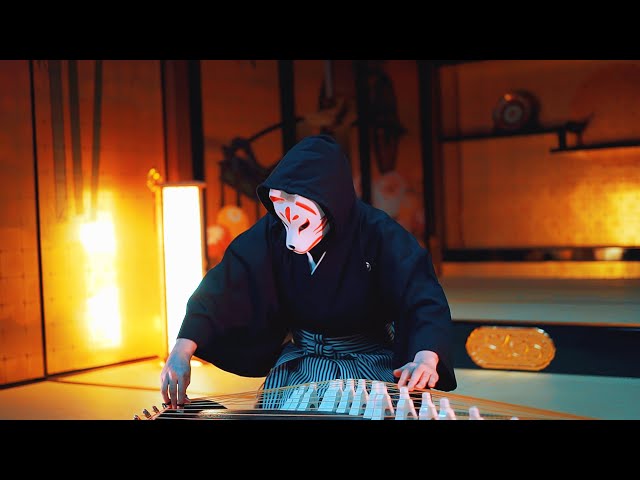
Among traditional Japanese instruments, the koto is the one that can create an elegant, refined splendor.
「“琴”と書かれることもありますが、実際には別の楽器を指します。」
With the koto (箏), you adjust the pitch using movable bridges, whereas with the kin (琴), you adjust the pitch by pressing the strings at different points.
The koto’s history dates back to the Nara period; it was brought from China during the Tang dynasty and was mainly appreciated by the aristocracy, especially in Kyoto.
When I was a child, my grandmother studied the koto, so we had one at home, but to me it just seemed like a very large, solid wooden instrument…
These days you can hear some really cool koto performances, including collaborations with orchestras and pop hits, so why not check them out?

bass drum

The odaiko drum is often seen at festivals in Japan, making it perhaps the most familiar traditional Japanese instrument.
Taiko has a long history—dating back to the Jomon period—and was reportedly used as a means of conveying information.
A cylindrical wooden body is hollowed out, cowhide is stretched over it, and the surface is struck with wooden sticks called bachi to produce sound.
Solo performances are powerful, but ensemble playing is even more dynamic and overwhelming.
Why not experience it for yourself, letting the deep, chest-thumping resonance of the drums wash over you?
ryuteki (a Japanese transverse bamboo flute used in Gagaku)

One of the wind instruments played in gagaku is the ryūteki.
It’s a transverse bamboo flute distinguished by a mouthpiece on the front and seven finger holes.
Its name is said to come from its tone, which was likened to the cry of a dragon rising skyward.
While it resembles a Western flute, it has the elegant aura unique to traditional Japanese instruments, and its sound can fill you with a solemn mood.
If you’re interested in Japanese instruments, give it a try! There are even set bundles that include a ryūteki and a CD with practice pieces.
biwa (Japanese lute)

The biwa is one of East Asia’s stringed instruments that captivates with its oriental tone.
Many people may have learned about the biwa from the ghost story “Mimi-nashi Hōichi” (Hōichi the Earless).
You might also picture a blind monk playing it.
Its origins are said to trace from Persia to China, and it was introduced to Japan by the Nara period.
It’s typically played by plucking the strings with a plectrum, producing a sound whose distinctive timbre can truly move you.
The narration of The Tale of the Heike accompanied by biwa performance is nothing short of marvelous.
Do give it a listen!
shinobue (Japanese bamboo flute)

The shinobue, a Japanese instrument similar to the flute, produces an even more delicate tone than the shakuhachi.
It’s made from bamboo, and aside from a coat of lacquer that highlights the natural beauty of the material, it has no other decoration.
Although the shinobue may look like a uniquely Japanese instrument, it’s said to have spread among common people from the Chinese instrument known as the ryūteki.
Since flutes are familiar instruments often learned at school, if you’re interested in trying a traditional Japanese instrument, I highly recommend giving the shinobue a try!
shamisen

Isn’t the shamisen one of those Japanese instruments that can project coolness just by being strummed? It’s said to have been brought over from the Ryukyu Kingdom during the Sengoku period.
Its hallmark is producing sound by plucking its three strings with a plectrum (bachi), and it resembles the sanshin used in Okinawa and the Amami Islands.
While the shamisen uses cat or dog skin stretched over both sides of the body, the sanshin uses python skin.
The shamisen isn’t an instrument you often get the chance to handle, which is precisely why it might be worth adding it to your list of things to learn.
shakuhachi

The shakuhachi, a traditional Japanese instrument with a unique tone, is a mysterious flute that resonates especially with Japanese people and awakens a sense of Japanese identity.
It’s said to have been brought from China’s Tang dynasty during the Nara period.
The name shakuhachi comes from its original length: one shaku and eight sun.
In period dramas, the komusō monks wearing deep straw hats are often shown playing the shakuhachi.
Today, many shakuhachi artists are active and the instrument frequently appears in collaborations with hit songs, so if you’re interested, be sure to give it a listen.