

Masterpieces and hit songs of 80s Japanese pop (kayōkyoku)

The ’80s were full of hit songs, weren’t they?
Here are some especially recommended classics and hits from the era’s signature kayōkyoku tunes.
It’s a timeless, legendary playlist that rewrote the history of Japanese music—one we want both those who spent their youth back then and those who didn’t to listen to.
We feature a wide range of artists, from bands and singer-songwriters to idols.
A karaoke contest limited to this decade would be a blast, wouldn’t it?
- Popular Nostalgic Hits and Classics Ranking [1980s Japanese Music Ranking]
- A collection of nostalgic Japanese hit songs from the 1980s that still linger in our ears
- Classic and hit Japanese pop songs from the nostalgic 80s
- [Songs from the Showa Era] Introducing classic tracks that are easy to sing at karaoke.
- Classic and hit songs by nostalgic Japanese pop idols of the 80s
- Top 1980s Female Singer-Songwriters: Popular Songs Ranking [2026]
- Recommended youth songs for people in their 80s: A collection of nostalgic classics
- A special feature on classic and hit songs by bands that were active in the 1980s
- Nostalgic yet fresh!? Classic masterpieces of Japanese rock from the 1970s and 1980s
- Classic nostalgic summer hits from the ’80s. A roundup of summer songs.
- [1980s J-Pop] Popular winter songs: from chart-toppers to hidden gems!
- Including global hits! 80s songs popular on TikTok
- Thrilling to Cool Showa-Era Tunes! Classic Songs from Female Singers and Artists of the Showa Period
Masterpieces and Hit Songs of 80s Kayōkyoku (31–40)
Return to Myself ~ I won’t, I won’t, summer.Hamada Mari

It was released in 1989 as Mari Hamada’s ninth single.
It was used as a campaign song for Kanebo Cosmetics and debuted at No.
5 on the Oricon Singles Chart.
The rock style is really cool.
B BLUEBOØWY
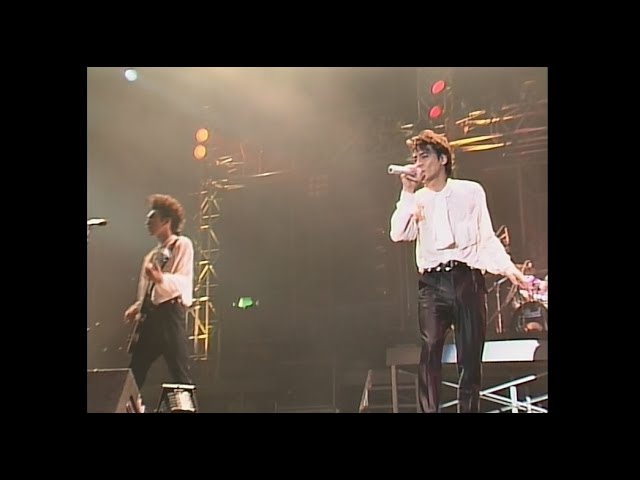
A track from the 1986 album BEAT EMOTION.
BOØWY is a four-piece rock band formed in 1981, centered around Kyosuke Himuro and Tomoyasu Hotei from Gunma.
The original title of this song was “True Blue.” Its straightforward rock-style beat meshes perfectly with Kyosuke Himuro’s vocals, making it a truly cool song.
Season in the SunTUBE

Included on the 1986 album “THE SEASON IN THE SUN.” TUBE is a four-member band from Kanagawa Prefecture that debuted in 1985.
With rhythms and melodies that evoke an open, tropical vibe and high-toned vocals, this is the kind of song that lets you strongly feel their signature “summer” just by listening.
Roppongi HeartbreakAn Ruisu

It was released in 1984 as Ann Lewis’s 25th single.
The song became a big hit, gaining strong support on cable requests and in karaoke.
It was used as the commercial song for “Warikka Highball CAN.” The lyrics of this song and of her 27th single, “Aa Mujou,” are said to be modeled after the singer Koji Kikkawa.
GET WILDTM NETWORK

Included on the 1987 album “Gift for Fanks.” It was used as the ending theme for the anime City Hunter.
The meticulously crafted synthesizer melody and the chopper-style bass groove are really cool.
Masterpieces and hit songs of 80s kayōkyoku (41–50)
MonicaYoshikawa Koji

This song was released as a single in 1984 and also served as the artist’s debut.
It was chosen as the theme song for the film Sukampin Walk, in which Koji Kikkawa himself starred.
The lively rhythm pairs perfectly with his vocals.
It’s a thrilling, cool classic.
A street corner where even lovers get wetNakamura Masatoshi

It was released in 1982 as Masatoshi Nakamura’s 17th single.
It’s a mood kayōkyoku song written and composed by Keisuke Kuwata.
It served as the theme song for the film “The Kamata March” and was also used as an insert song in the Fuji TV dramas “Omakase Kudasai” and “Omakase Kudasai, Ore no Nyōbō-dono.”