

Jazz commercial songs. Popular commercial songs.

Jazz has a stylish, sophisticated image, and it’s easy on the ears—perfect as background music, right?
You often hear it as BGM in cafes and restaurants, where it helps create a calm, relaxed atmosphere.
And those famous jazz tunes are huge hits in commercials, too!
From global classics known as jazz standards to jazz arrangements of pop songs and anime themes, a wide variety of jazz numbers have been used in commercials over the years.
In this article, we’ll introduce a whole range of jazz featured in commercials all in one go!
Why not take this as a chance to get interested in jazz?
- [Topic] An ultra-stylish commercial jingle: the secrets behind the catchy track
- The Royal Road of Jazz: Classic modern jazz masterpieces. Popular tracks you should listen to at least once.
- [I want to hear it again!] Songs from Suntory commercials. Popular commercial jingles
- [From timeless classics to the latest hits] A roundup of catchy commercial songs
- Classic swing jazz tunes. Recommended popular songs.
- Coffee commercial song. Popular commercial jingle.
- [Western Jazz] A Special Feature on Standard Numbers You’ve Heard at Least Once
- Nescafé commercial songs: timeless classics, both new and nostalgic, that suit a rich aroma
- [2026] A Collection of Classic Japanese Ballads with a Jazz Flavor
- Great for karaoke too! Jazz classics you’ll want to sing at least once
- Catchy Commercial Jingles and Ad Songs Featured on YouTube Shorts
- [Piano Pieces from Commercials] Introducing Moving Masterpieces That Resonate with the Heart
- Ranking of Popular Jazz Songs
Jazz commercial songs. Popular commercial songs (21–30)
Someone To Watch Over MeGeorge Gershwin

A famous jazz standard used in commercials for Secom and elsewhere.
Many of Gershwin’s works have been used in musicals and as songs within plays, and this piece is one of the most popular among them.
Please enjoy the 1926 piano recording.
There are arrangements for various instruments, with the orchestral versions being quite powerful, and the uptempo renditions are wonderful as well.
What A Wonderful WorldLouis Armstrong
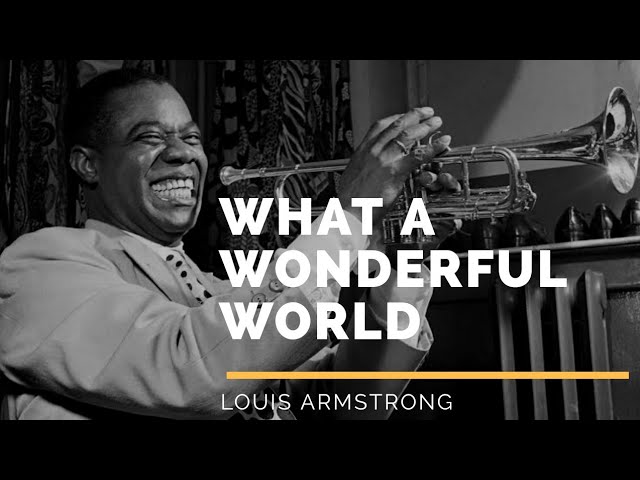
Songs that are used very often in commercials frequently aired even by major companies like SECOM, Honda’s Civic, and Sony’s Handycam.
Known as an anti–Vietnam War jazz piece as well, it has appeared in textbooks in Japanese under the title “Kono Subarashiki Sekai” (“What a Wonderful World”).
One of Louis Armstrong’s signature songs—made all the more captivating by his smile and the tone of his voice.
Jazz commercial songs. Popular commercial songs (31–40)
When You Wish Upon a StarKeith Jarrett Trio

A Wish Upon a Star has been used extensively, including at Tokyo Disneyland, in major financial industry campaigns, and as insert songs on TV programs.
This time, please enjoy it performed by the modern master trio, the Keith Jarrett Trio.
It’s a piece that’s also well known in music box arrangements.
Since it’s actually used in attractions within Disneyland, it’s a wonderful selection whose dreamy melody can bring back the day’s memories for anyone who hears it.
When you’re smilingBillie Holiday

It was used as the song in SoftBank’s “iPhone 4” commercial.
Since Louis Armstrong—affectionately known as “Satchmo,” a jazz trumpeter and vocalist—recorded it in 1929, the piece has become a jazz standard.
My Favorite ThingsJUJU

This is a song by JUJU, a singer who continues to be active while engaging with various scenes like hip-hop and R&B.
Although she’s involved with many genres, she says the one that has influenced her the most is jazz.
It’s well known that her name, JUJU, was taken from the title of an album by jazz saxophonist Wayne Shorter! Here you can see a cool side of JUJU that’s different from the one who sings hit songs.

Di-gue ding dingMichel Legrand

Di-gue ding ding is a song used in a series of Suntory beer commercials (The Malt’s, Diet Draft, Magnum Dry) and in Shiseido’s “uno FOGBAR” commercials.
This time, please enjoy it performed by Michel Legrand.
Since he himself is 85 years old, many people seem to think it’s quite an old tune, but this piece is actually his own composition.
He originally studied at the Paris Conservatory, learning piano accompaniment and more, and made his name primarily in film music while also thriving as a jazz pianist and a jazz singer.
With its mature, assured composition and performance, it’s the kind of piece that could even elevate the stature of the products it accompanies.
I’ve Got RhythmHiromi Uehara

It was used in many commercial songs, including Panasonic’s “Steam Oven Range Bistro,” House Foods’ “Tongari Corn ‘Blue Sky Tongari Band’” version, and Mitsui Fudosan’s “Tokyo Midtown.” Originally, it was an insert song from a musical by the Gershwin brothers, but later Gene Kelly sang and danced to it in An American in Paris.
Since then, it has become a jazz standard covered by many musicians.