

A classic song covered by major artists: cover versions of Spitz’s “Kaede.”


“Kaede,” a ballad by Spitz, is extremely popular.
With its heartrending lyrics, this song is incredibly captivating and has been covered by numerous artists.
You can probably think of a few artists who’ve covered it yourself, right? In this article, we’ll introduce many such covers—starting with the much-discussed versions and those included on Spitz’s compilation albums.
There are covers by a wide range of artists and vocalists, each transforming “Kaede” with their own unique color.
Give them a listen and see which one you like best!
A famous song covered by major artists: Top 10 covers of Spitz’s “Kaede” (1–10)
MapleShibuya Ryuta

This is the version by Ryuta Shibutani, the frontman of SUPER BEAVER who has won support with his fiery live performances.
It was featured as an insert song in a film released in December 2025, and, with an arrangement by Yaffle—who handled the film’s music—it’s expressed with a grand, expansive sense of scale.
Different from the expressions he shows with the band, his vocals resonate as if closely accompanying the film’s worldview, vividly reflecting the story’s sense of loss and hope.
The album “Kaede (Film) Original Soundtrack” also includes a cover by Tomaki and the original song by Spitz, letting you compare the nuances woven by each singer’s voice.
Why not immerse yourself in the gentle yet powerful vocals while picturing the scenes from the film?
MapleTomei

This is the version by the much-talked-about singer-songwriter Tomyo, produced as an insert song for the film “Kaede.” Discovered by RADWIMPS’ Yojiro Noda, her voice overlaps with Yaffle’s understated arrangement to draw out the story’s poignancy even more deeply.
In the film, which premiered in December 2025, the piece is used repeatedly as a key motif, moving audiences to tears.
As director Isao Yukisada chose her for evoking “the boundary between life and death,” her singing is marked by a translucent clarity tinged with shadow.
It’s also included on the “Kaede” soundtrack album—one you’ll want to savor slowly along with the film’s afterglow.
Different from Spitz’s original, its delicate, storyteller-like resonance is part of its charm.
MapleCrystal Kay

This is the version sung by Crystal Kay, who has been active on the front lines since her debut at 13.
Featured at the very beginning of her first cover album, “I SING,” released in April 2021, this track offers a fresh, synth-driven electronic arrangement that contrasts with the original.
Arranged by Kazuhiko Maeda, the warm yet dance-influenced sound design brings out the charm of her voice.
Beneath the poignancy, a core strength quietly emerges, making it perfect for a night drive or moments of solitary reflection.
Savor a sophisticated, urban atmosphere that’s distinct from Spitz’s take.
Maplehoshino disuko (papā)

A cover by Hoshino Disco from the comedy duo Parpar.
He beautifully evokes the poignant scene of a painful farewell with his characteristically clear, high-toned voice.
Leveraging his strength in the upper register, the soaring vocals in the chorus are deeply moving.
The video released on YouTube in December 2020 has racked up over 1.5 million views.
Singing over a simple karaoke backing allows the allure of his voice to come through directly.
In November 2021, he also performed it on the TV show “THE Karaoke★Battle,” which drew a huge response.
This work showcases his ability as a vocalist beyond the bounds of comedy.
It’s a must-listen for those who want to simply revel in great singing or are looking for a straightforward cover that honors the original melody.
MapleNatsuiro Matsuri & Rikka
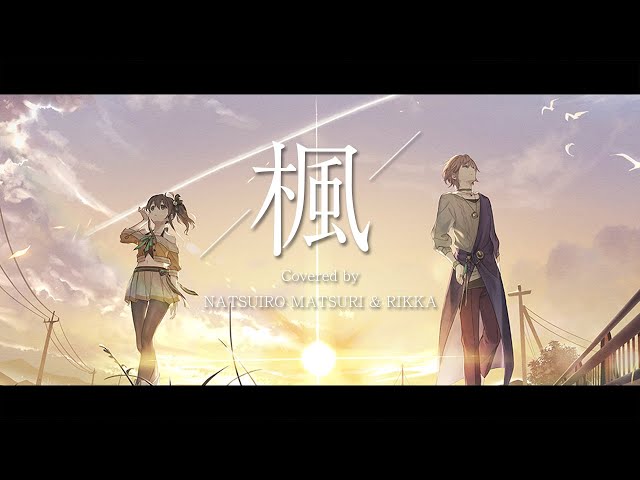
This is a duet version sung by Natsuiro Matsuri and Rikka, who belong to the virtual talent agency hololive production.
The original song is a single by Spitz released in 1998, widely known as an insert song for a TV drama.
The poignant lyrics, themed around parting and memory, are beautifully expressed by Natsuiro Matsuri’s clear, translucent high notes and Rikka’s gentle, enveloping low tones.
Released in September 2020, this work features professional-grade production—Bernis handled the mixing—and it’s crafted so finely that simply listening feels purifying.
The overlap of male and female vocals brings out a different narrative breadth from the original.
MapleBENI

This is a boldly reimagined version with entirely English lyrics by BENI, the bilingual songstress from Okinawa.
While retaining the original song’s heart-wrenching poignancy, it’s refined with an R&B flavor.
Arranged by mabanua, the track has been elevated into a mature ballad that melts seamlessly into a city night.
It’s included on the popular cover album “COVERS 3,” released in December 2013, and this series became a record-breaking hit with total sales surpassing one million copies.
Different from Spitz’s original, the smooth resonance unique to English lyrics and her lustrous vocals are so pleasing—you’ll want to play this one for a relaxing solo night.
MapleNakamura Emi

This is the NakamuraEmi version, hailing from Atsugi City in Kanagawa Prefecture, whose powerful vocals are unimaginable from her petite frame.
Together with producer Hiroshi Kawamura, she crafted an arrangement notable for its simple tones of acoustic guitar and piano.
Her signature style—carefully savoring each and every word—beautifully overlaps with the bittersweet worldview of Spitz’s classic.
After being performed as part of a live project in October 2022, it was recorded and included on the single “Haruku,” released in March 2024.
It’s a track where warmth and loneliness coexist, one you’ll want to listen to at autumn dusk or when you want to quietly immerse yourself in music alone.