

[Elementary School] Let's Learn Kanji with Songs! The Fun Kanji Song

Elementary school students, are you having trouble memorizing kanji?
With kanji, it’s not just the shapes—you also have to learn the correct stroke order, on-yomi and kun-yomi readings, stroke counts, radicals, and more.
On top of that, there are 80 characters in first grade, 160 in second grade… in fact, you need to learn over 1,000 characters by graduation!
Once you develop a dislike for kanji, it can be tough to catch up.
In this article, we’ll introduce “kanji songs” that make learning kanji fun!
They focus mainly on lower-grade kanji, but middle- and upper-grade students should give them a listen for review, too.
- Learn by Playing! Recommended Games with a Kanji Theme
- [3rd and 4th Graders] Karaoke Songs That Are Easy for Upper Elementary Students to Sing
- A song that makes learning the times tables fun
- [Elementary School] Karaoke songs that are easy for lower grades to sing
- [Playable from lower grades] Japanese language games and activities
- [For Upper Grades] Easy-to-sing songs for elementary school students. Popular karaoke hits that get everyone excited
- How many can you solve? Brain-flexing math riddle quiz
- A game where you can learn the multiplication table while playing
- The ABC Song: A fun alphabet song you can sing along to.
- What songs are popular among elementary schoolers? Well-known and sing-along favorites! [2026]
- Good songs recommended for junior high school students. Classic and popular Japanese hits.
- Recommended Japanese pop songs for elementary school students to sing at karaoke
- [Even If You're Tone-Deaf, No Worries] Recommended for Elementary School Kids! Popular Karaoke Songs That Are Easy to Sing
[Elementary School] Learn Kanji with Songs! The Fun Kanji Song (1–10)
On-kun Reading Song (1st Grade)
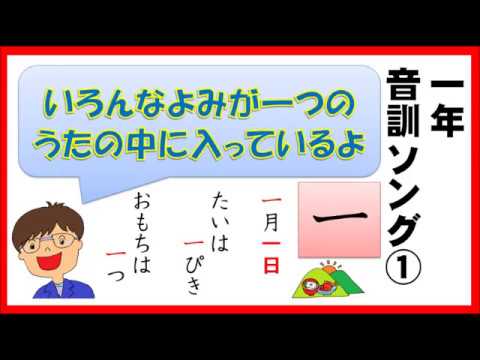
A song that helps you learn all the kanji taught in first grade is “Onkun Song (First Grade).” Each kanji comes with example sentences like a karuta card, and by repeating the same character, you can memorize it.
Start by singing along to the lively rhythm.
Once you have the lyrics down, try memorizing and singing them, or writing them in your notebook.
The lyrics are structured like a diary, so they’re easy for lower-grade elementary students to remember.
It’s also a good idea to create your own original lyrics based on real events.
Be sure to listen to this kanji song that lets you learn both on-yomi and kun-yomi at the same time.

Song of Radicals

If you want to memorize radicals—the parts often chosen to show a kanji’s meaning—‘The Radicals Song’ is highly recommended.
It’s a tune that teaches how kanji came to be, set to a lively melody.
The lyrics cover everything from the history of kanji itself to the background of how radicals were born.
It introduces radicals in coherent groups like “grass” and “person,” making it easy for elementary school students to visualize.
Let’s enjoy learning radicals to rhythmic music and dance! It’s also a great idea to study kanji grouped by their radicals.
Fish Lovers: The Song of Fish Radicals

When it comes to songs that help parents and children enjoy learning fish-related kanji together, “Osakana Daisuki ~Sakana-hen no Uta~” is a top pick.
With its rhythmic melody and dance, even elementary school students can have fun giving it a try.
From dialogue-style lyrics to mnemonic wordplay, the song approaches fish-themed kanji in various ways.
Fish kanji aren’t easy for elementary schoolers, but pairing them with unique phrases makes them easier to remember.
For upper elementary students, it can also help overcome any dislike of kanji.
Try enjoying and learning fish kanji while imagining the seasons and natural scenery.
[Elementary School Students] Let's Learn Kanji with Songs! The Fun Kanji Song (11–20)
Song of the kanji learned in first grade of elementary school

The perfect song for elementary school students to preview or review kanji is “The Kanji Song for First Graders.” It was created by S5, a male group that balances being comedians and idols.
This unique track is themed around the 80 kanji characters learned in first grade.
Over a light, bright guitar sound, their passionate choral work unfolds.
With a melody enjoyable for both adults and children, it’s great for singing together with family or friends.
Why not have fun and learn kanji at the same time?
Radical Song (Leg)

A song themed around the radical “ashi,” which appears as the lower part of kanji that are divided into upper and lower components.
A notable feature is that many of the images evoke the human body, states of objects, and natural scenery.
For the “ashi” radical, in some cases the name directly reflects the original form, while in others both the form and the name have changed.
In either case, the illustrations and lyrics provide clear explanations, making it easy to learn smoothly.
It’s a song suitable for learning radicals from the lower elementary grades, or for studying them together with kanji in the upper elementary grades.
By understanding the origins of kanji, learning will become more enjoyable.
Radical Song (Kamae)

A song about the radicals called “-gamae,” which are mainly composed to enclose from the outside.
Many of these radicals were created with motifs of human body movements or the way objects are surrounded.
Among the many radicals, these have origins that are easy to understand, so they should be easy for elementary school students to remember.
They beautifully depict everything from angular shapes to rounded ones.
For “hokogamae” and “shikigamae,” you can remember them easily by imagining the shapes of weapons.
Be sure to listen to this song of easy-to-write, easy-to-remember radicals.
It’s also recommended to compare the kanji you’ve learned with the origins of their radicals.
Radical Song (Right-side component)

Among radicals that are divided and classified by left-right or top-bottom placement, the ones that mainly appear on the right side are called tsukuri.
This song covers 20 such radicals, explaining their origins as well.
Many are inspired by the shapes of people or objects, so it’s easier to understand them by acting them out or checking with visuals.
Because each radical has clear characteristics, the trick is to memorize them together with illustrations.
Start by singing along to the light, catchy melody.
It’s a kanji song suitable for a wide range of learners, from lower elementary to upper grades.
Give it a try at school or at home!