

![[People・Songs・Heart] A Collection of Miyuki Kawanaka’s Easy-to-Sing Songs [2026]](https://i.ytimg.com/vi_webp/Wgqc7S2GeK4/maxresdefault.webp)

Speaking of Miyuki Kawanaka, she debuted in her teens under the name Harumi Kasuga, then, after several years of groundwork, changed to her current name in 1977.
In 1980, one of her signature songs, “Futari Sake,” became a hit, and she appeared on the following year’s Kōhaku Uta Gassen.
She remains a leading enka singer, still active even in the Reiwa era.
For those who want to try singing many of Kawanaka’s celebrated songs at karaoke, this article highlights and compiles relatively approachable tracks that are easier to take on.
Singing like Kawanaka—effortlessly handling everything from soaring high notes and sultry low tones to powerful vocals that give you a strong push—is no easy feat, but let’s practice step by step so we can get closer.
- The Most Idol-Like Star in the Enka World: Easy-to-Sing Songs by Kiyoshi Hikawa
- [Mitsuko Day] A Collection of Easy-to-Sing Songs by Mitsuko Nakamura [2026]
- Queen of Local Songs: Kaori Mizumori's Easy-to-Sing Tracks
- [For Women] A roundup of enka songs that can score high in karaoke
- [For Women] Masterpiece Enka Songs with a High Degree of Difficulty
- Queen of Enka: A roundup of Aki Yashiro’s easy-to-sing songs
- [For Beginners] Recommended Enka Classics for Karaoke — Women Singers Edition
- [Mysterious Enka] A Collection of Easy-to-Sing Songs by Midori Oka [2026]
- Classic enka songs you’ll want to sing at karaoke: recommended popular tracks
- [Tears and Alcohol] A Collection of Kaori Kozai’s Easy-to-Sing Songs [2026]
- Enka songs that are easy for men to sing: a roundup of tracks to try at karaoke
- [Original Endoru] A Collection of Easy-to-Sing Songs by Junko Ishihara [2026]
- The Allure of Deep Vocals: A Collection of Yutaka Yamakawa’s Easy-to-Sing Songs [2026]
[People • Songs • Heart] A Collection of Miyuki Kawanaka’s Easy-to-Sing Songs [2026] (1–10)
Lantern flowerkawanaka miyuki

Released in 1996 and a long-running hit, “Chochin no Hana” is one of Miyuki Kawanaka’s signature songs of the 1990s, with lyrics by Yu Aku and music by Hiroshi Madoka.
With lanterns and sake as motifs, Kawanaka’s clear, beautiful voice shines as she carefully sings of life’s joys and sorrows without making it overly sad.
The slightly wistful chorus carries a kayōkyoku flavor and is very easy to remember, and since the overall range isn’t very wide, it’s a song that even beginners to enka will find relatively easy to sing.
Rather than emphasizing the typical enka kobushi ornaments, practice producing a delicate yet lustrous vibrato.

a coquettish moodkawanaka miyuki

With its bouncy rhythm and Japanese-style arrangement, “Enya na Kibun” is the kind of song that makes you want to clap along and sway your body—you should definitely try singing it at karaoke.
Released in 2009 as a single by Miyuki Kawanaka, it’s a track that fills you with energy as you listen to her playful yet somehow gentle voice.
Kawanaka’s signature vibrato appears throughout, but there aren’t any intimidating high notes, and it’s a song you can enjoy even if you can’t do vibrato.
So first, try singing it without overthinking.
Once you get used to it, practice adding a bit of vibrato little by little!
To my belovedkawanaka miyuki

Listening to the chorus of this song, many people who know the ’90s well probably recalled the TV commercial for House Foods’ instant ramen “Umaissho.” Released in 1994 as a single by Miyuki Kawanaka, it’s packed with J-pop flavor and sits a bit apart from classic enka, making it an approachable choice for karaoke even if you’re not into full-on enka.
Of course, techniques honed in enka—like vibrato—appear throughout, but it’s nice that the melody still feels great to sing even without vibrato.
Once you’re comfortable, listen closely to Kawanaka’s original performance and try gradually incorporating some vibrato.
Anemone flaccida (nirinsō; literally “two-flowered anemone”)kawanaka miyuki
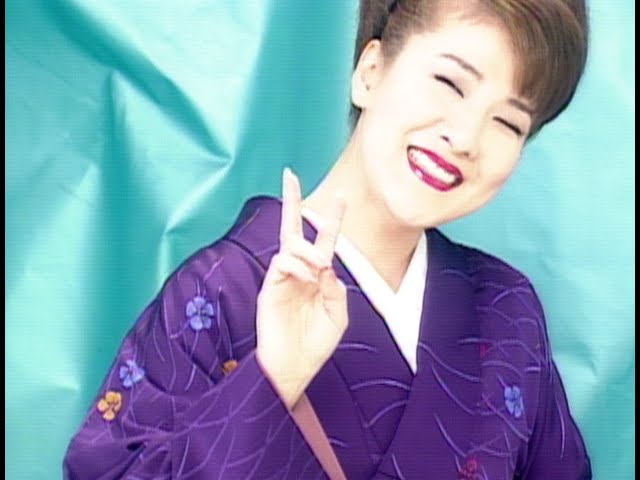
Among Miyuki Kawanaka’s songs, “Nirinsō” stands out as one of the most well-known, with sales reaching one million copies.
Kawanaka herself released an album titled “Shiawase Enka,” and it’s fitting that “Nirinsō” is the first track—its bright, upbeat tone is distinctive and seems to symbolize the “sunny” side of enka, which expresses the full spectrum of life’s emotions.
For enka fans, it needs no introduction, and it’s also immensely popular at karaoke, so there’s no need for excessive commentary.
For beginners, however, practicing this song can be a great way to learn fundamental enka techniques like vibrato and kobushi.
If the high notes are tough, adjust the key to suit your voice, study the wonderful lyrics, and sing with feeling.
Lily of the Valley — Kimi-kagesōkawanaka miyuki

Released in 1999, this song—one of Miyuki Kawanaka’s signature tracks—sold 600,000 copies, won the Gold Award at the Japan Record Awards, and was performed on the NHK Kouhaku Uta Gassen.
Titled “Kimikagesou ~Suzuran~” (“May Lily of the Valley”), it’s a popular number that many people likely sing at karaoke.
While it has the classic, unpretentious pathos of mainstream enka, the vocal range is fairly wide.
The soaring high notes in the chorus are impressive, but the low notes in the A section can be quite challenging.
Adjust the key to suit your voice and aim for a performance with clear dynamic contrast.
Desert of the Moonkawanaka miyuki

It’s a famous 1990s song by Miyuki Kawanaka, notable for its graceful strings and a hint of kayōkyoku flavor.
Kawanaka also holds back on overt enka-style techniques in her vocals, so it might be an easy entry point for those who don’t yet feel confident singing full-on enka.
The overall vocal range is relatively narrow, the pitch isn’t very high, and the melody is easy to remember, so many people will likely find it comfortable to sing at karaoke.
One point to watch: be careful not to let it become too flat or monotonous—focus on clearly articulating the lyrics as you sing.
Bungo Channelkawanaka miyuki

Released in 1988 as a single by Miyuki Kawanaka, “Bungo Channel” is a masterpiece by the legendary duo Akuyu and Takashi Miki, who produced countless classics in Japanese music history.
It is one of Kawanaka’s signature songs, frequently covered by subsequent enka singers and highly popular in karaoke.
It’s a quintessential enka number steeped in a melancholy that resonates with the Japanese heart.
While it fully incorporates hallmark enka techniques such as vibrato and kobushi, the melody itself isn’t overly complex, making it relatively easy to sing.
When performing it, try to be mindful of the contrast between the calm A-melody and the chorus that highlights soaring high notes, and aim to express that contrast effectively.