

Kids go wild! Popular hand games and fun sing-alongs

Kids love fingerplay! When the teacher cheerfully sings and moves their hands, the children’s eyes light up as if to say, “What’s starting?” They gaze intently or try to imitate, showing such adorable reactions.
Fingerplay is essential in early childhood settings—for introducing activities or drawing children’s attention.
So this time, we’re introducing popular fingerplays and action songs for kids.
From classic routines often used in nurseries and kindergartens to trendy new ones, we’ve got plenty that will captivate children.
Find options that match their interests and age, and give them a try!
- [Hand Play] Popular with kids! A collection of trendy hand-play songs and nostalgic traditional children’s songs
- [Childcare] Fun Rhythm Play! Recommended Games and Hand-Clapping/Hand-Play for Kids
- Get excited! A list of popular and fun hand games that captivate children
- Popular hand games and hand game songs for toddlers and children! Full of ideas for childcare/early childhood education.
- [Parenting] Parent-child bonding! Hand-play songs and traditional nursery rhymes collection
- [For 1-year-olds] Fun Together! Recommended Songs and Hand Play Collection
- Traditional Games: Fun Old-Time Play. Popular Activities Useful in Childcare
- Useful for childcare! Today’s recommended recreational activities, including fingerplay and games!
- Hand games toddlers and infants can do. Popular hand play songs in childcare
- [For 0-year-olds] Recommended songs for babies: A special feature on bonding play and traditional nursery rhymes
- [Children's Songs] Cute songs recommended for childcare. List of popular nursery rhymes.
- [Music Play] Children’s Recreational Music: Rec Songs You Can Sing and Play
- Recommended for daycare activities! A Halloween song you can sing and play with
Kids will love it! Popular hand games and fun sing-alongs (11–20)
What should I be when I grow up?

Ooki-kunattara Nanni Narou (“What Will I Be When I Grow Up?”) is another recommended fingerplay song that you can enjoy while letting your imagination grow.
First, you raise one finger, pretend it’s a syringe, and play the role of a doctor.
Next, you use two fingers as scissors and become a barber, then three fingers as a whisk to become a baker—adding more fingers each time to take on different jobs.
Children can watch with excitement, wondering, “What will I be next?” and it can also inspire them to think about their future dreams.

Play song ‘On the Bus’Sakushi/Sakkyoku: Taniguchi Kunihiro

When it comes to things little kids love, both boys and girls, vehicles like cars and buses are at the top of the list.
This is perfect for children who love going out or often draw buses and cars in their pictures.
This song is a fun activity where you sit side by side with your child and pretend to drive a bus with simple motions.
You can also place the child on someone’s lap and bounce your legs to mimic the bus’s vibrations—kids will be delighted.
It’s a great recommendation for rainy days or times when you can’t go outside.
From inside the cabbage
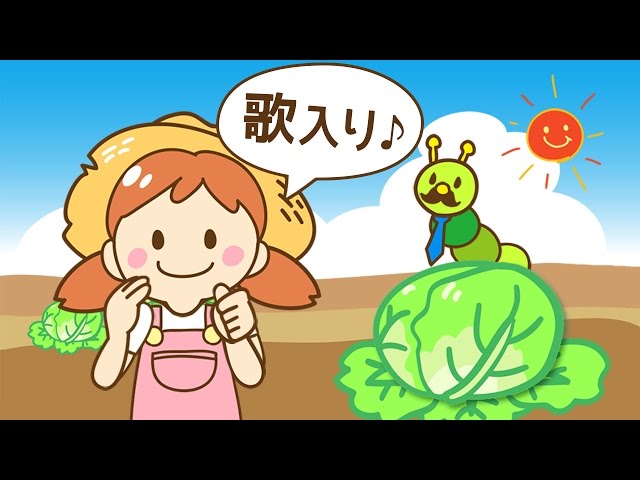
Here is an introduction to the hand-play song “From Inside the Cabbage.” This is a game where you use both hands in time with the lyrics, pretending your hands are a cabbage.
One by one, little caterpillars pop out from inside the cabbage.
Since you extend your fingers in order, it might be a bit difficult for infants, but watching them imitate the teacher and sing along is absolutely adorable! And the way the hands come together at the end to become a butterfly is super cute, too!
five melon breadsSakushi: Nakagawa Hirotaka / Sakkyoku: Igirisu dōyō

Derived from a British nursery rhyme, the fingerplay “Five Melon Buns” captivates children with its regular rhythm and fun actions.
The phrases using numbers from one to five, repeated over and over, can help children naturally learn how to count.
The frequently appearing melon buns have their own storyline, allowing children to enjoy using their imagination.
By changing your voice and using big gestures, you can have fun together with the children.

Close It, Open It

Let’s enjoy “Musunde Hiraite” with one-year-olds who are getting better at imitation.
The song incorporates various movements, like opening and closing the hands and raising and lowering the arms in time with the music.
Watching the teacher’s example and copying it is so much fun for children.
You’ll see a range of expressions, from big smiles to very serious faces.
The key is to sing at a slow tempo so it’s easy to imitate.
Spend a wonderful time with the adorable children as they express themselves with all their might using their little hands.

Vegetable Song

This song, whose lyrics directly express the names and characteristics of vegetables, is a hand-play activity that even infants can enjoy.
Clap your fists together with a “ton-ton,” point your index fingers with a “pi-pi,” and freely enjoy the gestures while following the pleasant rhythm of the words.
It’s also recommended to arrange the song by adding vegetables or fruits that don’t appear in the lyrics—find them together in picture books or field guides and incorporate them.
As you sing it repeatedly, children are likely to remember many vegetable names and their features! If you include it before lunchtime, it can also support food education.
It requires no preparation and can be enjoyed anywhere, so be sure to sing it together with the children.
Kids Go Wild! Popular Hand-Clapping Games and Fun Singing Games (21–30)
Ehomaki, yum!gaagaaS

A hand play that children love—among them, gaagaaS’s “Ehoumaki Amu” is a perfect, fun song for the Setsubun season.
With lyrics themed around ehoumaki and a rhythmic melody, it captures children’s hearts.
The lyrics that go “amu amu amu,” mimicking the sound of eating, spark their imaginations.
Because the actions involve repeatedly eating ehoumaki while paying attention to direction, kids can learn about directions in a fun way.
If you include it in Setsubun events at nurseries or kindergartens, it’s sure to get everyone excited! It’s a wonderful song that helps children enjoy learning about a traditional Japanese custom.