

Songs with titles starting with “Ko” [Great for karaoke and shiritori, too!]

There are many song titles that start with “ko,” featuring familiar words like “koi” (love) and “kokoro” (heart).
The range is really broad, but even just branching out from “koi” will lead you to lots of songs!
From era-defining hit tunes and more.
Sometimes nothing comes to mind right away and you want to look some up…!
So we’ve put together a list of song titles that start with “ko,” which might come in handy at such times.
Feel free to use it not only when you’re curious about what songs begin with “ko,” but also as inspiration for shiritori or choosing songs at karaoke.
- A compilation of Vocaloid songs with titles that start with “Ko”
- Songs with titles that start with “Go”
- Songs with titles that start with 'Ke'
- A roundup of songs that start with “So.” Perfect for word-chain games or picking karaoke tracks!
- [2026] Crowd-Pleasing Songs Recommended for People in Their 50s: A Collection of Nostalgic Classics
- Songs with titles starting with 'O' [Great for karaoke and shiritori!]
- Songs with titles that start with “te.” Perfect for shiritori karaoke or song-title shiritori!
- A roundup of songs that start with “ku.” Perfect for shiritori or picking karaoke tracks!
- Songs with titles that start with “Sa”: a roundup you can use for shiritori or karaoke
- [For People in Their 40s] Karaoke Songs That Are Easy to Sing: 2026 Ranking
- Songs with titles starting with “Ki” [Great for karaoke & shiritori!]
- Songs with titles starting with 'Ka'
- Songs with titles that start with “Chi.” Useful as hints for word-chain games!
Songs with Titles Starting with “Ko” [Great for Karaoke & Shiritori!] (451–460)
Heart RainŌe Yutaka

Kokoro Ame, a masterpiece by Hiroshi Oe, is notable for his piercingly emotive singing voice.
While Oe is often associated with a powerful, dynamic singing style, he is actually skilled at female-voiced songs as well.
Among his female-voiced repertoire, this piece is particularly easy to sing.
The melody is pure enka, but the vocal line, somewhat unexpectedly, leans strongly toward kayōkyoku (Japanese popular song), and it doesn’t demand any complex rises and falls in pitch.
There aren’t many instances of kobushi (melismatic ornamentation), but dynamic contrast is crucial, so be mindful of that.

Sky of the heartTendō Yoshimi
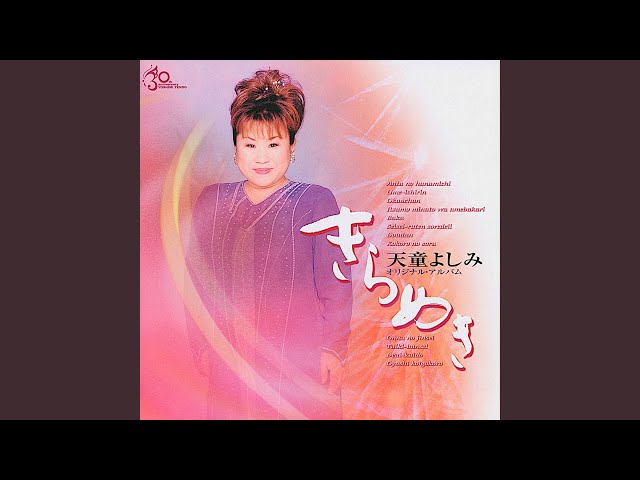
Yoshimi Tendo’s classic “Kokoro no Sora,” beloved for its warm, gentle melody.
While it may seem like enka, its vocal line is actually in the pop style.
Therefore, it doesn’t require intricate pitch inflections such as kobushi.
If you want to make it sound even better, try adopting a forward-projected Western singing technique rather than the harmonically focused, back-of-the-head resonance often used in traditional styles.
It’s highly recommended for those who want to practice achieving a rich, full vocal tone.
Be sure to add it to your repertoire.
Curiosity 100% and caution 0%. Is this child a penguin?Ie no ura de manbō ga shinderu P

This is a Vocaloid song by the sibling duo known as “There’s a Dead Sunfish Behind My House P.” Released in December 2024, it portrays the feelings of a protagonist brimming with curiosity and utterly without caution, just as the title suggests.
It was produced as the theme song for a light novel of the same name, slated for release in February 2025.
Koharu Rikka’s radiant vocals match perfectly with the high-speed progression of the track.
It’s the perfect song for when you’re in the mood to see the world from a slightly unusual perspective.
Love SakuraKobayashi Sachiko

It’s a beautiful enka masterpiece—grand in scale yet tinged with melancholy—richly infused with traditional Japanese flavor through the use of Japanese instruments.
“Koi Zakura” is a single released by Sachiko Kobayashi in 2007, and she also performed it at that year’s NHK Kohaku Uta Gassen, so some listeners may find it familiar.
While Kobayashi’s signature techniques—kobushi, shakuri, and vibrato—are of course present, the melody that seems to speak to the Japanese soul is easy to remember, and once you’ve learned it, singing it itself shouldn’t be too difficult.
There are no extreme high notes either, so even those who feel uneasy about higher pitches should definitely give it a try.

Fall in LoveKobayashi Akiko

A gem of a love song that portrays the aching feelings of a woman in love.
With moving lyrics by Reiko Yukawa and a beautiful melody composed by Akiko Kobayashi herself, this work harmonizes perfectly to vividly depict the delicate emotions of a woman suffering from a forbidden love.
Released in August 1985, it was also used as the theme song for the TBS drama “Friday Wives.” It topped the Oricon Weekly Singles Chart seven times and became a massive hit, ranking third on the 1985 year-end chart.
Even today, it continues to be beloved by people of all ages as a song that stays close to the hearts of those who harbor secret affections and wavering emotions.
Songs With Titles Starting With “Ko” [Great for Karaoke & Shiritori!] (461–470)
Kokoro KaleidoscopeYamauchi Keisuke

It’s no exaggeration to call this a new signature song for Keisuke Yamauchi born in the Reiwa era! “Kokoro Mangekyo,” released in 2023, marked a new challenge for Yamauchi as it’s a song from the year he entered his forties.
It’s a dynamic kayōkyoku that skillfully fuses orchestral and Japanese flavors, and if you nail it, it will definitely liven up any karaoke session.
The spot where the melody shifts at the end of the final chorus while applying vibrato requires particular practice, but overall the key is on the lower side and it doesn’t rely much on traditional enka techniques, so it’s also recommended for beginners to enka.
A street corner in loveYamauchi Keisuke

Released in 2008, Koisuru Machikado is one of Keisuke Yamauchi’s signature songs and a fan favorite.
With an upbeat sound that sits between enka and kayōkyoku, its catchy melody showcases Yamauchi’s sultry, husky vocals and has become a staple at his concerts.
It was also performed on the NHK Kōhaku Uta Gassen, so it’s widely known by the general public and is sure to get people of all ages excited at karaoke.
The characteristic enka kobushi (melismatic ornamentation) is almost absent; as long as you can handle a smooth, expansive vibrato, the melody is easy to learn and approachable even for beginners to enka.
The vocal range is relatively wide, so try to sing with clear contrasts and dynamics!