

Masterpieces and popular songs by Keisuke Kuwata

Here’s an introduction to songs by Keisuke Kuwata, who serves as the guitarist and vocalist for Southern All Stars and is also active as a solo artist.
His distinctive voice and singing style are striking, and he has a uniquely charming individuality that makes it instantly clear it’s Keisuke Kuwata singing.
Apparently, during his school days, he was really into bowling, and his best official tournament score was 297.
It’s also said that TV music programs began displaying on-screen lyrics because Kuwata’s fast singing made the words hard to catch, which prompted the addition of subtitles.
There are many other episodes like these, and they’re quite entertaining.
Now, please enjoy Keisuke Kuwata’s songs in this playlist.
- Keisuke Kuwata’s Most Popular Songs Ranking [2026]
- Keisuke Kuwata Ballads: Popular Song Ranking [2026]
- A roundup of easy-to-sing Southern All Stars songs for karaoke
- Keisuke Kuwata’s Cheer Songs and Popular Tracks Ranking [2026]
- The Appeal of Solo: Easy-to-Sing Songs by Keisuke Kuwata. Perfect for Karaoke!
- [The Spirit of Japan] A special feature on Southern All Stars’ classic hits. Gemlike songs
- Keisuke Kuwata’s Most Popular Karaoke Songs Ranking [2026]
- [For People in Their 50s] Ranking of Easy-to-Sing Karaoke Songs [2026]
- Takashi Yu's masterworks and popular songs
- Keisuke Kuwata’s Love Songs and Popular Songs Ranking [2026]
- Ballad songs that are easy to sing at karaoke. Recommended classics and popular hits.
- [Showa Era] A roundup of nostalgic folk song classics and popular tracks you’ll want to sing at karaoke
- [Songs of Infidelity] A collection of forbidden love songs about unattainable romance
Keisuke Kuwata’s Greatest and Most Popular Songs (41–50)
A drop in a great riverKuwata Keisuke
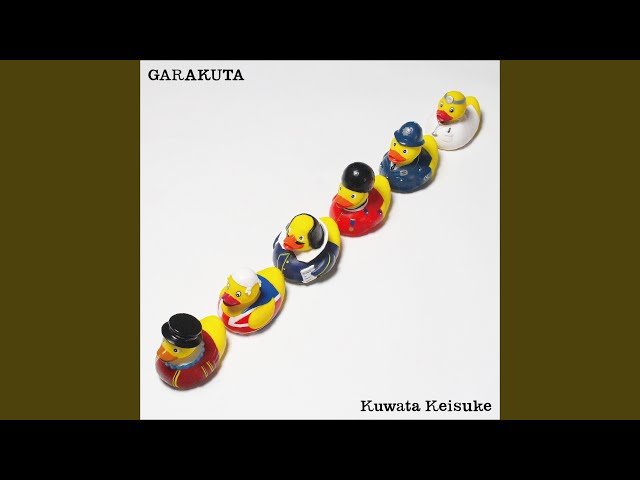
In 2016, the CM song for UCC Black Sugar-Free “Man’s Black” was Keisuke Kuwata’s “A Drop in a Great River.” He delivers the tie-in original track “Man’s Black” with overwhelming vocal power.
Keisuke Kuwata appears in the commercial, exuding the allure of Man’s Black.
Keisuke Kuwata’s classic and popular songs (51–60)
A Million Red RosesKuwata Keisuke

It’s a song that conveys a hopeful message, calling on us to move forward toward tomorrow while carrying various emotions such as joy and sorrow.
After being released in 2016 as the B-side to “Yoshiko-san,” it was included on the 2017 mini-album Karakuta.
Written specifically as the theme song for Fuji TV’s news program Your Time, it even features the name of the show’s host, Saya Ichikawa, which adds to its playful charm.
With minimal melodic rises and falls that emphasize the sound of the words, it’s also particularly easy to sing.

The Truly Scary Side of Love and RomanceKuwata Keisuke

It’s a quintessential Japanese rock track that opens with a Billy Joel-like piano.
Its refined taste easily transcends the bounds of rock.
And with so many instruments joining in, a careful listen reveals a lively timbre that gives it a sense of opulence.
MoonKuwata Keisuke

It’s a track that really evokes Tsuyoshi Nagabuchi, yet you can tell it’s a Kuwata song from the vocals.
It’s the kind of song that seems like it should be common but actually isn’t, and for fans it’s a highly polished piece that’s truly satisfying to hear.
Simple, yet a masterpiece you’ll want to replay again and again.
Surfing JohnnyKuwata Keisuke

Like “Shiroi Koibito-tachi,” this song is also one of Mr.
Kuwata’s signature tracks.
In the opening of the music video, he showcases skillful acting, making it worth watching for that alone.
It remains a quintessential summer song, and I feel like listening to it whenever the weather gets hot.
Tokyo VICTORYKuwata Keisuke

It sounds like a sports cheer song, but to me it feels like a song cheering on everyone.
This type of song is hard to pull off, yet when Southern or Mr.
Kuwata make it, it doesn’t come off as preachy and instead draws you in.
The melody is great, and I think it’s a new anthem.
After the FestivalKuwata Keisuke

It’s a classic song that’s hugely popular live.
One hallmark is that many of his songs take “the end” as their theme, and yet Mr.
Kuwata keeps on singing—he must be something more than just an object of admiration for his fans.
He’s a charming middle-aged man who, though a bit playful, makes that very playfulness feel endearing.