

Quotations from literary masters: messages from authors who weave captivating works.

The literary masters who have created countless works that captivate readers’ hearts.
Adept at wielding words, they left behind many memorable sayings beyond their writings.
In this article, we introduce famous quotes spoken by these literary giants.
We’ve selected words from a variety of authors—those whose works have had a profound impact on people, those whose writings appear in school textbooks, and even those depicted as characters in manga.
Please enjoy this world of words spun by great writers—a realm distinct from their works themselves.
- Words from famous people that I’d like to adopt as my motto. Inspiring quotes that convey the power of words.
- Heartfelt! Inspiring Quotes Left by Great Figures of Japan
- Short quotes from Studio Ghibli works: profound words that give us strength
- Short precisely because it sticks in your heart: witty, chuckle-worthy one-liners and quotes
- Guaranteed to move you! Memorable words by great figures and famous people.
- Witty quotes by great figures and celebrities where wordplay shines even in brevity
- Not just the main characters! Short quotes that add depth to anime works
- Famous quotes everyone knows, including words from great figures and characters
- Just remembering them fills you with courage! Striking quotes that touch the heart from great figures and famous people
- Quotes from great figures that give us the power to live
- Keep your favorite words close. A short collection of quotes that comfort the heart.
- Words of love that tug at your heart. A moving message that will surely convey your feelings.
- Gives you the power to face challenges! Inspiring words of courage from great and famous people.
Quotes from literary masters. Messages from authors who weave captivating works (21–30)
Human beings are, by nature, born alone and die alone. It’s only natural to feel lonely even when you’re among a crowd.Katai Tayama
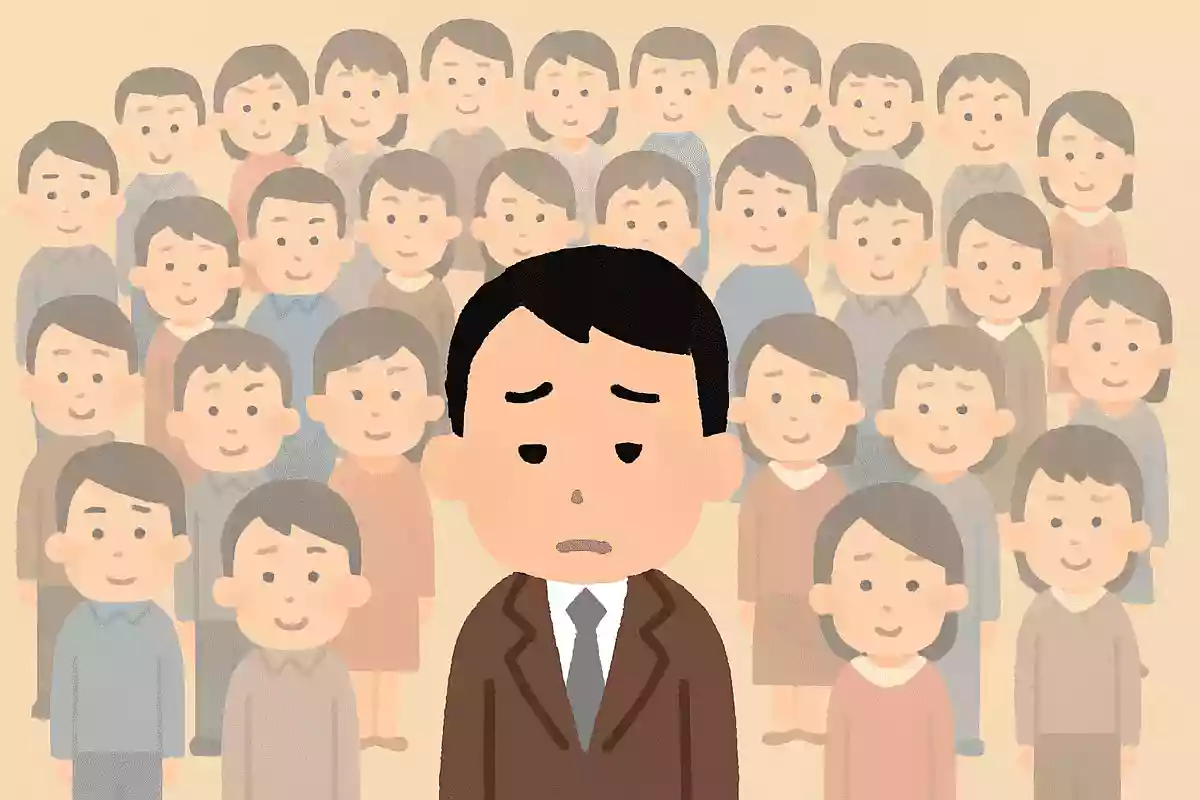
If you’re struggling because you don’t fit well into a circle of friends or some kind of group, try reading these words.
They’re by the novelist Tayama Katai, known for works such as Futon and The Country Teacher.
He seems to be telling us that since humans can never be completely free from loneliness, not being able to join a circle isn’t something to worry about too much.
It may also mean that fretting about possibly becoming lonely in the future—even if you’re part of a group now—is an unnecessary worry.
Accepting loneliness, too, is likely something important for us as human beings.

The foremost condition for a person’s happiness is peace within the home. And what is peace within the home? Nothing other than husband and wife loving each other deeply.Koyo Ozaki

In addition to leaving works such as “Two Nun Disciples’ Confession of Passion” and “Kyara Makura” as a novelist, Ozaki Kōyō was also active as a haiku poet.
These are words left by this great Meiji-era literary master that express his view on what is most important among human happiness.
He says that above all, it is essential for the household to be peaceful; if there is deep love between husband and wife, one can walk through life happily.
From words like these, we can also sense that when the home is peaceful and happy, it naturally fosters a positive outlook.

People who have achieved great success tend to blame themselves rather than others for failures.Rohan Kōda
Rohan Koda, who was active as a novelist from the Meiji through the Showa era, is known for representative works such as “The Five-Storied Pagoda” and “Fate.” These are words from a great literary master, remembered as a leading figure of modern literature, about how successful people face failure.
We may want to blame someone else for our failures, but he says that those who can accept failure as their own and turn it into reflection and learning are the ones who can seize success.
It suggests that failure isn’t necessarily a bad thing; it may in fact be essential for gaining lessons for the future.
Perfect love is another name for “selflessness.”Kyoka Izumi

Kyoka Izumi, known not only for his novels but also for his plays and haiku, is celebrated for representative works such as The Surgery Room and The Holy Man of Mount Koya.
These words, by Izumi—who is also regarded as a pioneer of fantasy literature—express his view of what perfect love is.
When love grows to its fullest, one stops thinking of oneself; he suggests that this is the same as the Buddhist state of enlightenment known as selflessness (muga).
As long as one is still thinking about oneself, love is not yet complete—and the process of bringing it closer to completion seems, in itself, to be a step toward enlightenment.
One must live. To live, one must fight. One must make a name for oneself. One must earn money. One must stake one’s life on the decisive contest.Roka Tokutomi
Tokutomi Roka was a writer active mainly during the Meiji era who left behind a wide range of works, not only novels but also essays and translations.
These are words from a great literary figure who recorded even his ideas and way of life in writing, expressing his view of what it means to live.
He says that living is not merely the passage of time; rather, it is the very act of striving earnestly to obtain wealth and fame that constitutes being truly alive.
These words seem to prompt us to reflect on whether we are facing our own lives seriously and whether we are truly living in the real sense, offering an opportunity to consider the paths we have taken and how we will proceed from here.
Life isn’t something that can be neatly wrapped up with clear-cut endings.Hayama Yoshiki
We tend to want to make everything black and white in modern times, but life is by no means something in which everything becomes clear.
These words were spoken by Yoshiki Hayama, considered a leading figure in proletarian literature that depicted the realities of people placed in harsh working conditions.
It is human nature to desire clear answers to what we seek.
Yet these words suggest that precisely because some things cannot be decided definitively, life and the world can be interesting.
Life has a way of opening and closing paths at unexpected times.Saneatsu Mushanokōji

Along with Naoya Shiga and others, Saneatsu Mushanokōji launched the magazine Shirakaba and wrote not only novels but also biographies and essays on art.
Leaving behind many works with the theme of love for humanity, he was a writer who continually gazed at the happiness hidden in everyday life.
These words teach us to accept that life is unpredictable and to adapt flexibly to change.
Even amid difficulties, one can find hope and sense an attitude of living everyday life positively.
The message that embracing life’s uncertainties can open the way to the future offers deep resonance and courage to contemporary readers as well.
