

[For Men] These Songs Will Make You a Better Singer! Tracks That Are Effective for Karaoke Practice


Have you ever found yourself getting better at singing without even noticing, just by belting it out at karaoke? In fact, the songs you choose for practice can make a big difference in how quickly you improve! Songs that help you build vocal fundamentals, songs with easy-to-catch pitches, songs that expand your range, and songs that train your sense of rhythm—each type has its own benefits for practice.
By the way, the reason I learned to hit high notes was simply because I kept singing the same song over and over without giving up! In this article, we introduce a wide range of tracks that are perfect as karaoke practice songs—ones that naturally boost your singing skills while you have fun.
If you’re thinking, “I want to sing better!” be sure to use this as a reference!
- [For Men] Mix Voice Practice Songs: Reference Tracks to Help You Hit High Notes More Easily
- Even karaoke beginners can relax! Easy-to-sing songs for men
- [Even If You're Tone-Deaf, It's Okay!] Easy-to-Sing Karaoke Songs and Practice Tracks
- Karaoke songs recommended for men with low voices or who are good at singing in a low register
- Songs that make it easy to score 100 at karaoke! Introducing foolproof tracks men can aim for
- Must-see for men: Songs that look cool if you can sing them at karaoke—numbers that women can’t help but be captivated by.
- Karaoke songs where even men with low voices can aim for high scores
- This is a sure hit! Hype songs men will want to sing as the first track at karaoke
- [For Men] This song is perfect for hyping up the crowd at karaoke!
- Songs Women Want Men to Sing: Popular Karaoke Picks Chosen by Girls
- Recommended karaoke songs for male vocalists with high voices
- [Enka] Songs That Are Easy to Sing Even for the Tone-Deaf [Male Singer Edition]
- For Men in Their 50s: No Worries If You’re Tone-Deaf! A Curated Selection of Easy-to-Sing Karaoke Songs
[For Men] These Songs Will Make You a Better Singer! Highly Effective Tracks for Karaoke Practice (41–50)
festivalFuji Kaze

Fujii Kaze’s masterpiece “Matsuri.” While it makes full use of distinctly Japanese sounds, its arrangement throughout strongly evokes elements of Black music.
The key feature of this track is, above all, the abundance of vocal runs.
It’s not straight-up R&B, so the runs are simpler compared to authentic R&B, but even so, there’s plenty for Japanese listeners who aren’t used to Black music to learn from.
The vocal range itself isn’t especially wide, so this is a must-listen for anyone looking to hone their run/embellishment techniques.

Wind GodVaundy

Vaundy’s new song “Fujin.” Since it’s also the theme song for the TBS drama “Lion’s Hideout,” many of you may already know it.
The real charm of this track is, above all, its groove.
The chorus feels very J-pop, but the A and B sections resemble neo-soul—a genre that blends soul with hip-hop, jazz, and funk.
Because this genre places a strong emphasis on a sense of groove that isn’t typically associated with Japanese music, singing a track like this, with those strong elements, can help you develop a groove akin to that of foreign artists.
W/X/YTani Yuuki

Released in May 2021, “W/X/Y” is one of Tani Yuuki’s signature songs! It’s a recommended love song for those who want to practice falsetto naturally without strain, and it makes it easy to move from chest voice to mixed voice to falsetto.
I’ve taught it a few times myself, and the melody line was tougher than I expected.
I recommend firmly memorizing the melody line before singing.
In particular, the B section has a melody line that clearly uses falsetto when you listen, and Tani Yuuki generally has a gentle tone that gives his singing a light, airy quality.
Start by imitating: take a good breath, then sing gently as you produce your voice.
Since falsetto uses a lot of breath, the key point is to “take in a lot of air.”

proofflumpool

It seems this was the set piece for the 2011 (78th) NHK All-Japan School Music Competition, Junior High Division! The vocal range is quite wide, from A2 to C5.
The falsetto parts appear in the chorus.
The melody line is easy to follow, building nicely through a verse (A), pre-chorus (B), chorus, and final chorus.
First, the A section sits quite low, so be careful not to overuse your throat there.
If you watch choirs or singers’ facial expressions, you’ll notice their eyebrows and facial muscles are lifted quite a bit.
Simply lifting your facial muscles like this helps open the throat and makes singing a bit easier.
It also helps you transition smoothly from chest voice to falsetto.
In addition, make sure to fully support and release your breath on the high falsetto notes.
Aiming your voice straight up toward the top of your head makes falsetto easier to produce.
With just a small shift in awareness, the song becomes much easier to sing—give it a try!
The thing I’ve always wantedHirai Dai

When Japanese people sing, their voices tend to sound thin, regardless of vocal quality.
One factor is pronunciation.
Even among professionals, very few singers can properly execute the English “R” and distinguish among “N,” “M,” and “NG,” but Dai Hirai does this perfectly.
His new song, “Boku ga Zutto Hoshikatta Mono,” is an ideal piece for improving your singing.
It’s word-heavy, so you can learn a lot about pronunciation in Japanese songs.
If you want to sing with the kind of rich, full pronunciation you hear from foreign singers, definitely add it to your repertoire.
LemonYonezu Kenshi

Released on March 14, 2018, it’s the song created as the theme for the drama “Unnatural,” which became a huge hit under Kenshi Yonezu’s name, right? It’s a ballad known for its delicate emotional expression and its demanding range and rhythm, making it an ideal male-oriented track for karaoke practice to develop expressiveness, pitch accuracy, and mixed voice.
In vocal training, there were so many people saying, “I want to sing this song!” The song’s characteristics are the low notes in the A and B sections and the suddenly soaring range in the chorus.
As expected, everyone struggled with the high notes in the chorus.
Indeed, the rhythm is also unique—like “ta-TA ta-TA”—so it’s difficult if you’re not used to it.
However, instead of trying to sing everything at once, if you break it into sections and sing piece by piece, you’ll lock into the rhythm and find it easier to sing.
Once you get used to that momentum, you should naturally be able to use mixed voice as well!
IdeaHoshino Gen
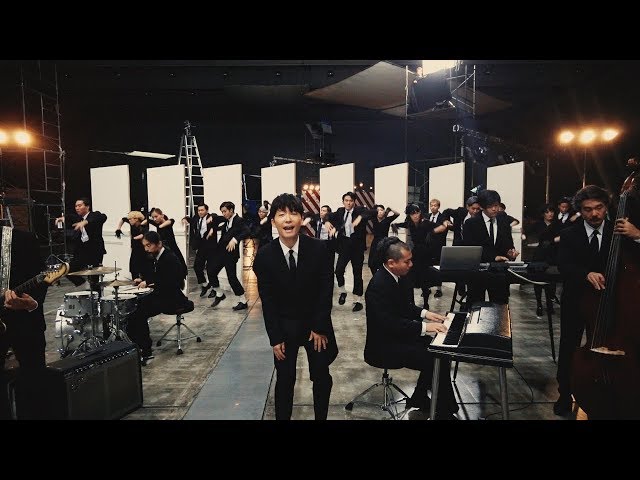
A song released digitally on August 20, 2018, written specifically as the theme for the NHK morning drama series “Half, Blue.” In karaoke, it’s popular as a track that doesn’t require an overly wide vocal range but shows differences through sense of rhythm and expressiveness.
The tempo is 120, and since it has a band sound, it’s easy to lock into the groove; however, when you get excited while singing, the overall tempo tends to rush.
If you keep a bit of cool composure as you sing, you should be able to stay balanced and keep steady time.
Try to sing with a straight, projected tone without relying too much on falsetto; imagining your voice shooting forward will help you produce sound smoothly without hesitation.
In any case, focus on projecting firmly so your voice stays steady and doesn’t waver!