


“This is the current Yuu Matsuo”: An interview with piano lady Yuu Matsuo in red shoes
The piano lady in red shoes, Yu Matsuo.
Not only is she a singer-songwriter and pianist, but she also sometimes teaches at music schools, sharing the wonders of music.
She continues to take on a wide range of challenges, including composing school songs and corporate pieces, as well as product production.
Seeing her speak with confidence and strength—“This is who I am now, Yu Matsuo”—I felt not only her identity as a singer-songwriter, musician, and performer, but also a vision of her continuing to scale up as a woman in her own right.
Unstoppable, and active across various fields with music at her core—what is she feeling now, and what does she want to express next?
As she passes the fifth anniversary of her career and enters her sixth year, we spoke at length about her thoughts on her third full album, Kaze to Voyage (released November 3, 2017), among many other topics.
The challenge of giving a hall recital led me to new possibilities within myself.

So your third full album, “Kaze to Voyage,” announced on November 3 this time, is your first in about a year and a half since the 5th-anniversary album “MY LIFE IS,” right?
In 2016, with the release of the 5th-anniversary album “MY LIFE IS” and the first hall recital held at the Annex Hall of the Museum of Kyoto, I felt, in a sense, that I had passed a certain milestone.
It was definitely a big deal for me to take on a recital—a format of performance that differs in character from a live show.
On that day, I was particular about using an arrangement with strings to give it a strong classical feel, and thankfully, it seems what the audience wanted matched what I wanted to express.
It was so well received that we decided to hold another hall recital, and we will be hosting it again this November. (Held on November 3, 2017)
Since last year’s anniversary year, I’ve felt even more motivated to create and to be active, and before I knew it I had built up quite a few songs. That also led to the release of “Kaze to Voyage” timed with the date of this year’s recital.
—The song “Kazabana,” which you performed with baritone singer Jun Tanaka as a guest at last year’s hall recital, is also included this time as a bonus track, which hints at a form of the work that feels a bit different from what you’ve done so far, doesn’t it?
In this song I deliberately changed my singing style, using falsetto with an operatic or classical feel in mind.
So yes, I wanted to include it as a bonus track because I hoped people would enjoy a different kind of world from usual.
Since I had the opportunity to compose this piece specifically to perform with Jun Tanaka, it ended up being different from the musical genres I usually express, and I feel that this song has led me to a broader range of expression and new challenges.
Moreover, since these are recordings made specifically for this album, I think both those who attended last year’s recital and those who didn’t will be able to enjoy it in an even fresher way.
What I can do to help through the single tool of music
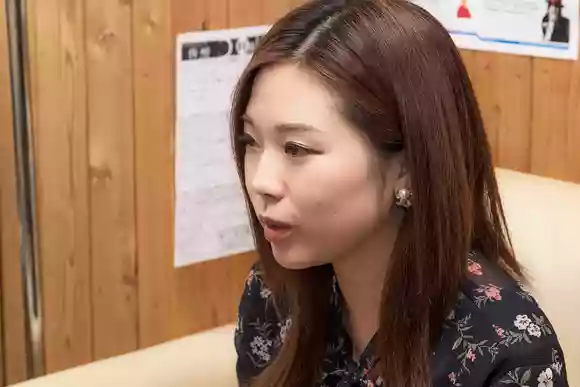
—And in terms of the changes over the year leading up to this release, you’ve taken on a wider variety of challenges, such as tie-ins and providing songs, haven’t you?
Thankfully, “leaves” (M-1) was used in a tie-up by the lingerie maker Charle.
We set the music to a dramatized movie in which a mother and her daughter write letters to each other expressing their feelings and read them aloud.
I was truly happy that my music could collaborate with such a moving film that conveys love and bonds.
Was there any particular reason that led to you receiving the tie-in offer?
It all started when I was contacted by the president of a company called yucca Inc., which is run mainly by young employees in their twenties, through a connection with the person in charge of our music video filming.
I once visited the company to introduce myself, and at that time they said, “Actually, we have this kind of project—would you be interested?” Thanks to those connections coming together, it ended up happening.
Are there also requests from people in genres not limited to that kind of music, or from those in different lines of work?
Actually, I also compose company songs for certain companies.
I listened to the president talk about wanting employees to hold these kinds of feelings and to focus on these themes, and I wrote the lyrics based on that.
You could say it’s like a school anthem, so while I felt a certain nervousness about having everyone sing it, I was of course also happy.
Connecting with companies and people through the single tool of music—and seeing the ways I can be of help continue to grow—has been incredibly inspiring for me.
As an artist, of course, but also as a composer, lyricist, and arranger, I find it deeply moving to think that the name “Yuu Matsuo” will remain in the world.
When you’re composing a piece on commission, is your mindset different from when you’re creating your own original work?
When I receive a request, the image of what I want to convey or sing starts to take shape within me, so the time it takes for a song to come together is relatively quick.
Since my original song starts from a more vague place, it might be taking longer.
Speaking of activities that cross musical genres, a collaboration watch was created in a previous project with Time Station NEO, right?
My encounter with the president of Time Station NEO was also by chance; it began when he heard my live performance during a radio appearance we did together.
They liked my musical style, and from there, amazingly, they decided to create a Yuu Matsuo model for their women’s product line, MIA.
The collaboration watch inevitably ends up being a women’s item, but we wanted people of all genders and ages to enjoy this memorable collaboration, so we turned an original image song we wrote, “Tokimeku Toki,” into a CD as a novelty gift for those who purchased the watch.
We had the young actress Aio Kamidono appear in the music video, and we were also allowed to use a school classroom as the filming location.
After all, since the watch is a product aimed at female junior high and high school students, I realized that it was precisely because of this project that we were able to clearly keep the target demographic in mind.
I think this also ties into what you said about composing songs based on a theme, but “The Most Beautiful” (M-4) was also sparked by a particular episode, right?
It's a song I made for my cousin, who's the same age as me and lives next door, and the subject matter was a huge source of inspiration.
While I was writing the letter to read before singing at the wedding, the melody of this song kept coming to me more and more.
Before I knew it, I was sitting at the piano and starting to compose a piece, and I poured all my feelings from the very beginning of the letter into the lyrics.
I said, “I’ll stop reading the letter since I’ve finished a song, so I’ll sing it,” and I ended up giving it as an impromptu gift.
I wouldn’t have been able to write this song without the trigger of “my cousin getting married,” and it made me realize again that I turn anything into a trigger to make songs.
Music production, after all, seems to come down to how fulfilling your everyday life is.
While some artists take the stance of “I can only make music this way” or “This is my policy for creating,” I’m impressed by how flexibly you respond to inspiration from everyday life. In the past, I believe you performed frequently at live houses, but the field in which you’re active has gradually broadened and changed as well, hasn’t it?
Recently, we also held a live performance at the music school salon I used to attend.
I kept going there all the way through high school, so it kind of feels like my alma mater.
When I was attending, the only image I had was just playing the piano if it was piano, and the option of singing along didn’t exist.
So realizing that there's such a thing as singing with self-accompaniment (hikigatari) was something I only figured out in hindsight.
I was hoping to create an opportunity for the people currently attending the class to realize that there’s also a path in music called being a singer-songwriter—like, “There’s an older girl doing this kind of thing”—and to let them know about it.
Everyday life is just like a journey. I want you to listen to this album while layering it with your own days.
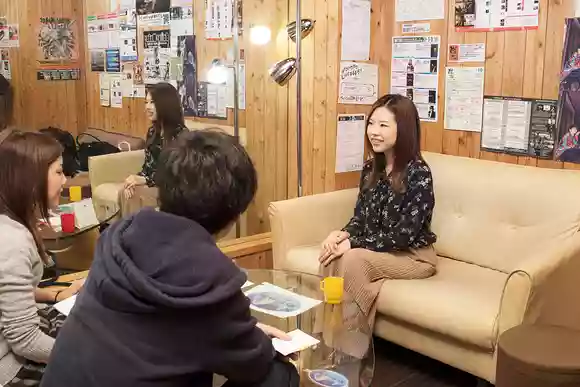
—As you continue your activities, it seems your feelings toward future generations are growing stronger. I felt that both “Kimi ga Otona ni Natte” (1st single) and the lead track included this time, “Dear me.” (M-8), carry a strong message toward the next generation. Does that mean you yourself are shifting into that mode?
To be honest, I wasn’t really aware of it myself, but after people around me pointed it out, I realized for the first time that the direction of my music had gradually changed.
I’ve been hearing more people say, “I want to let my kids listen to it,” so I realize once again how much my experience as a music teacher has meant.
In our early songs, perhaps because of our youth, many of them were about romance.
So, I do hear people say they prefer my older songs, but it's also true that I can confidently say, 'This is who I am now.'
For example, the lyrics in “Dear me.” (M-8) — “The world is surely wider than you think. It’s surely freer and better than you think. Shall we freely begin this once-in-a-lifetime journey, to meet a new version of myself?” — are something I feel I couldn’t have written without experiencing various things like tie-ins and commissions, as I mentioned earlier.
After all, as I change, the songs that are born naturally change too, so I hope you can enjoy the world I’m creating, including the parts that have evolved.
The album title this time, “Wind and Voyage,” also reflects the encounters you’ve had with people, things, and events, doesn’t it?
The title is based on “leaves” (M-1), which I mentioned earlier as a motif.
Like a single leaf riding the wind and traveling to many places, I wanted to portray the scenes where people meet each other.
Also, since the word 'wind' appeared frequently in the songs throughout the album, I combined them.
After all, I think everyday life is the same as a journey.
Of course, going on a trip offers more stimulation and lets you encounter unfamiliar places and people, but that's true in everyday life as well, isn't it?
I think that just taking unfamiliar paths instead of the same ones can bring a fresh feeling, and I’ve come to realize that the same sense as traveling can also be found scattered throughout everyday life.
I was influenced by that aspect as well, and that’s how I arrived at the title “Wind and Voyage” this time.
People can look back on various pasts and also envision the future.
I’d be happy if you could listen to this album as if you were traveling on the wind, reflecting on the events that have happened in each of your lives.
Music that isn’t swayed by trends. That’s who I, Yuu Matsuo, am right now.
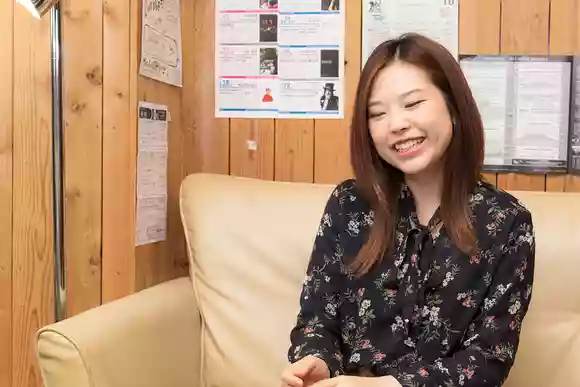
—This album is filled with feelings that are very much yours as you are now, Yuu. Did you do the recording this time with the usual members as well?
It's always the bass and drumsStudio Rag Saiin StoreAnd Mr. Sakamoto, the engineer, is making it for us, right?
The recording members are almost the same as last time, but for “Dear me.” (M-8), we wanted to give it the special feel befitting a lead track, so we invited sax player Daisuke Naito to join us.
I had this image in my mind that a sax sound would definitely suit this track, so I put sax in my own recording for the first time, and the color changed all at once.
I heard you took a lot of time with the mixing this time—was there anything you absolutely wouldn’t compromise on?
Of course my tracks include vocals, but I want to make the piano the main selling point.
We intentionally set the piano a bit louder so that it can be heard clearly.
Also, for 'leaves' (M-1), we recorded it with just a solo piano-and-vocal performance and a violin, but I had the desire to create a sound that could stand on its own as an instrumental even without vocals.
Compared to the commonly available recordings, in my version the string instruments are mixed to sound a bit louder, and I was particular about intentionally highlighting that aspect.
For this production, regardless of what's trendy nowadays, I focused on maintaining a balance of sound that feels true to myself.
I agonized a lot over how to balance it, but in the end I felt I couldn’t put it out into the world unless it was something I was personally satisfied with.
I went through the same wavering and struggles as after my first full album, “Kiss and Fly,” but I believe I was able to create something I’m most satisfied with now, without compromising.
You also have a strong relationship of trust with the engineer, Mr. Yugo Ogura, don’t you?
Even when I think the mix is good, once I try mastering, the impression changes from the mix stage. For this recording, I had Mr. Ogura redo things many times, but since he’s also active as a musician himself, it’s incredibly reassuring that he has the kind of understanding only an artist can have.
For example, I usually record the main lead vocal first and then layer the backing vocals, but once we actually start recording the instruments, there are times when the sound ends up different from what I had in mind.
This time, the chorus harmonies didn’t work out with what I had originally planned.
But especially this time, there were many moments when things stopped working and we had to rethink the chorus on the spot, and Ogura-san always praises me for that adaptability and sense of arrangement.
You’d think we’ve been a tag team for a long time, but surprisingly it’s only been about three years.
Perhaps Mr./Ms. Ogura and I are similar in that we casually and quickly handle anything ourselves.
I’ve also recently started editing music videos myself.
I can’t do anything that advanced, but when I get particular about something, I end up wanting to make it myself.
Speaking of music videos, for Kafka (M-5) you challenged yourselves with your first shoot using drone technology, and even through the footage, the dynamism and tension come across directly, don’t they?
This song is only about three and a half minutes long, but I’m actually using athletic-level stamina to play it.
We actually ended up shooting 32 takes for the music video before we finally got an OK.
Before I knew it, I had been playing continuously for about six hours.
I found it difficult to play along with the audio after the recording was finished, and through this shoot I feel like I also learned how challenging it is to faithfully perform and complete the piece.
"Kafka" (M-5) is actually Czech, and when translated into Japanese it means "crow."
Crows might not have a very good image for some people, but I think, depending on how you look at them, they have a dual nature—like light and shadow.
That uniquely bold, go-getter vibe of crows—the sense of being full of ambition—is something I feel is necessary when you’re actively working as an artist.
I strongly wanted to turn that kind of overflowing spirit of challenge into a song, so this time I expressed it as an instrumental track.
Even without words, their aggressive performance beyond language naturally conjured an image of them relentlessly and voraciously forging ahead into the future.Lastly, please tell us about your future goals as an artist.。
As a near-term goal, I really want to create a commercial jingle. If I could receive a theme and combine music with visuals, I envision that an even more dramatic world could be created.
Speaking of music and visuals, I’d like to try composing music for dramas.
Speaking of collaborations with other genres, I’d like to perform music as a backdrop for picture book read-alouds, and I’d love to try improvising so the music naturally shifts according to the story being read.
I want to be there at the moment when music is combined with something else to deliver an even more powerful expression.
In the future, I want to create songs that anyone can understand when they listen.
I want to create songs that people of all ages—from little kids to the elderly—can listen to and think, “Ah, so that’s what this song is about.”
To say something on a bigger scale, it's the kind of song that could be included in music textbooks.
I want to create songs that people naturally think of—like, “you know that one song”—when they’re going through tough times, and someday make music that can be sung without being swayed by trends.

2017.11.3 ReleaseYuu Matsuo 3rd full album “Kaze to Voyage”
- leaves
- There’s a world I want to see with you.
- One Piece
- the most beautiful
- Kafka
- contrarian; someone who instinctively does the opposite or acts contrary out of perverseness (Amanojaku)
- When I feel like crying
- Dear me.
- Soul melodyBonus track.
Kazahana feat. Jun Tanaka
Recording musician
Yu Matsuo: Vocal & Piano & SynthesizerKazuki Oe: GuitarKenji Watanabe: BassRyo Morita: DrumsRyohei Kajitani: PercussionMahiro Mizuno: ViolinAkitoshi Kono: CelloDaisuke Naito: SaxJun Tanaka: Baritone
Recording staff
Yugo Ogura: Recording Engineer & Mixing & MasteringTaiga Sakamoto: Recording Engineer (Drums & Bass) atStudio Rag Saiin Store
Yu Matsuo
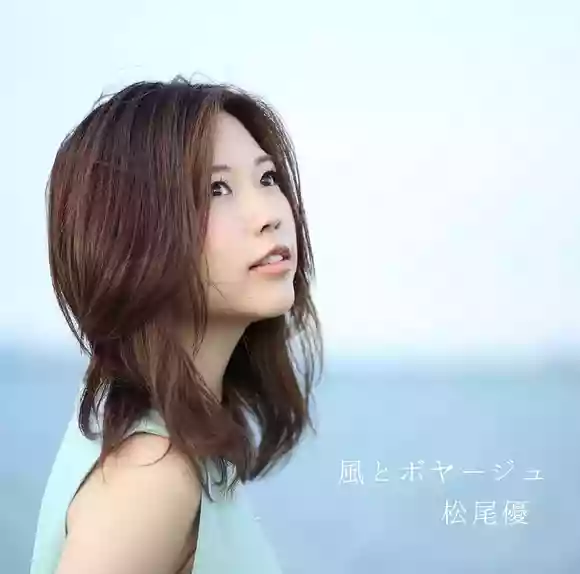
I was a child who would memorize the songs I learned in kindergarten, go home, play them on a toy piano, and perform them for my family.
Having been familiar with the piano since age 4 and the Electone since age 9, a guest appearance at pianist Takashi Obara’s recital when she was in the second grade of elementary school later influenced her path to becoming an artist.
When that piano tone—one that captivates you from the very first listen—is gently carried by an angelic, translucent singing voice, it softly envelops the heart and brings healing.
A singer-songwriter and pianist from Kyoto.
【WORK】
- Sakai Moving Service Co., Ltd.TV commercial song (2015) “When You Grow Up”
- Nakazawa Co., Ltd. Time Station NEO “mia” Yuu Matsuo model watch release & image song
- Kyoto Women's University / Yomiuri TV weather forecast filler music: “To the Shining You”
- Maisonette Co., Ltd.Theme song for the farmers’ market “Jinento Ichiba”
- Urban Renaissance Agency (Independent Administrative Institution)Theme song and insert song for UR’s short web drama for young people, “Share Living: Real-Life Fulfillment”
- Insurance Design Co., Ltd. Image Character Pan-chan Theme Song
- KABUSHIKI KAISHA KANTOKU Radio commercial jingle
- Arrangement of the school song of Nara Municipal Niname Junior High School
- Solo performance of the national anthem at Kyocera Dome Osaka