

[Karaoke] A Collection of Songs Whose Titles Start with 'Mo'

At karaoke, people sometimes set various rules, like singing songs by the same artist or choosing based on song titles.
One fun idea is to pick a letter from the Japanese syllabary and sing “songs that start with ___.”
In this article, we’ll introduce a selection of songs that start with “mo,” so feel free to use this as a reference for your next karaoke session.
Many of these tracks feature sentimental words like “moshi” (if) and “mou” (already/no longer), so it can be nice to think about the lyrics’ meaning or imagine the story as you sing.
Be sure to check out these “mo”-starting songs by artists who’ve been active from the Showa era through Heisei and into Reiwa.
- A compilation of Vocaloid songs with titles that start with 'Mo'
- Compilation of Vocaloid songs with titles starting with “Mi”
- Songs Women Want Men to Sing: Popular Karaoke Picks Chosen by Girls
- A compilation of Vocaloid songs with titles starting with 'Mu'
- A roundup of songs with titles that start with “Me” (Melody, Merikuri, and more)
- [For People in Their 40s] Karaoke Songs That Are Easy to Sing: 2026 Ranking
- [Karaoke] A collection of Japanese songs that start with “Mu”
- A collection of songs with titles that start with “Mi.” Useful for shiritori and karaoke.
- A compilation of song titles that start with “Ma”
- Songs with titles that start with “wo.” Useful as hints for karaoke and shiritori!
- Songs Men Want Women to Sing at Karaoke: Irresistible Tracks [2026]
- Songs with titles starting with 'O' [Great for karaoke and shiritori!]
- A compilation of Vocaloid songs with titles that start with “Me”
[Karaoke] Collection of songs with titles starting with 'Mo' (81–90)
sympathetic tearsHitoto Yo

The debut single by singer-songwriter Yo Hitoto, who has a Taiwanese father and a Japanese mother and continued making music in an a cappella club while attending Keio University.
Released in October 2002, the song reached No.
4 on the Oricon charts without a major tie-in and became a long-running hit, staying on the chart for 70 weeks.
The lyrics, which depict how a friend’s tears set off a chain reaction of emotions, are said to have been inspired by a heartbreak she experienced during her university years.
The striking chorus was crafted so that it can be sung universally using only vowels, creating a unique world where an Oriental, R&B-tinged arrangement and her resilient, powerful vocals blend exquisitely.
In 2003, the song earned her the Japan Record Award for Best New Artist and her first appearance on the NHK Kohaku Uta Gassen, making it the track that defined her career as an artist.
mo∞entKito Akari

This piece was released digitally in July 2025 as the ending theme for the second part of the TV anime “Toilet-Bound Hanako-kun 2.” The lyrics, composition, and arrangement are by Saku, and they capture the protagonist’s resolve to move forward despite carrying regret and impatience.
And of course, Akari Kito’s clear, transparent vocals are wonderfully emotional.
With its worldview that blends the uncanny and the everyday, it’s an anime song that lets you savor the afterglow of the story—especially when you listen on Halloween night.
moored boatMifune Kazuko
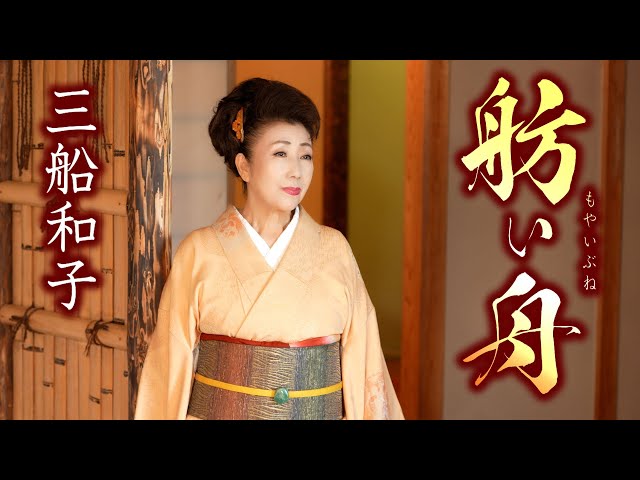
Sixty years after her 1965 debut, a single symbolizing that journey was released in October 2025.
This work, which overlays the feelings of two lovers who cannot be together onto a boat, is a classic enka that captures the subtleties of a heartrending romance.
The emotive lyrics by Chiyo Yoshimi, the wistful melody by Chiaki Oka, and the arrangement by Tatsuo Matsui—fusing tradition with a contemporary sonic balance—are in splendid harmony.
Moreover, Kazuko Mifune’s richly expressive vocals vividly convey the rising passion from the conversational A-melody to the soaring chorus.
A track to savor slowly.
Christmas Once MoreŌe Senri

A number by Senri Oe, who was active both as a singer-songwriter and as a songwriter for many other artists.
Featured on his 1985 album “Miseinen” (Minor), this track stands out with its poppy synthesizer tones that set it apart from other Christmas songs.
As it looks back on memories with a lover, the yearning to reclaim the warm Christmases of those days resonates with a bittersweet touch.
Its irresistibly danceable groove is sure to light up the room even if the audience doesn’t know the song! That delightful imbalance—feeling both fresh and of its era—will leave a strong impression on younger listeners who may not have known Senri Oe’s music until now.
Mont BlancIkuta Erika

Since graduating from Nogizaka46, Erika Ikuta has been forging her path as a solo artist.
Released in November 2024, this track is her first song themed around winter.
On a Christmas night when lovers gather, it delicately portrays the feelings of a protagonist spending the evening alone, layering the sweetness of a cake they ordered with the aching sadness of an unattainable love.
The lyrics, where the dream of a pure love like a white shortcake intersects with the bittersweetness of reality, will resonate in the stillness of a winter night.
A gentle arrangement anchored by piano highlights her clear, translucent voice, evoking a nostalgic mood.
It’s a Reiwa-era Christmas ballad that quietly stays by your side on a holy night spent alone.
Mosh Under The Rainbow IIHi-STANDARD

Isn’t this the live anthem that shines brilliantly in Japan’s punk scene—Hi-STANDARD’s very own? The track is included on the classic album “MAKING THE ROAD,” released in 1999, which sold over 600,000 copies.
After the spoken-word intro, the laid-back beat and guitar riff built on triplets give it a vibe distinct from their other songs.
The English lyrics even say, “Let’s mosh under the rainbow!”—you can practically picture everyone linking arms and jumping together to the easygoing rhythm.
[Karaoke] Collection of songs with titles starting with “Mo” (91–100)
Momiage o Shakaage onununununununununununununununu

It might be fair to call this a masterpiece of “denpa” songs.
Released by Nununununununununununu in June 2024, this track is packed with jokes and references about karaage (Japanese fried chicken).
The lyrics lurch from one sudden twist to the next, taking things in wildly unexpected directions that might make you blurt out, “Huh?” But it has a strange charm that keeps pulling you in.
Coupled with Zundamon’s cute voice, it’s the kind of song that lifts your spirits as you listen.