

The Royal Road of Jazz: Classic modern jazz masterpieces. Popular tracks you should listen to at least once.

Have you ever wondered what exactly people mean by “modern jazz,” a term you often hear within jazz? If you’re new to jazz and have that question, you’re not alone.
Modern jazz generally refers to the period spanning from “bebop,” which emerged in the mid-to-late 1940s, to modal jazz, which appeared in the late 1950s.
You could even call modern jazz the classic, mainstream form of jazz, and many of the genre’s most iconic albums and songs were created during the modern jazz era.
In this article, we’ve put together a selection of great modern jazz tunes.
If you’re thinking of giving jazz a listen, this is the perfect chance to check them out!
- [Start Here] Jazz Masterpieces: A Must-Listen Album Selection
- [For Beginners] Classic Modern Jazz Albums: Recommended Records to Start With
- [Western Jazz] A Special Feature on Standard Numbers You’ve Heard at Least Once
- [Jazz Intro] Classic Jazz Tracks Recommended for First-Time Listeners
- Jazz commercial songs. Popular commercial songs.
- Hall of Jazz: Classic Blue Note Records. Recommended jazz albums.
- Classic swing jazz tunes. Recommended popular songs.
- Start here first! Classic jazz-rock masterpieces. Recommended popular tracks.
- Famous Western jazz classics. Recommended popular songs.
- Ranking of Popular Jazz Songs
- [2026] Jazz piano masterpieces: from standards to recent favorites
- Introduction! A collection of recommended masterpieces and standard numbers for jazz beginners
- [2026] A Collection of Classic Japanese Ballads with a Jazz Flavor
The Royal Road of Jazz: Masterpieces of Modern Jazz. Popular Tracks You Should Listen to at Least Once (31–40)
Five Spot After DarkCurtis Fuller

The harmony of the trombone and tenor sax really captures a rugged, masculine vibe.
With no alto instrument taking the lead, it has a subtly burnished, old-silver quality.
Even so, it swings properly and doesn’t feel heavy.
Dads out there are doing their best.
And of course, they drink.
A Love SupremeJohn Coltrane Quartet

It’s “A Love Supreme” by John Coltrane, the “philosopher who plays.” Though it’s a single piece that incorporates classical elements, it’s structured in four movements.
It’s practically the poster child for the idea that “jazz = difficult.” If you ask jazz fans whose music they recommend, many will answer “Coltrane,” so the moment someone hears this most famous piece, they’re almost certain to come away with a mistaken impression.
Swingin’Clifford Brown
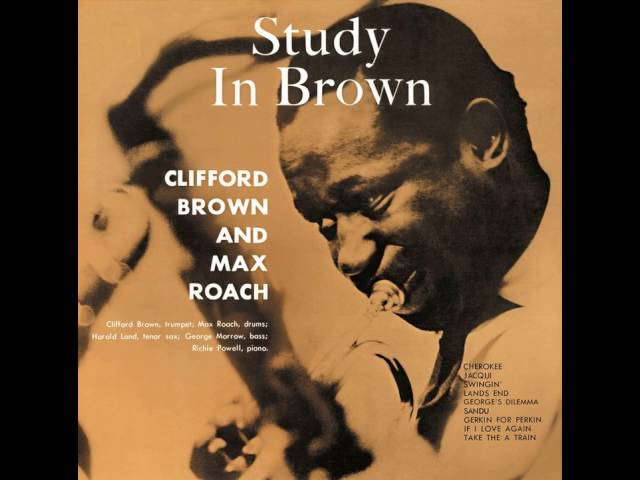
A signature work by the “genius hard-bopper” Clifford Brown.
It’s just superb—yet eccentric.
He was so extraordinarily gifted that, tragically, he passed away in a car accident at just 25.
His technique was so flawless—never a single mistone—that people joked he must have made a pact with the devil.
If Miles was the field commander, Clifford delivered a truly striker-like sound.
MantecaDizzy Gillespie

It is a seminal piece of Afro-Cuban jazz and is known as a landmark performance in jazz history.
First recorded on December 30, 1947, by Dizzy Gillespie and his orchestra, the piece symbolizes the fusion of Afro-Cuban rhythms and American jazz.
Built on the rhythm pattern known as the clave, it features complex harmonies and rhythms, as well as improvisation.
This work can be seen as an ambitious statement in which Gillespie, while hinting at the racial tensions in America at the time, suggested new possibilities for cultural exchange through music.
It’s also a recommended track for those new to jazz.
DjangoModern Jazz Quartet

Known as a masterpiece in the history of jazz, this piece was composed in 1954 by John Lewis.
Written as an homage to Django Reinhardt, who had passed away the previous year, it opens with a theme like a dirge, imbued with deep sorrow and melancholy.
Its structure departs from the traditional AABA form, adopting a distinctive design that, while influenced by the blues, also includes an homage to J.S.
Bach.
In 2000, it was selected by NPR as one of the 100 most important American musical works of the 20th century, a testament to its high artistic regard.
It’s a recommended listen not only for jazz enthusiasts but also for anyone who wants to relax with music on a quiet night.
[The Royal Road of Jazz] Classic modern jazz masterpieces. Popular tracks you should listen to at least once (41–50)
Infant EyesWayne Shorter

Composed by Wayne Shorter, who was inspired by the innocent gaze of his own daughter, this piece appears on the classic 1966 album Speak No Evil.
It is a beautiful ballad distinguished by deep emotion and complex harmonies.
The melody and harmony unfold with delicate elegance, as if reflecting a father’s love and his feelings for his daughter.
With contributions from renowned jazz musicians such as Freddie Hubbard and Herbie Hancock, it is highly regarded as a work that opened new horizons in modern jazz.
It’s a song best savored alone on a quiet night, or shared when you want to connect heart-to-heart with someone special.
The Shadow of Your SmileJoe Pass
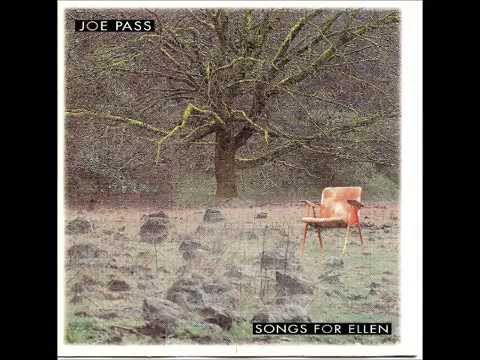
A World of Only Guitar — It’s a work that makes you oddly solemn.
In his later years, Joe Pass built a unique jazz universe using only a gut-string guitar.
That sound has a quality reminiscent of the tea ceremony.
Everything unnecessary is stripped away.
Just the guitar.
Jazz usually feels out of place in a Japanese-style room, but this is music that shines even in a dim, tea-room-like space.
Strangely, I sense a similar spirit to wabi-sabi and kare (withered elegance).
It’s the realm of a master that someone as young as me still cannot fully grasp.