


Difficult Songs by Mr.Children | A Must-See for Confident Singers! A Collection of Challenging Mr.Children Tracks

If you’ve ever listened to or hummed along to Mr.Children’s songs, you’ve probably thought at least once, “This is hard…!” The complexity of the melodic lines, the unique leaps in pitch, and the multilayered worldview of the lyrics—these captivating elements are exactly why their music isn’t easy to tackle.
In this article, we’ve gathered Mr.Children tracks that demand advanced technique and expressive skill to sing well.
Whether you’re confident in your vocals or a devoted fan who loves Mr.Children, you’re sure to discover something new that will enrich your musical experience.
Challenging Mr.Children Songs | A Must-See for Confident Singers! A Collection of Mr.Children’s Difficult Tracks (1–10)
GIFTMr.Children
Among Mr.Children’s ballads, GIFT is a standout that gained particular popularity.
This song boasts a fairly wide vocal range, with the lowest note at mid1 A and the highest at Hi B.
While it doesn’t demand delicate, falsetto-like vocals, it requires you to sing the high parts using mixed voice—or even chest voice—with a bit of a shout.
On top of that, the chorus repeatedly hits hi A and mid2 G, so in terms of high-note stamina, it ranks among the most challenging within Mr.Children’s catalog.

walnutMr.Children

The classic song “Kurumi,” which gained popularity for its heartrending lyrics, is composed as a slow ballad—one of the patterns Mr.Children excels at.
Because the tempo is that of a slow ballad, it tends to be easy to sing.
The vocal range is fairly wide at mid1E to hiF, with the hiF appearing after the key change.
Due to the nature of a slow ballad, it doesn’t require a great deal of vocal power, but since the arrangement is relatively sparse, it’s harder to mask imperfections, so practice is a must.
NOT FOUNDMr.Children

At the time of its release, the masterpiece “NOT FOUND,” touted as Mr.Children’s greatest work, drew a lot of attention.
While the chest voice sits in a slightly higher range of mid1 C# to hi A, it still falls within a generally standard vocal range.
The falsetto reaches hi C#, and since it appears in every chorus, you should pay particular attention to it.
Aside from being a bit on the high side, the main challenges are the falsetto in the chorus and the long sustained notes, so although it’s difficult, you should be able to tackle it if you focus on the key points.
Endless JourneyMr.Children

Mr.Children’s classic “Owarinaki Tabi,” released in 1999, is a million-selling hit that remains a staple for the band’s fans today.
While the song spans mid1 B to hi C#—slightly high for a male vocalist—it stays within a singable range depending on key adjustment.
As for the hi C#, it only appears twice in the final chorus, which might seem reassuring; however, the pitch movement there is somewhat intense, so thorough preparation is necessary.
REMMr.Children

Among Mr.Children’s songs, one I especially recommend for its wide vocal range is REM.
The song spans a remarkably broad range from mid1 F# to hi B, with the highest note, hi B, appearing repeatedly in the A, C, and D sections.
The pitch moves up and down dramatically, and notes like hi B and hi A show up right after mid2 F# or mid2 G as if it’s nothing, so you’ll need excellent pitch control.
There are also many shout-like parts, which demand strong vocal cords.
If you’re confident in your singing ability, definitely give it a try.
Tomorrow never knowsMr.Children
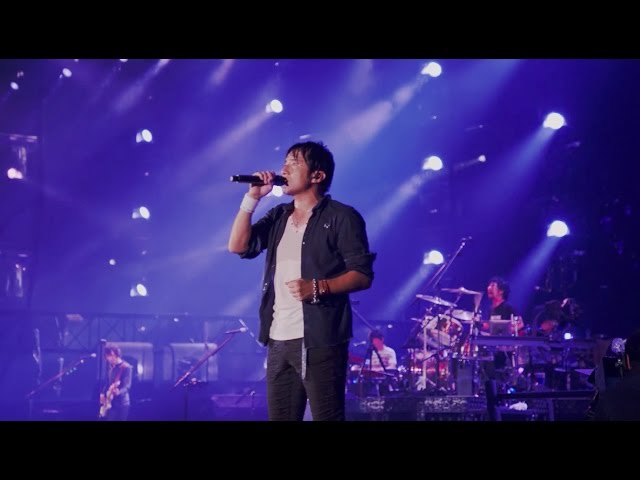
Mr.Children has many difficult songs, but among those, the highly well-known “Tomorrow never knows” is the one I especially recommend.
The main challenge lies in the final chorus.
Due to a key change, the key modulates up by two semitones, and since the original range is from mid1 F to hi B, there isn’t much room to lower or raise the key.
It’s fundamentally a song that demands a wide vocal range from the singer.
Truly worthy of being called a difficult piece.
If you’re confident in your vocal range and pitch control, give it a try.
fanfareMr.Children

Mr.Children’s classic “fanfare,” which evokes the vibe of UK rock.
Although it features a crisp, punchy rock sound, the vocals frequently employ shouts, so powerful singing is required in every section.
The range is fairly wide, from mid1 C# to hi A#, and the hi A parts demand both shouting and sustained long tones, requiring solid foundational vocal technique.
If you’re confident in a raw, gritty vocal style, be sure to add this to your repertoire.