

[Elementary School Music] List of Popular and Nostalgic Songs That Have Appeared in Textbooks


Do you remember the songs you sang in elementary school music class or the pieces you played on the recorder?
Songs learned in childhood are deeply engraved in our memories, and sometimes a fragment of the melody pops into your head out of the blue.
In this article, we’ll introduce songs that were featured in elementary school textbooks, as well as pieces that are still included today.
From nostalgic children’s songs to recent J-pop, the genres are diverse.
Of course, you can simply listen and reminisce, but it’s also great to listen with family or friends and let the conversation bloom with memories!
- [Ensemble Pieces for Elementary School Students] A comprehensive introduction from timeless classics to the latest hits!
- [Elementary School Chorus Songs] A comprehensive showcase from moving masterpieces to the latest hit tunes!
- Nursery rhymes you’ll want to sing at karaoke: classic and popular songs everyone can enjoy together.
- What songs are popular among elementary schoolers? Well-known and sing-along favorites! [2026]
- Choral Songs Sung at Elementary School Graduation Ceremonies: A Collection of Moving Song Ideas
- Ranking of Popular Choral Songs [2026]
- [Showa-Era Graduation Songs] Nostalgic? Emotive? A curated selection of timeless classics loved across generations
- [For Upper Grades] Easy-to-sing songs for elementary school students. Popular karaoke hits that get everyone excited
- Songs about schools: a collection of songs that depict school building scenery.
- Memories come flooding back! Graduation songs recommended for the Yutori generation
- Folk Songs of the World | Hometown Songs Passed Down Abroad
- Recommended anime theme songs for children: timeless anime song classics you should listen to at least once.
- [Even If You're Tone-Deaf, No Worries] Recommended for Elementary School Kids! Popular Karaoke Songs That Are Easy to Sing
[Elementary School Music] List of Popular and Nostalgic Songs That Have Appeared in Textbooks (21–30)
Spring MeadowSakushi: Sakata Hiroo Sakkyoku: Ichikawa Toshiharu

This is a children’s song by poet-lyricist Hiroo Sakata and composer Toshiharu Ichikawa, a pioneer of educational music, depicting a foal galloping across a pasture.
It sings of a lively young horse running about in the spring breeze, with fresh grasses and flowers sprouting all around.
It has been included for many years in lower-grade music textbooks, featuring a comfortable vocal range and an easy-to-remember melody that thoughtfully draws out children’s natural singing voices.
It is featured in Educational Art Company’s elementary school music textbooks for the 2020 and 2024 school years, with accompanying teacher’s CDs and beginner piano scores available.
Expressing the vibrant feeling of spring through a bright, light rhythm, this piece is perfect for choral singing in early childhood settings as a new season begins, or for family sing-alongs at home.
If your child loves ranches or animals, try singing it together for fun!
Flowers will bloom.
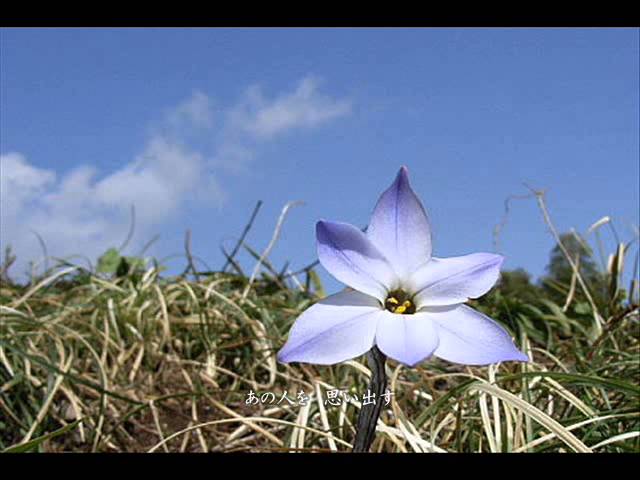
Released in 2012, Hana wa Saku is a song with lyrics by Shunji Iwai—an audiovisual creator known for a distinctive aesthetic and a devoted fan base through works like Swallowtail and All About Lily Chou-Chou—and music by Yoko Kanno, a globally renowned composer for anime, TV dramas, commercials, and numerous artists.
It is a charity song for the areas and people affected by the Great East Japan Earthquake, which threw Japan into turmoil the previous year, 2011, and was produced as the theme song for NHK’s disaster-relief initiative, the NHK Great East Japan Earthquake Project.
Its positive, warm message that gently embraces the listener is truly wonderful.
Both Iwai and Kanno are from Sendai, and the recording features singers from or connected to Iwate, Miyagi, and Fukushima.
There is also a solo version sung by AKB48’s Karen Iwata—the only participant who was herself a disaster victim—so if you’re interested, please check it out.

[Elementary School Music] List of Popular and Nostalgic Songs That Have Appeared in Textbooks (31–40)
Light of Fireflies

This is a song we learned in music class.
Many people, from children to adults, know it well.
As a classic that gently signals parting or endings, it resonates not only at school graduations but also in many everyday moments.
You can hear it in closing department stores or at the end of events, and because the melody is so familiar, it lingers in the heart.
Its bittersweet yet warm tone is something you’ll recall in unexpected moments even as an adult.
Listening alone on a quiet night, it stirs nostalgia for days gone by.
With Japanese lyrics set to a Scottish folk melody, this piece has long been beloved; people of all ages know it, and it remains a timeless classic that stays with you in any era.
Aux Champs-Élysées
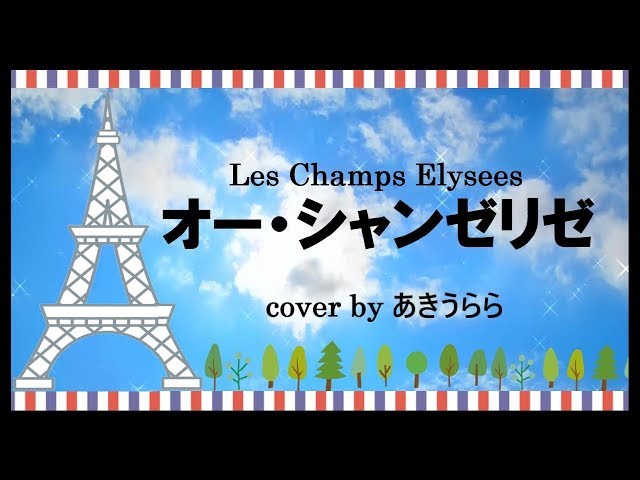
“Aux Champs-Élysées” is a song inspired by the Champs-Élysées avenue in Paris, France.
Its origins go back to a song that was created in the UK in 1968, which later received French lyrics and was released by singer Joe Dassin in 1969 as “Aux Champs-Élysées.” In Japan, it has been covered by artists such as Fubuki Koshiji and The Peanuts.
The song appears not only in elementary and junior high school music textbooks but also in high school textbooks, making it widely known across generations.

I look up as I walkSakamoto Kyu

This is a song known as one of Kyu Sakamoto’s signature works.
It portrays the feeling of trying to walk forward while holding back tears, set to a gentle melody.
Released in 1961, it became a huge hit not only in Japan but also overseas.
In the United States, it was popularly known under the title “Sukiyaki” and achieved international success, including reaching No.
1 on the Billboard Hot 100.
Through depictions of various seasonal scenes, it expresses a determination not to lose hope despite loneliness and sorrow, making it a song that offers comfort to those trying to overcome difficult times.
This work is a heartwarming piece that gives you the courage to keep moving forward.
We Look Up to You with Respect

These days, it’s becoming mainstream to sing popular artists’ songs as graduation tunes, so I feel like “Aogeba Tōtoshi” doesn’t get performed as often.
Still, the sentiments in this song—gratitude to the teachers who took care of us and memories of our school days when we look back—are timeless and universal.
I think the time will come again when this song is sung at schools everywhere.
That short piano intro is so moving, isn’t it? In 2007, it was selected as one of the “100 Best Japanese Songs.” Even now, it remains one of the quintessential songs for graduation ceremonies.
Orchestra of Life

This is a piece by Kensuke Yugeda that straightforwardly conveys the beauty of nature and the preciousness of life.
It’s included in the fourth-grade music textbook published by Kyoiku Geijutsu Sha and is likely a song familiar to many children.
Said to have been inspired by a walk in the forest, the work was released in April 2020.
Its evocative depiction of natural sounds—like birdsong and the rustling of trees—likened to an orchestra is striking and may resonate with listeners.
It’s a perfect choice not only for school music classes but also for moments when you want to feel close to nature.