

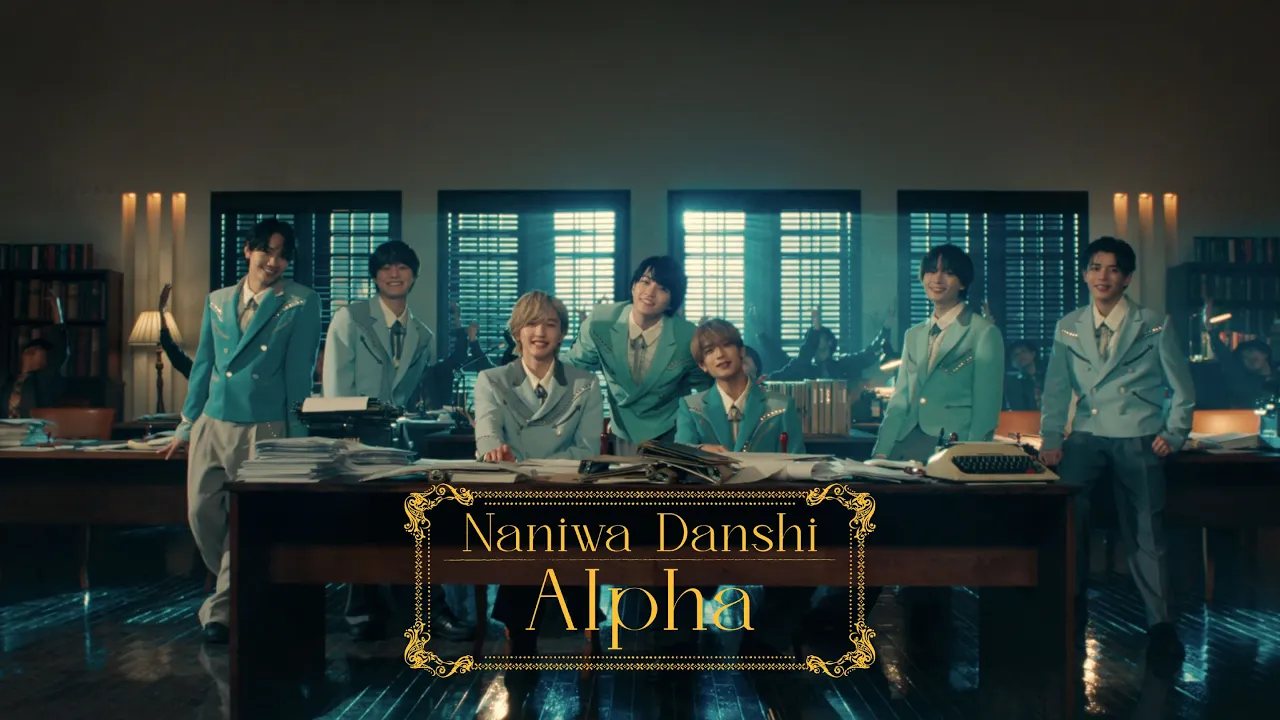

Naniwa Danshi, shining as the newest stars of Kansai.
Their songs, each showcasing the unique personality of every member, capture the hearts of fans.
In an era when many lean toward K-POP-inspired sounds, they proudly uphold a classic idol style—another key part of their appeal.
Why not explore the charm of Naniwa Danshi’s singable tracks that you’ll find yourself humming along to? We’ll highlight songs featuring expansive melodies and lyrics that resonate deeply.
You’re sure to discover a track you’ll want to add to your playlist.
- Recommended and popular songs by Naniwa Danshi: a curated selection of tracks that resonate with the heart
- Cute idols from Kansai! Ranking of Naniwa Danshi’s popular songs
- [Johnny's Classic Hits] Carefully Selected Popular Songs That Are Sure to Liven Up Any Karaoke Session!
- [Karaoke] Recommended easy-to-sing songs by KinKi Kids
- [Karaoke] A roundup of easy-to-sing NiziU songs
- [Karaoke] A roundup of easy-to-sing King & Prince songs
- [Naniwa Danshi] Master hit songs on the piano without sheet music—and for free!
- Karaoke songs by SixTONES that are easy to sing
- Recommended songs by King & Prince: a curated selection of popular tracks you’ll want to sing at karaoke
- Johnny's WEST's masterpieces and popular songs
- [Karaoke] Easy-to-sing Arashi songs & popular karaoke picks!
- Popular, easy-to-sing karaoke numbers by Official HIGE DANDism
- WANIMA songs that are easy to sing, including tracks that are approachable even for those who struggle with high notes!
Easy-to-sing Naniwa Danshi songs: Popular tracks that hype up karaoke (1–10)
Be My BabyNEW!naniwa danshi

This piece, chosen as the theme song for the film “Yamaguchi-kun wa Warukunai,” starring Kyohei Takahashi as the protagonist, was released in May 2026.
It’s included on their album “ND⁵,” which symbolizes their anniversary year as they celebrated their 5th debut anniversary in November 2026.
It’s a love song that straightforwardly portrays affection, sprinkled with Kansai dialect, and its energetic rock-tinged sound feels great.
I hope not only those who want to confess their feelings to someone they like, but also those who want a boost of power to tackle something, will give it a listen!
Alphananiwa danshi

“Alpha” features many bright yet somewhat ballad-like, mellow phrases.
It’s a song that evokes the feel of the Heisei-era idol style, and overall it’s tied together by catchy vocals.
The vocal range for this track is mid1E to hiC.
Since it sits within a typical range and the melodic movement is similar to that of standard J-pop, it can be considered quite easy to sing.
However, because the core of the song generally centers on mid-to-high notes, if you find it a bit high, it’s better to adjust the key based on the frequently occurring mid2C rather than the highest note.

Missingnaniwa danshi

The song “Missing,” used as the theme for the TV drama Knocking on a Locked Door starring member Daigo Nishihata.
For Naniwa Danshi, it’s unusually cool and stylish in its production.
While the piece has a strong jazz flavor, the vocal line itself leans toward J-pop with a slightly kayōkyoku feel, so it’s not overly difficult.
However, a falsetto appears toward the end of the chorus, so take care there.
Since it’s a relatively low falsetto, it’s a good idea to lower the key and try singing it with mixed voice.
Please use this as a reference.
Poppin’ Hoppin’ Lovin’naniwa danshi

The song “Poppin’ Hoppin’ Lovin’” is notable for its bright melody.
Released in 2023, it delivers a highly pop-oriented sound just as the title suggests.
This kind of style can be considered Naniwa Danshi’s forte.
The song’s vocal range is an average mid1F to hiC.
While the pitch movement is somewhat lively, the standard range and mid-tempo make it overall easy to sing.
I wish you lots of happinessnaniwa danshi

Naniwa Danshi’s classic “Sachiare” is memorable for its poppy melody.
Although the range is on the higher side at mid1D to hiD, it’s not particularly difficult for female singers.
For male singers, the B-melody before the final chorus may feel high, so it’s a good idea to lower the key with that section as the reference point.
The vocal line itself is straightforward without quirks, so as long as you can handle the range, it shouldn’t feel difficult to sing.
First Lovenaniwa danshi

Speaking of Naniwa Danshi, many people probably think of “Ubu Love,” right? This song was the one that put them on the national map, featuring a classic idol-song vibe with a sweet, poppy melody throughout.
While the vocal range is somewhat wide at mid1B to hiC, it involves almost no advanced techniques like ad-libs, and the pitch movement isn’t particularly drastic, making it overall an easy song to sing.
Be sure to add it to your repertoire.
Koisuru Hikarinaniwa danshi

The masterpiece “Koisuru Hikari,” which serves as Naniwa Danshi’s seventh single, was used as the theme song for the film “We Who Don’t Know Love,” starring group member Ryusei Onishi.
Thanks in part to the movie’s popularity, the song is widely supported among fans.
While the range spans a fairly wide mid1 D to high C#, it’s still easy to sing in terms of tempo and diction.
You might find the falsetto at the end of the chorus challenging, but at that pitch, difficulty often comes from not being able to produce a low falsetto.
So it can be a good idea to boldly raise the key, centering it around the falsetto section.