

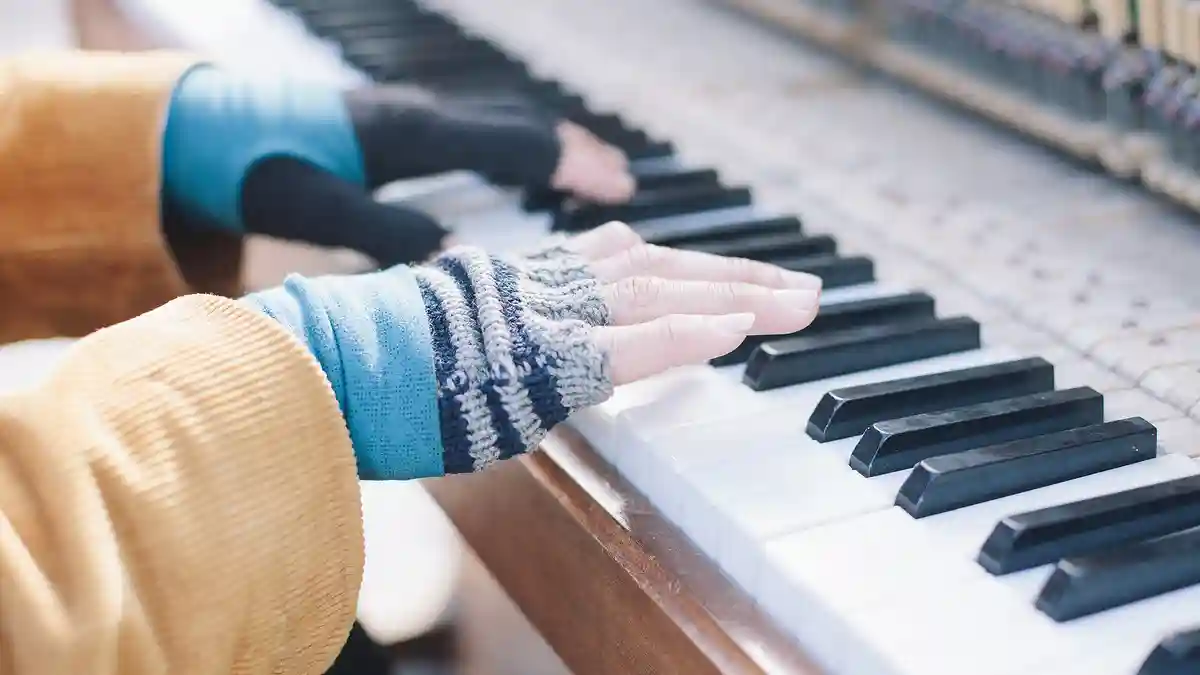
If you’re aiming to become a nursery school teacher, piano is a required subject.
Because of that, some people start learning after entering a vocational school or university.
Recently, I get the impression that more people than before are taking or starting lessons because they’re aiming to become nursery school teachers.
In this article, I’ll introduce recommended digital pianos for current and aspiring nursery school teachers.
- Childcare: Today's recommended fun songs
- [Latest] Nursery Teacher Exam Piano Set Pieces | Thorough Prep with 2023 Selections and Past Pieces!
- A must-see for childcare workers! A collection of app ideas that are useful for daily childcare activities.
- Recommended musical instruments for children's lessons
- At what age should you start learning the piano?
- [For Preschool Teachers] Recommended Costumes for Halloween
- [Childcare] A collection of recommended melodica (pianica) songs for 4-year-olds
- [Childcare] Recommended for sports day performances and dances! A collection of classic and popular songs
- Recommended Songs to Try on the Melodica for Kindergarten Seniors
- [Preschool] Recommended choral pieces for 3-year-olds
- [Childcare] Fun Songs for 2-Year-Olds to Sing! Recommended Song Collection
- [For 3-year-olds] Songs to sing at nursery schools and kindergartens! Popular and recommended songs
- [Entrance Ceremony] Let smiles spread through song! A recommended collection of songs perfect for nursery and kindergarten advancement as well
What level of musical performance is expected of childcare workers?
Nursery school teachers are not expected to have extremely advanced performance skills on par with music college students.
So, how much performance skill is required?
When you put it that way, it's hard to express because it can't be quantified, but at the very least,
- I can play children's songs with ease.
- Be able to play them with enough ease to sing along
- Able to convey the fun/enjoyment of songs and music.
Such performance skills will be required.
Therefore, techniques like super agile finger movement or playing complex rhythms are not required.
It’s certainly better if you can play it, though.
Given this, assuming that such a high level of technical skill is not required,An electronic piano in the 100,000 to 150,000 yen range will be sufficient.。
Even if it’s expensive, it’s best to keep it to around 200,000 yen.
However, if you started learning with the goal of becoming a nursery teacher and ended up getting more into the piano than you expected—so much that you want to pursue it as a hobby as well—you could choose a higher-level class.
Now, I’ll introduce the recommended points for each price range.
Under 100,000 yen class
When it comes to digital pianos priced under 100,000 yen, they are the stylish type.
It doesn’t take up much space, so even people living alone will find it easy to secure a place for it.
In particular, the following two are recommended because, for under 100,000 yen, they offer good touch and sound.
Roland F-140R
The touch of the Roland F-140R is flawless for a stylish-type model!
The comfortable playability and the beautiful piano tone are the recommended points.
Roland FP-30
Likewise, Roland’s FP-30 is recommended for its keys, which have a satisfying feel and a moderately weighted action.
For this price, this touch/feel is excellent.
The stand is sold separately, so you can choose any one you like.
Just changing the stand can also change the impression when it’s set up.
If you buy it together with the dedicated stand, it will look more like a piano, so you can approach it with the mindset of really practicing hard.
In contrast, if you choose an X-type stand, the room will have a cleaner, more streamlined look.
100,000-yen class
This digital piano, priced in the 100,000-yen range, is designed with a focus on replicating a grand piano.
While not too expensive,The keyboard and sound performance far surpass that of the stylish model.。
With Yamaha’s YDP-163, its straightforward, uncolored ease of use is appealing, and the Roland RP501’s playability and beautiful tone suit children’s songs and preschooler-oriented anime tunes very well.
You can’t go wrong with any choice in this price range!
Even among those, if I had to recommend one in the 100,000-yen class of digital pianos, it would definitely be this one.
Kawai CN27
The biggest selling point of Kawai’s CN27 is its excellent key touch, despite being an affordable digital piano priced at around 100,000 yen.
Keys with a solid, weighty feel, close to that of a grand piano.
In addition to being heavy, it also features a let-off feel function, further enhancing realism.
It’s designed with playing a grand piano firmly in mind, making it good practice for mastering heavier keys.
I asked a junior colleague who still works at a music store, and it seems the CN27 is also popular among people aiming to become childcare workers.
Recommended digital pianos in the 150,000-yen class
Compared to the 100,000-yen class, the touch nuance is even more detailed, and the sound is closer to the real thing.
Even if you’re not aiming for ultra high-level performance, if you want to solidly build up a certain level of technique, an electronic piano in this price range is by far the best recommendation!
Yamaha’s CLP-635 allows for even more precise dynamic expression than the YDP-163, so you’ll remain satisfied using it even as you improve over time.
Both the touch and the sound feel natural, making it easy to use with minimal quirks.
Kawai’s CN37 and CA48, like the CN27, are characterized by their heavier key action.
In particular, the CA48 features wooden keys at a price under 200,000 yen.
Among these, the recommended one is this digital piano.
Roland HP601
Although the Roland HP601 falls into the 150,000-yen class, it uses the top-tier keyboard.It has the same touch feel as an electronic piano in the 300,000-yen class.。
It also has a feature that lets you play songs stored on your smartphone via a Bluetooth connection.
A major point is that you can use this feature to play along while playing your favorite songs or assigned pieces.
This is a feature that is quite helpful for practice.
Roland DP603
Roland’s DP603 definitely deserves a spot on the recommended list too!
Combines a premium tactile feel with a compact depth.
You can practice with keys that feel close to a piano, without worrying about finding a place to put it.
It’s a very pleasing size for people who are thinking about living alone after getting a job, as well as for those who already live on their own.
Recommended digital pianos in the 200,000-yen class
Kawai’s CA58 features wooden keys that provide a solid, weighty playing feel.
The Roland HP605 delivers a lifelike, three-dimensional sound with its six-speaker system.
These two features are also very good, but at this price point, for current childcare workers or those aiming to become childcare workers,It's fine even without such sharp/distinct features.
Therefore, the top recommendation in this price range is the Yamaha CLP-645.
Yamaha CLP-645
Compared to the two above, Yamaha’s CLP-645 is “normal” in a good way, so it should be easy to practice any piece on it.
With its moderately weighted wooden keys and unobtrusive sound, it offers the most natural playing experience.
Lastly
Among current and aspiring nursery school teachers, the most popular and recommended price range for digital pianos is the 100,000–150,000 yen class.
Indeed, for an electronic piano in this price range, both the touch and the sound provide a solid, authentic piano feel.
Therefore, when they actually go to the nursery and play a grand piano or an upright piano, the gap compared to practicing at home isn’t that big.
You should be able to fully demonstrate the results of your practice.
Also, once you pass the exam and officially become a childcare worker, many of you will likely graduate from the lessons.
But the real challenge begins after you become a nursery school teacher.
For example…
- I’ve been assigned to play the piano at the upcoming event.
- I have a piece I’ll be playing in front of the children, so I need to make sure I can play it by then.
You still need to practice at home.
But even if it’s for work, if you’re going to play anyway, wouldn’t it be better to practice in a way that’s fun?
100,000 yen or 150,000 yen is not a cheap purchase.
That's exactly why it's better to choose a digital piano that makes you feel like you want to play it, don't you think?
And if you choose something that feels that way to you, you'll be able to use it for a long time.
For nursery teachers and everyone aspiring to become one, I hope you choose an electronic piano that truly satisfies you, not just based on price!