

[For Seniors] Recommended Songs for Care Activities and Events! Crowd-Pleasers That Bring Joy

Many nursing homes and day service centers incorporate music appreciation, don’t they?
Listening to music is a form of entertainment anyone can enjoy.
Older adults likely have songs that have stayed with them throughout their lives.
So this time, we’ll introduce songs that seniors will love.
We’ve gathered many songs that can make seniors feel nostalgic or uplifted.
They’re perfect for playing at recreational activities and events, too.
Even seniors who find it difficult to go out may feel refreshed by listening to seasonal songs.
Nostalgic tunes can also stimulate the brain by prompting the recall of memories.
We hope you’ll make the most of this article.
- [For Seniors] Songs Everyone Can Sing Together! A Roundup of Recommended Crowd-Pleasers
- Ranking of popular songs for senior citizens
- [For Seniors] Let’s Have Fun Together! Introducing Uplifting, Energizing Songs
- [For Seniors] Popular Karaoke Songs That Everyone Can Enjoy Together
- [Celebration] A compilation of Japanese songs that elderly people will enjoy
- Great songs recommended for people in their 80s: a collection of tracks with lyrics that touch the heart
- [For Seniors] Winter songs you'll want to hum along to. A collection of classic tunes recommended for BGM and recreational activities
- [For Seniors] Crowd-Pleasers! A Collection of Classic Karaoke Songs
- [Sing for your health!] Popular songs among seniors. Also recommended for recreational activities.
- [Recommended for people in their 70s] Songs that really move you. Beloved classic Japanese hits of the past.
- [Grandpa & Grandma] Timeless Songs to Gift to Seniors
- Also great for dementia care! Recommended dance songs for people in their 70s: Let’s dance to those classic hits
- [For Seniors] A heartwarming round song. Let’s layer our voices with this nostalgic classic.
For seniors: Recommended songs for caregiving activities and events! Crowd-pleasing favorites (1–10)
The Bride of SetoKoyanagi Rumiko

Ruriko Koyanagi, who trained at the Takarazuka Music School and, despite a brief stint with the Takarazuka Revue, has continued to thrive as both a singer and an actress from the Showa era through Heisei and now Reiwa, wields exceptional singing and acting ability as her strengths.
With such a long career, each generation has its own image and impression of her.
For those who remember Koyanagi at the height of her popularity in the early 1970s as a talented idol singer, the song “Seto no Hanayome” featured here may well bring tears of nostalgia.
Her fourth single overall, “Seto no Hanayome,” released in 1972, followed her debut song “Watashi no Jokamachi” to become another major hit.
It won the Grand Prize at the 3rd Japan Kayō Awards and the Vocal Performance Award at the 14th Japan Record Awards, making it one of the quintessential songs of the 1970s.
Aligned with the “Discover Japan” campaign run by the then–Japanese National Railways, it is, as the title suggests, themed around the Seto Inland Sea—a so‑called local song—so users from Shikoku might find it especially delightful!

Journey of the Heartchūrippu

This song by Tulip is a heartwarming classic that portrays parting with a loved one and a new beginning.
Sung with a sweet voice, its melody is sure to resonate deeply with older listeners.
Released in 1973, it became the band’s first hit and has been cherished by many.
The song has also been used in TV programs and commercials, making it popular across generations.
Its nostalgic lyrics evoke fond memories, soothing the hearts of seniors and providing positive stimulation for the brain.
It’s a perfect tune for cheerful events or peaceful moments of music appreciation.
Shopping BoogieKasaogi Shizuko

Let me introduce a song by Shizuko Kasagi, a leading figure in Japan’s postwar music scene.
With its lively rhythm and playful lyrics, it’s a tune that older adults can easily enjoy.
Released in June 1950, this piece is distinctive for its Osaka-dialect, dialogue-style lyrics.
It humorously depicts a shopping scene, and just listening to it is sure to lift your spirits.
It could be fun to sing together with seniors or even come up with some choreography.
It’s a wonderful song that brings smiles along with a sense of nostalgia.
Please consider using it for recreational activities.
[For Seniors] Recommended for Care Activities and Events! Crowd-Pleasers That Get Everyone Excited (11–20)
12th graderFunaki Kazuo

School songs that capture the ever-shifting feelings of teenagers are always popular, and “Koko Sannensei” (High School Senior) is the quintessential classic among them—a landmark of youth kayō music.
At the time of recording, Kazuo Funaki was himself a third-year high school student, and his fresh, vibrant vocals breathed life into the song.
It became a massive hit, surpassing one million copies sold in less than a year after its release.
Funaki won the New Artist Award at the 5th Japan Record Awards.
The film of the same title, starring Funaki, was also a smash hit, and this debut song catapulted him to instant stardom.
Since we’re at it, it might be fun to organize a film screening and, after watching, have everyone don school uniforms and sing this song together!
Tsugaru Strait Winter SceneIshikawa Sayuri
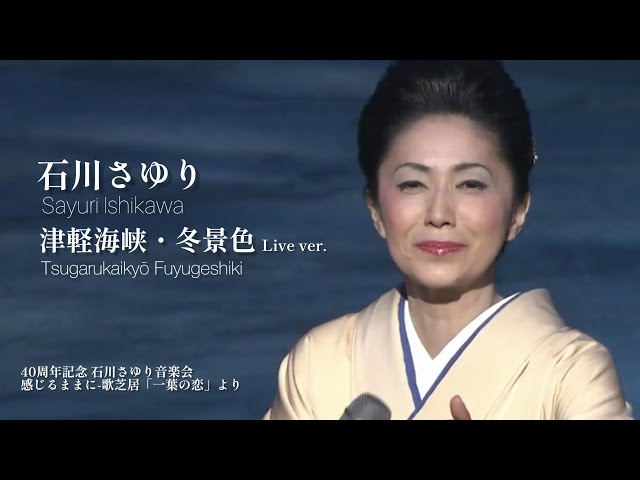
Sayuri Ishikawa, who holds the record for the most appearances by the Red Team on NHK’s Kōhaku Uta Gassen, graced Japan’s New Year’s Eve in 2022 with a commanding performance of her signature song “Amagi-goe.” Originally debuting at the young age of 15 as an idol singer, Ishikawa did not achieve major success in that field.
She dedicated herself to vocal training, honed her singing skills, and transitioned into a full-fledged enka singer.
In 1977, she had a major breakthrough with “Tsugaru Kaikyō Fuyugeshiki,” a single cut from her album released the previous year, “365-nichi Koi Moyō.” Speaking of classic Shōwa-era songs, this one features lyrics by Yū Aku and composition and arrangement by Takashi Miki.
Along with “Amagi-goe,” mentioned at the beginning, “Tsugaru Kaikyō Fuyugeshiki” has become a beloved national favorite—often performed alternately every other year when she appears on Kōhaku—so people of all ages are likely to have heard it at least once.
Even younger facility staff should be able to enjoy singing this song together with the residents!
Flowers will bloom.Sakushi: Iwai Shunji/Sakkyoku: Kanno Yoko

This work was created with the aim of supporting recovery from the Great East Japan Earthquake.
The lyrics, said to be written from the perspective of those who passed away, carry a gentle yet powerful message.
Shunji Iwai wrote the lyrics, Yoko Kanno composed the music, and it was performed by members of the “Flowers Will Bloom” project.
Released as a single in May 2012, it has long been cherished as NHK’s recovery support song.
There are various arrangements, including a version featuring figure skater Yuzuru Hanyu, and it is loved across generations.
It’s the perfect song for moments spent thinking of someone dear while watching flowers bloom with the arrival of spring.
Please hum along to this beautiful melody that rests close to everyone’s heart.
What a nice bath.dorifutāzu

When people take a bath, many—across generations—find the melody of this song popping into their heads.
With lyrics by Rokusuke Ei, known for songs like “Sukiyaki (Ue o Muite Arukō),” and music by Tak Inoue, who produced numerous Showa-era classics across genres, “Ii Yu da na” is a masterpiece that lingers in the hearts of Japanese people.
While many remember it as sung by The Drifters, the original was actually a kayōkyoku released by Duke Aces in 1966.
The Drifters’ version first appeared in 1968 as a cover; later, it was adapted as parody songs: “Dorifu no Vivanon Ondo” for the ending of the TV show “It’s 8 O’Clock! Everyone Gather ’Round!” and “Sayonara suru no wa tsurai kedo” for the ending of “Dorifu Daibakushō.” Although the song began as a local-themed tune, if you’re singing it together with users, the Drifters’ version may be the one people are more familiar with.