

Songs with titles starting with 'O' [Great for karaoke and shiritori!]

Songs with titles starting with “O” often feature unique names—like those using characters meaning “dance” or “gold,” as well as Osaka-themed songs.
They also tend to be great for getting everyone fired up when singing! I can’t think of many off the top of my head, so I want to look some up…
This is a list that might come in handy at such times: songs with titles that start with “O.” Use it when you’re wondering, “What songs start with ‘O’?” and also as a prompt for shiritori or when choosing tracks at karaoke.
- Vocaloid songs that start with 'O'
- Masterpieces with titles that start with 'A'
- Songs with titles that start with “wo.” Useful as hints for karaoke and shiritori!
- 2000s: A Collection of Hit Karaoke Classics
- A roundup of songs with titles starting with 'Da' (Dai-〇〇, Diamond, etc.)
- Songs with titles that start with 'Ke'
- Songs Men Want Women to Sing at Karaoke: Irresistible Tracks [2026]
- A compilation of Vocaloid songs with titles that start with 'wo' (を)
- Songs by Yoshimi Tendo, the songstress born in Osaka, that are easy to sing
- Songs with titles starting with “No” (Perfect for karaoke and shiritori!)
- Songs with titles that start with a number. Useful for karaoke or playlist selection.
- Cool If You Can Sing! Popular Karaoke Songs Recommended for Women
- Songs with titles that start with 'de'. Perfect as hints for karaoke or shiritori!
Songs with Titles Starting with 'O' [Great for Karaoke & Shiritori!] (61–70)
Ordinary daysmilet
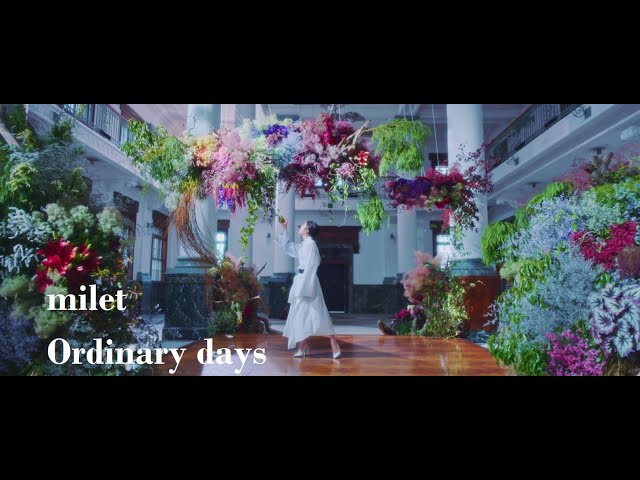
Ordinary days, which was chosen as the theme song for the drama “Hakozume: Tatakau! Koban Joshi,” starring Erika Toda and Mei Nagano, is the title track of milet’s 7th EP, Ordinary days, released in August 2021.
Expressing the irreplaceable nature of everyday life and the feeling of cherishing someone, this work strikes a chord with its dynamic yet delicate sound co-written with Koichi Tsutaya.
It also drew attention when its music video won Best Pop Video at MTV VMAJ 2021.
With a voice that blends enveloping warmth and strength, milet delivers a song that feels perfect for adding color to ordinary days or when you need energy for tomorrow.
Since you came, I have to sing now, don’t I?piinata

How about an electro-pop tune that blends venom and cuteness to perfection—purely addictive from start to finish? Its fierce hook will lodge in your ears after a single listen, and Teto Kasane’s provocative vocals are irresistibly habit-forming.
It’s like a rush of beats racing through your brain all at once.
Teaming up with video artist Shirock, this track was released in June 2025.
Peanata’s sound brims with rapidly unfolding waves of audio that never let the listener get bored.
In a compact two and a half minutes, it packs in dense, overwhelming ideas.
Perfect when you want to crank up your energy or dive into something a bit edgy—experience it with your own ears.
Golden LionZa Rīsaru Weponzu

It’s a stadium-sized anthem packed with love and fervor for the golden age of professional baseball.
The Lethal Weapons’ “Golden Lion,” born from their deep admiration for ’80s culture, radiates respect for the star players of that era in every line.
The invigorating, synth-driven rock sound and shout-along call-style phrases will get your heart racing.
Released in February 2026, this track arrived at remarkable speed—just three months after their comeback from a long hiatus.
Its explosive energy, condensed into just 2 minutes and 27 seconds, is simply stunning.
It’s a tremendously powerful fight song that will push you forward when you want to give it your all or face a crucial moment.
Thanks to me.Onoe Matsuya

A song from the Disney movie Moana, which depicts an adventure set on a southern island.
It’s performed in the scene where Maui—the shape-shifting master whom Moana meets, a demigod—boasts about his past exploits.
In the Japanese version, kabuki actor Matsuya Onoe handled both the dubbing and the vocals.
The song is included on the album “Moana (Original Soundtrack / Japanese Version),” released in March 2017.
With a lively rhythm that weaves in rap and humorously flaunts his confidence, this track fills you with positive energy just by listening.
If you really get into character and sing it out, it’s sure to instantly brighten the mood! It’s the perfect number for times when everyone wants to get pumped up together!
OmoidamaKanjani∞

Woven from roughly 6,000 phrases submitted by high school students across the country, and featuring a recording by a wind instrument ensemble of high schoolers chosen through auditions, this is truly a track imbued with the very warmth of the ballplayers.
Released in July 2014, it was selected as the “2014 ABC Summer High School Baseball Support Song” and as the theme song for Asahi Broadcasting/TV Asahi’s “Netto Koshien.” It was also included on the album “Kanjanism” and has since become one of the group’s signature songs.
The sound design overlaps with the cheers from the stands and the resonance of the brass band, and every listen sets a quiet heat glowing deep in your chest.
OasisDo As Infinity

This is one of Do As Infinity’s signature early works.
The fusion of strummed acoustic guitar and full band sound is exquisite, and Tomiko Van’s dignified vocals resound throughout.
The lyrics, carrying a message about living strongly—like watering a parched heart—are also memorable.
Released in January 2000 as their third single, it drew attention as the CM song for Kanebo Cosmetics’ “Testimo.” It’s included on albums such as BREAK OF DAWN.
This track is also known for marking the start of producer Seiji Kameda’s involvement.
It’s a masterpiece I want people who are about to take on a challenge or are searching for a place of their own to hear.
Even if it’s one of a kindkujira

That sudden sense of loneliness, the impatience that comes from comparing yourself to others.
KujiRa’s “Even If I’m an Only One” gives voice to those feelings that have nowhere to go.
Released digitally in July 2025, the track is also included as the coupling song on the CD single featuring the opening theme for the anime “Shabake.” The lyrics, which capture fragments of contemporary life, and the light yet somehow wistful melody slip right into your heart.
We all have those nights when we worry we’ll never become anyone at all, don’t we? In those moments, KujiRa’s distinctive choice of words is sure to gently loosen a heart grown stiff.