
Enthralling odd meters: mysterious music with odd time signatures and complex rhythms

Suddenly, but have you heard the musical term “irregular time signatures”? Many of you probably learned concepts like 4/4 in music class, but unlike common meters like 4/4 or 3/4, pieces that use unconventional meters such as 5/4 or 7/4—or even switch between multiple meters within a single song—are collectively referred to as “irregular time signatures.” They might sound a bit niche, but in fact, you can find irregular meters in pop songs, anime themes, and more that you hear every day.
In this article, we’ll introduce songs that use these intriguingly unusual time signatures, spanning a variety of genres.
Be sure to try counting along as you listen!
- The Appeal of Odd Time Signatures: A Compilation of Songs That Use 7/4 Time
- The Appeal of Irregular Time Signatures: A Collection of Songs in 5/4 Time
- Addictive Anime Songs That Use Irregular Time Signatures
- Masterpieces in 3/4 Time: That Hit Song Too!? A Curated Selection of Popular Japanese and Western Tracks
- Songs with satisfying key changes: classic J-POP and Japanese tracks where the mood and impression shift naturally
- [2026] Grabs Your Heart! Songs with Cool Intros. Classic Tracks with Electrifying Openings
- The World of Addictive Songs: Loops that Spiral with Irresistible Catchiness
- Dance music that was popular among Gen Z. A song that went viral.
- Barrage of words! The best fast-talking songs. Shocking, high-speed rapid-fire tracks.
- Masterpieces of the Reiwa Era: Hit Songs That Define the Times
- A catchy tune that sounds familiar
- [Hot & Cool] Up-tempo, hype-inducing anime song
- [Rhythm] A roundup of popular Japanese songs that use 16-beat [2026]
Enthralling odd meters: Mysterious music with odd time signatures and complex rhythms (21–30)
Kids Returnsōtaisei riron

In the 2000s, Sotaisei Riron suddenly burst onto the Japanese rock scene, quickly becoming a sensation thanks to vocalist Etsuko Yakushimaru’s uniquely sweet, conversational singing voice and the band’s experimental musicality.
Among their tracks, one that I’d like to highlight for its use of an irregular meter is Kids No Return, included on a single sold exclusively at live shows.
The 11/8 time signature is certainly noteworthy, but what truly stands out is Yakushimaru’s commanding vocal presence, which remains unfazed by such rhythmic idiosyncrasy.
Take FiveDave Brubeck

It’s a famous jazz standard—you’ve probably heard it on TV and elsewhere.
As the title suggests, “Take Five” stays in 5/4 time from start to finish.
Because of that, it’s dramatically difficult to play for those accustomed to 4/4 rhythm, making it a real challenge for beginner jazz players.
To count it, try thinking of it as 3/4 + 2/4; that’ll help you catch the groove.

Perfect GardenPeople In The Box

They are a three-piece band that can be considered one of the leading representatives of the “Zankyo-kei” rock bands that colored the Japanese rock scene of the late 2000s.
Their appeal lies in delicate ensembles and a wistful vocal style that enrich the songs’ dreamlike worlds.
But their greatest strength is how they weave seemingly tricky odd meters into their music with an entirely natural flow.
You could say they’re a gateway rock band to the world of irregular time signatures.
The Dance of EternityDream Theater
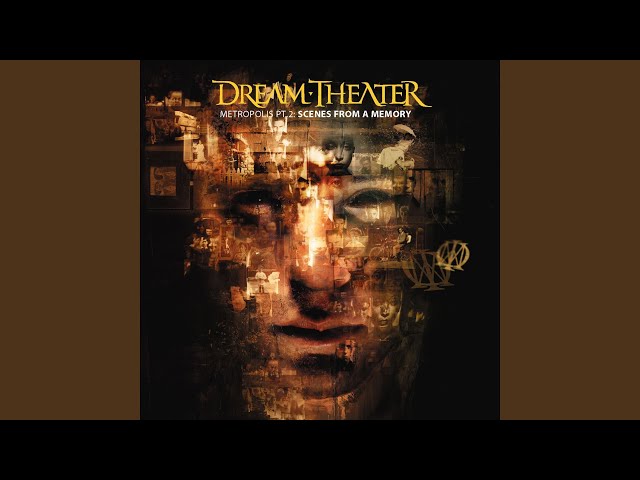
Dream Theater, a band that represents the progressive metal scene with their bold use of odd time signatures, enjoys immense popularity in Japan as well.
Among their instrumental tracks, this one is particularly famous.
It’s a notoriously difficult piece that many technical players attempt, but it demands a different set of skills from those used for orchestral odd meters.
Depending on who transcribes the score, interpretations can vary widely, too.
Just from counting, you can spot measures of 5/4, 7/4, 10/4, 6/4, 4/4, and 3/4 scattered throughout.
Even if it’s hard to groove along, it’s a truly wonderful track that lets you immerse yourself in its world just by listening.
A-E-I-U-E-O-AO!!Gekidan Hitotose Koto

There are various anime songs that use irregular time signatures, but among them, the opening theme of the 2017 anime “Hinako Note” is especially striking! Just when you think it starts off normally, it weaves in all sorts of meters—6/4, 5/4, 3/4, 2/4—making it hard to even clap along.
Still, the clever arrangement shines through, with things like inserting spoken lines during brief pauses, so the odd meters don’t feel overly jarring.
Himitsu Girl’s Top SecretZAZEN BOYS

ZAZEN BOYZ is a four-piece rock band formed by Shutoku Mukai, the frontman of NUMBER GIRL, who laid the groundwork for Japan’s alternative scene.
As you’d expect from a band whose members all boast exceptional musicianship, their playing might look effortless at first glance, but if you try keeping time while listening, you’ll quickly realize how intricate it really is.
The songs often sustain the same riffs and vocal phrasing, and even the rests are placed with a distinctive sense of timing, demanding intense focus from the performers—a rock band truly worthy of the name “ZAZEN.”
NanahitsujiShinario Aato

They’re a three-piece rock band from Shiga Prefecture.
Despite their already tricky mixed and odd time signatures that are hard to keep time with, the drummer also handles half of the twin vocals while playing—showcasing an incredible rhythm section.
If you build your cover around the female drummer, who’s confident in both her singing and technical skill, you’re sure to turn heads.
Why not give it a try?