
Enthralling odd meters: mysterious music with odd time signatures and complex rhythms

Suddenly, but have you heard the musical term “irregular time signatures”? Many of you probably learned concepts like 4/4 in music class, but unlike common meters like 4/4 or 3/4, pieces that use unconventional meters such as 5/4 or 7/4—or even switch between multiple meters within a single song—are collectively referred to as “irregular time signatures.” They might sound a bit niche, but in fact, you can find irregular meters in pop songs, anime themes, and more that you hear every day.
In this article, we’ll introduce songs that use these intriguingly unusual time signatures, spanning a variety of genres.
Be sure to try counting along as you listen!
- The Appeal of Odd Time Signatures: A Compilation of Songs That Use 7/4 Time
- The Appeal of Irregular Time Signatures: A Collection of Songs in 5/4 Time
- Addictive Anime Songs That Use Irregular Time Signatures
- Masterpieces in 3/4 Time: That Hit Song Too!? A Curated Selection of Popular Japanese and Western Tracks
- Songs with satisfying key changes: classic J-POP and Japanese tracks where the mood and impression shift naturally
- [2026] Grabs Your Heart! Songs with Cool Intros. Classic Tracks with Electrifying Openings
- The World of Addictive Songs: Loops that Spiral with Irresistible Catchiness
- Dance music that was popular among Gen Z. A song that went viral.
- Barrage of words! The best fast-talking songs. Shocking, high-speed rapid-fire tracks.
- Masterpieces of the Reiwa Era: Hit Songs That Define the Times
- A catchy tune that sounds familiar
- [Hot & Cool] Up-tempo, hype-inducing anime song
- [Rhythm] A roundup of popular Japanese songs that use 16-beat [2026]
Bewitching odd meters: Enigmatic music with odd time signatures and complex rhythms (31–40)
RedKing Crimson
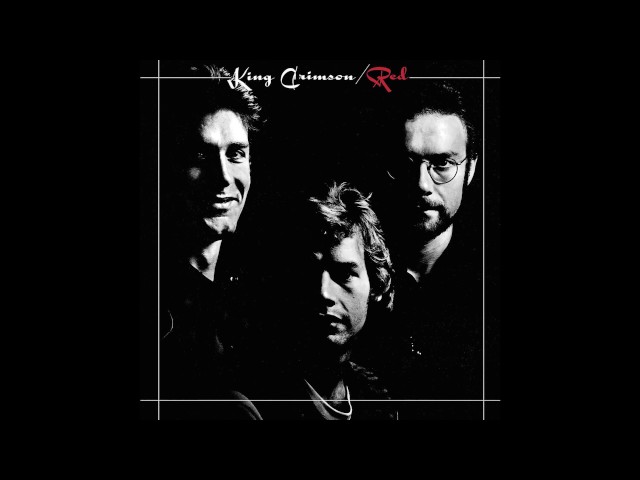
Since the 1960s, many progressive rock bands have made their mark, but King Crimson can be considered one of the genre’s defining figures.
Known for their use of odd time signatures and formidable technique, they particularly shine on the track “Red,” which could be called an ideal entry point to prog.
Aside from the signature theme, the piece is basically in 4/4, and the opening theme can be understood as a 5+5+6+8 grouping, which may make it easier to grasp.
It’s a highly recommended progressive rock track, with a fiercely distorted bass that deserves special attention.

Do You Want It All?Two Door Cinema Club

A hidden gem from a Northern Irish indie rock band that lets you fully savor the appeal of odd time signatures.
The entire track is driven by a distinctive 7/8 groove, most notably structured with a consistent “4+3” feel right from the intro.
Featured on their 2010 debut album, Tourist History, the song was also used in the film Chalet Girl and the MTV series Teen Wolf, significantly boosting the band’s profile.
Despite its odd meter, the groove feels effortlessly natural—proof of true craftsmanship—and it’s sure to captivate any music lover with a passion for rhythm.
The Lion’s RoarCYNIC

The American progressive metal band CYNIC.
They originally started as a death metal band, but that element has gradually faded, and they have shifted toward progressive metal characterized by soaring, ethereal melodies.
This track, included on their third album, ‘Kindly Bent to Free Us,’ begins in 6/8 without any sense of odd meter, then surprises as it gradually shifts back and forth between 6/8 and 5/8.
Also noteworthy is the performance technique that never compromises the natural flow of the melody.
Seven DaysSting

Here’s a 5/4 time signature song from Sting’s fourth solo album, Ten Summoner’s Tales, released in 1993.
This track, which was also released as a single, features the legendary drummer Vinnie Colaiuta—active across genres from jazz to rock—on drums.
Despite being in 5/4, the song unfolds naturally without feeling awkward.
While the gentle melody and Sting’s vocals are certainly factors, isn’t Vinnie’s outstanding performance also a major reason? Be sure to pay attention to the drumming, which may seem simple at first but subtly shifts its expression with refined technique.
Robot StopKing Gizzard & the Lizard Wizard

This experimental masterpiece brilliantly embodies the conceptual theme of an infinite loop through an uneven 7/4 meter.
The clever subdivision of 4 + 3 creates a distinctive groove you can’t get from regular even time signatures, giving the listener a constant forward-driving momentum and a pleasant sense of tension.
Opening the April 2016 album “Nonagon Infinity,” this track occupies a crucial position as both the starting point and the endpoint of a circular structure in which all nine songs connect seamlessly.
Its arrangement, which deftly shifts the 7/4 riff against 4/4 and 3/4, demands advanced musicianship, but ultimately elevates the complexity of odd time into pure thrill and excitement.
An absolute recommendation for anyone eager to dive into the world of odd meters or drawn to progressive sounds.
Enthralling odd meters: Enigmatic music with irregular time signatures and complex rhythms (41–50)
Tattooed Love BoysPretenders

This song is one of the Pretenders’ signature tracks, brilliantly embodying the fusion of late-’70s punk and new wave.
While it tackles a heavy theme drawn from Chrissie Hynde’s personal experiences, it shines as a piece that skillfully combines 7/8 and 4/4, showcasing the allure of mixed meter.
The forward-leaning tension created by the 7/8 in the verses contrasts exquisitely with the sense of stability when it returns to 4/4 in the chorus, giving the whole track a distinctive thrill.
Released to the world in 1979 as the B-side to the single “Kid,” it was included on their 1980 debut album Pretenders, which topped the UK charts.
It’s a must-hear for anyone interested in irregular time signatures or eager to experience an evolved form of punk rock.
Another World of BeastsUematsu Nobuo

The piece that portrays the World of the Espers in Final Fantasy VI, composed by a master of game music, radiates an overwhelming allure through its distinctive sense of weightlessness and mystique created by an irregular 7/4 meter.
Using progressive rock techniques that Nobuo Uematsu excels at, its subdivision of beats—such as 3+2+2 or 4+3—crafts a structure that brilliantly transports the listener to another realm.
First appearing in the 1994 Super Famicom release, it was used as the theme for dungeons and event scenes related to the Espers.
It is a must-listen masterpiece for those who want to experience an otherworldly, fantastical atmosphere or savor the appeal of odd time signatures.