

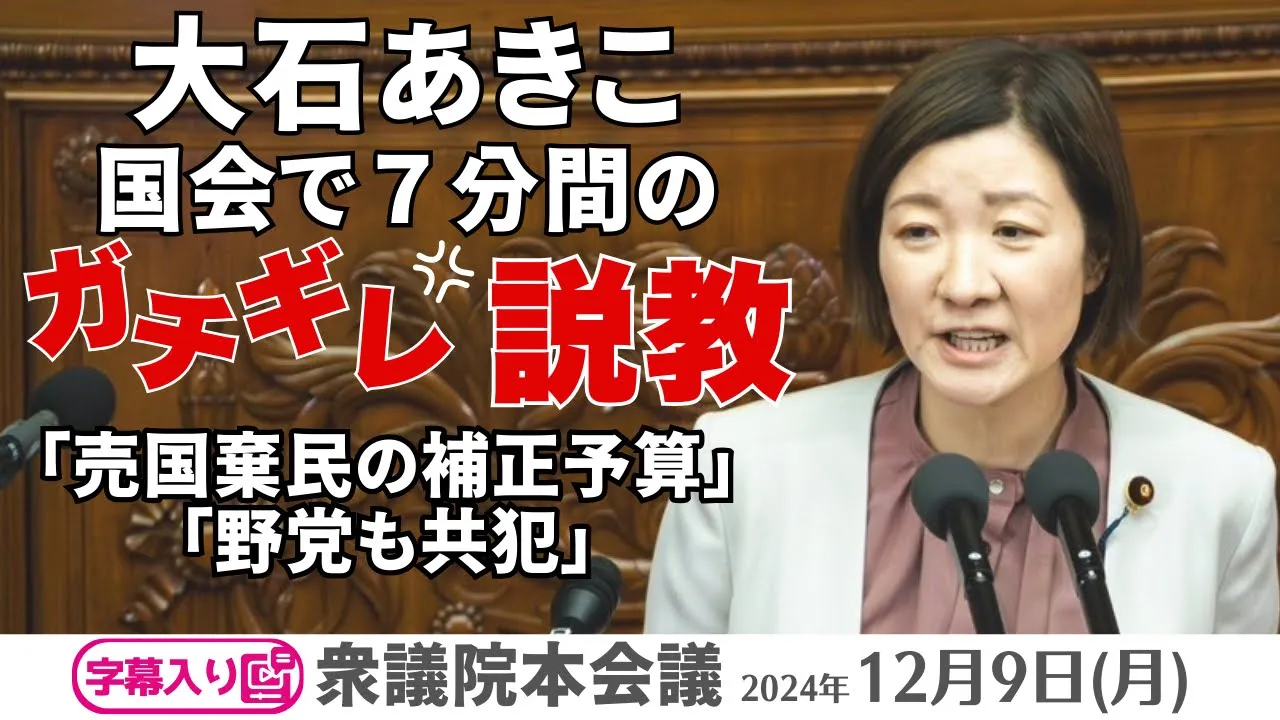

When it comes to politicians’ remarks, many people might picture something rather stiff and formal.
But Akiko Oishi’s words are packed with plainspoken directness and a sharp perspective that makes you stop and think.
Whether in parliamentary questioning or on social media, her words in various settings have a compelling force that makes both those interested in politics and those who aren’t want to listen.
In this article, we introduce memorable quotes by Akiko Oishi.
- [Sanae Takaichi] Quotes that reflect conviction and resolve. Powerful words with an eye on the future
- Satsuki Katayama’s famous quotes: Looking back at the sharp words she delivered in the political arena
- Katsuya Okada’s famous quotes. A collection of words that reveal the true feelings of a politician.
- [Taro Aso] Exhilarating, sharp-tongued, and cool quotes. Powerful, thought-provoking messages
- Shinjiro Koizumi’s quotes that make you do a double take! A slowly-sinking-in collection of uniquely original sayings
- [Kimi Onoda] Exhilaratingly bold quotes. Unvarnished, no-sugarcoating, cool words
- Fiery quotes by Shigeharu Aoyama: words that stay true to conviction
- Takashi Kawamura: Distinctive turns of phrase and memorable quotes. Addictive expressions spoken in Nagoya dialect.
- [Yuichiro Tamaki] A passionate message to politics and the people. Memorable, impactful words.
- Yoshihiko Noda’s famous quotes: profound words that exude sincerity
- Ryuichi Yoneyama’s famous quotes: words that reveal his true feelings
- Kazuyoshi Shimba’s fiery quotes: words spoken from the citizens’ perspective
- Short precisely because it sticks in your heart: witty, chuckle-worthy one-liners and quotes
Akiko Oishi’s quotes are exhilarating: razor-sharp words that make you slap your knee (1–10)
We cannot entrust this country to those who won’t promptly cut taxes.Akiko Oishi

These are the words Ms.
Oishi, who has consistently called for a consumption tax cut, directed at the Liberal Democratic Party during the December 2024 plenary session of the House of Representatives, criticizing them for not taking the plunge on tax cuts.
After stating that tax reductions are an effective way to increase take-home pay for citizens suffering under the tax burden, she argued that a party that fails to implement them swiftly should not be entrusted with governing.
The choice of the phrase “sassato” (“hurry up”/“just get on with it”) is very characteristic of Ms.
Oishi, and its sharp tone conveys the strength of her conviction about the policy.

That’s beyond brazen.Akiko Oishi

In January 2026, amid public discussion about local assembly members from Nippon Ishin no Kai allegedly dodging National Health Insurance premiums, these words were spoken to criticize their attempt to hold a double election for the Osaka prefectural governor and Osaka city mayor.
While the act was condemned as quasi-legal and drew widespread criticism, it also fiercely denounced their stance of pursuing a snap election to revisit the Osaka Metropolis Plan.
Here too, Oishi’s trademark rhetoric was on full display, using Kansai dialect to add emphatic “do-” for intensity, calling it “do-atsukamashii” (ultra brazen).
At this point, some people might even have felt a certain strange sense of refreshment.
It’s not about right and left, not Japanese vs. foreigners, not the elderly vs. the young.Akiko Oishi

These are the words she spoke when pointing out the fundamental structure of conflict in elections.
She said that commonly cited divides—right versus left, Japanese versus foreigners, the elderly versus the young—are not fundamental; rather, the structure of conflict is based on economic hierarchy.
She expressed her conviction to pursue politics that stand with the more than 99% of ordinary people, not the ultra-wealthy who make up less than 1% of the country.
Her words convey a desire to practice politics for the benefit of many citizens, regardless of ideology, nationality, or generation.
In the Diet, I think of myself as a clown.Akiko Oishi

She has engaged in actions that ultimately earned her a strict warning, such as holding up placards in the main assembly hall and employing a filibuster-like slow-walking tactic during the budget vote.
Reflecting on those incidents, she referred to herself as a clown—words she spoke in a video posted on her YouTube channel.
She explained that behind such unconventional acts and her harsh attacks on other parties and lawmakers lies her intention to prompt the public to think.
One senses her determination to face issues for the sake of improving Japan, no matter how disliked she may become in the Diet or even if she ends up being punished herself.
I would like to read the death poem that goes, “A runaway car, even when stopping, was abrupt.”Akiko Oishi
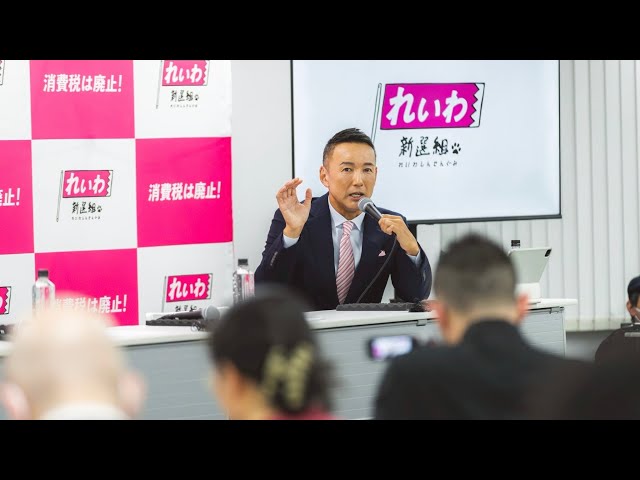
This is part of a comment made by Ms.
Oishi in January 2026, following Mr.
Taro Yamamoto’s resignation from parliament due to a diagnosis that he was on the verge of multiple myeloma.
A “jisei no ku” refers to a haiku composed as one’s final poem before death, and it is usually written by the person themselves.
However, Ms.
Oishi drew attention by composing Mr.
Yamamoto’s jisei no ku.
At the time, Mr.
Yamamoto was seated next to Ms.
Oishi and remarked, “That’s black humor.” It was an exchange that offered a glimpse into the trust between the two, who can even joke with each other like this.
You fool!Akiko Oishi

During the vote on the new fiscal year’s budget proposal held in February 2023, she employed a filibuster tactic by taking a long time to walk to the ballot box.
She took this action as a protest against the lack of sufficient debate, raising her voice to make her case even in front of the ballot box.
And the words she shouted at the end were these.
Her words and actions convey a strong determination to change politics in the Diet.
Incidentally, because her prolonged delay was deemed to indicate “no intent to vote,” the ballot box was closed, and she was unable to cast her vote.
How much unpaid overtime do you think I’m doing?!Akiko Oishi

Ms.
Oishi, who has a strong presence as a member of Reiwa Shinsengumi, actually drew attention for her plain-spoken remarks even before she became an active member of the Diet.
In 2008, at the first morning assembly after Toru Hashimoto became Governor of Osaka Prefecture, Hashimoto initially tried to hold the assembly before the start of working hours, but was stopped by surrounding staff on the grounds that it would constitute overtime.
In response, Hashimoto made remarks to the effect that, in that case, cigarette breaks and idle chatter during working hours would be grounds for pay cuts.
In reaction to those remarks, Ms.
Oishi, who was then an Osaka prefectural employee, sharply criticized Hashimoto with these words.
She went on to tell him not to make statements that would divide prefectural residents and prefectural employees.