With his distinctive turns of phrase that make you tilt your head but somehow stick in your mind, Shinjiro Koizumi’s remarks have a curious charm: even if they initially make you go “huh?”, savor them and deeper meaning begins to emerge.
Dubbed the “Koizumi Quotations” or “Shinjiro-isms,” his words have sparked buzz online and entertained many.
In this article, we introduce Shinjiro Koizumi’s lines—from quips that make you chuckle to statements that actually hit the mark.
Come experience his unique worldview for yourself!
Shinjiro Koizumi’s quotes that make you do a double take! A slowly-sinking-in collection of original sayings (1–10)
So it’s your birthday. I was also born on my birthday.Shinjiro Koizumi
These words offer a fresh perspective on birthdays, something everyone experiences.
At first glance, it sounds like a statement of the obvious, yet it’s actually infused with a kind of humor that puts listeners at ease.
Politicians’ remarks tend to be received as stiff, but an unexpected turn of phrase can warm the room and help relax the other party.
It’s a distinctive expression of Shinjiro Koizumi’s unique sensibility.
As words to someone celebrating a birthday, it’s an unexpected response that can spark laughter.
It’s a unique quote you can use when celebrating a special day.
Shinjiro Koizumi’s statement, based on the legal definition in Germany that children’s voices are not considered noise.
A news report aired about a park being closed due to complaints from nearby residents who regarded children’s voices as noise.
His view—that the real issue lies in a social structure lacking the emotional leeway that leads people to perceive children’s voices as noise—could truly prompt Japan to reconsider its path forward.
I also believe he is a politician capable of viewing Japan from a global perspective.
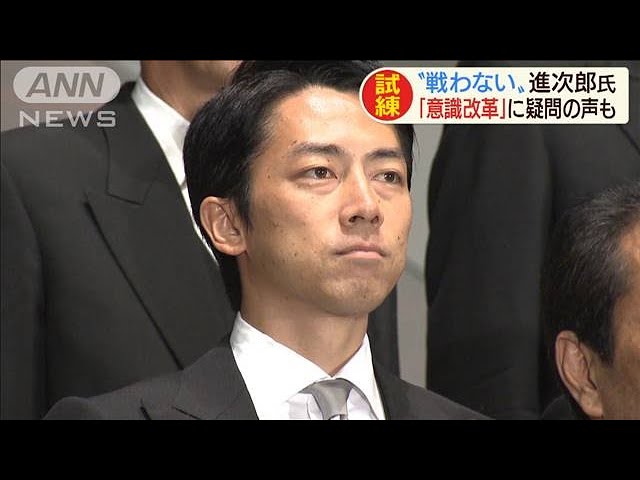
I don’t think things can stay the way they are. That’s precisely why I believe Japan can’t remain as it is now.Shinjiro Koizumi
Mocked as the 'Poem Minister' too: a shift in expectations for Mr. Shinjiro (20/01/03)
This is one of his so-called “Koizumi constructions,” a quintessential example of his phrasing.
When you listen closely, it feels like you’re being fogged out.
He strings together pleasant-sounding words that sometimes lack substance, which is why he was even nicknamed the “Poetry Minister.” Perhaps his head is actually packed with more concrete ideas, but something happens when he puts them into words.
Or maybe he’s aiming for a synergistic effect by layering similar words.
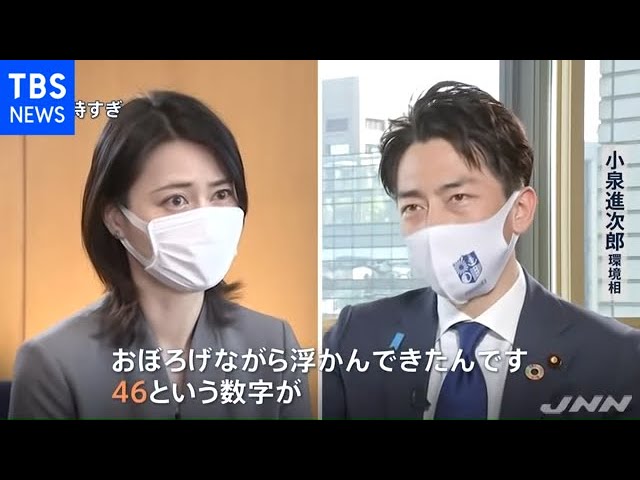
It’s not like I could see a clear figure, but something vague started to surface. The number 46.Shinjiro Koizumi
Exclusive interview with Environment Minister Koizumi: If we compare the “46% reduction” to a medal? [news23]
Shinjiro Koizumi is someone who puts very passionate feelings into words, but sometimes his remarks can seem quite intuitive and a bit light on reasoning, don’t you think? I feel this quote is one of those.
Just because the number 46 vaguely came to mind, setting that unrealistic number as a target seems questionable.
But he seems to interpret it as, “Who says aiming for anything other than a gold medal is acceptable when you’re competing in the Olympics?” There are things that can’t be accomplished on feelings alone, right?
Promises are meant to be kept. I will do my utmost.Shinjiro Koizumi
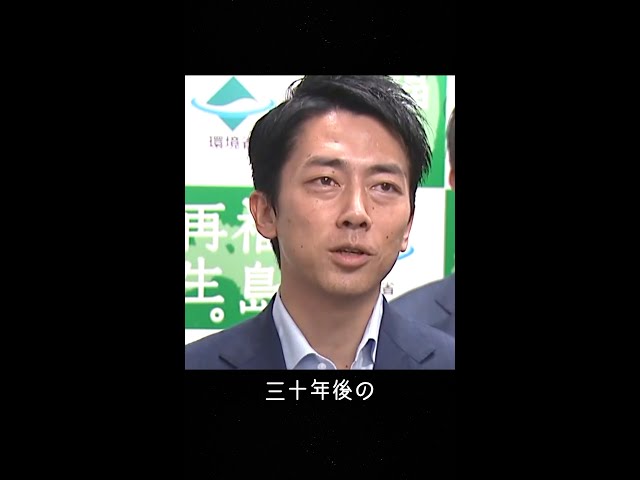
[Shinjiro Koizumi] How old will I be 30 years from now?
Shinjiro Koizumi’s remarks often seem coherent at first glance, but every now and then there’s a moment that makes you go “huh?”—and that’s part of the fun, isn’t it? In this comment, he says, “I wonder how old I’ll be in 30 years,” but if we paraphrase it, perhaps he meant to say that even after 30 years, he’ll still be young enough to fulfill long-term commitments.
Sometimes it feels like he doesn’t quite have the full picture of what he wants to say, but that, too, is a charming point that makes you chuckle.
Part of me hopes Koizumi stays just the way he is.
Big challenges like climate change should be tackled in ways that are fun, cool, and sexy.Shinjiro Koizumi
“Make climate change issues sexy,” Minister Koizumi said in a speech at the UN (2019/09/23).
It’s been a long time since global warming became a worldwide issue, but this is one problem that doesn’t have a magic-bullet solution like “Do X to fix Y!” I believe all we can do is start with the mindset that each of us will do what we can for the planet.
Mr.
Shinjiro’s words take the issue of climate change head-on.
His slightly humorous response—saying we should stay “cool” in a warming world—really reflects his style, doesn’t it? We tend to furrow our brows when thinking about issues like this.
As Mr.
Shinjiro says, I hope we can solve it in a “fun” way.