

[Orchestra] A List of Instruments Played in an Orchestra: Introduced by Category


Have you ever actually gone to listen to an orchestra perform? I’m sure many people have heard recordings, but there may not be that many who have actually listened in a concert hall.
However, surely everyone has at least seen videos of an orchestra performance, right? Rows of string, woodwind, brass, and percussion instruments are truly overwhelming to behold.
In this article, we’ll introduce all the instruments played in an orchestra at once! We’ll go through each section—strings, woodwinds, brass, percussion, and other auxiliary instruments—so if there’s a particular instrument you want to learn more about, please take your time and have a close look.
- A comprehensive list of instruments that shine in wind bands, introduced by category
- [Orchestra] Introducing famous and popular pieces
- [Masterpiece Classics] A special showcase of gem-like masterpieces so beautiful they’ll move you to tears
- Cool classical masterpieces. Recommended classical music.
- [For Instrument Beginners] Recommended Instruments for the School Concert Band: Flute, Trombone, and Trumpet Edition
- [Quartet] Masterpieces and Popular Pieces for String Quartet
- Classical Masterpieces: Recommended Works You Should Hear at Least Once
- Recommended pieces for a wind band contest
- Masterpieces of Ballet Music: Introducing Classic Favorites
- To you who are thinking about quitting the brass band club: You shouldn’t quit for reasons like these.
- [Violin] Recommended practice pieces for violin beginners. Famous pieces you’ll want to try playing.
- [Fight songs and marches included] Moving songs you want to hear at the Spring High School Baseball Tournament
- A classic brass band medley
Woodwind instruments (1–10)
English horn
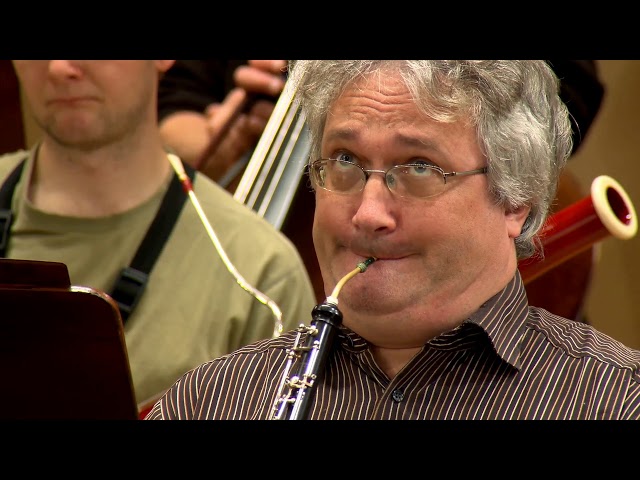
As you can hear from its tone, the English horn is an instrument very similar to the oboe.
What sets it apart is that it sounds a perfect fifth lower than the oboe and has a bulb-shaped bell.
This spherical structure produces a softer sound than the oboe.
It’s also curious that, despite its similarity to the oboe, it’s called the “English horn.” Originally it was referred to as the cor anglais, meaning an angled or bent horn, but the “anglais” part was misunderstood as “English,” which led to its current name.
If you’d like to hear it, you can listen to its characteristic timbre most notably in the second movement of Dvořák’s Symphony No.
9 “From the New World.”

clarinet

The clarinet is a woodwind instrument we’ve been familiar with since childhood through songs like the children’s tune “I Broke My Clarinet”! It’s also a star in wind ensembles.
Its hallmark is producing sound by vibrating a single reed made from cane, and it’s an intriguing instrument that reveals many colors—from low tones that create a mysterious mood to thin, piercing high notes.
Beyond classical music, it’s also used in jazz, so check it out.
If you’re thinking of playing the clarinet in a wind ensemble, be sure to give it your attention.

flute

If we talk about the most glamorous instrument in the orchestra, isn’t it the flute? The silver transverse flute is elegant and a longtime object of admiration for many women, and we tend to picture many flutists as female! Originally, the term “flute” referred to a vertical flute, but in the late 17th century French aristocrats redesigned it into a transverse instrument, and it became hugely popular.
Its birdsong-like timbre is distinctive, and it’s often used in pieces related to birds, such as “The Aviary” from Saint-Saëns’ The Carnival of the Animals.
These days it’s heard not only in classical music but also across genres like jazz and rock, so if you’re curious, be sure to check it out!
oboe
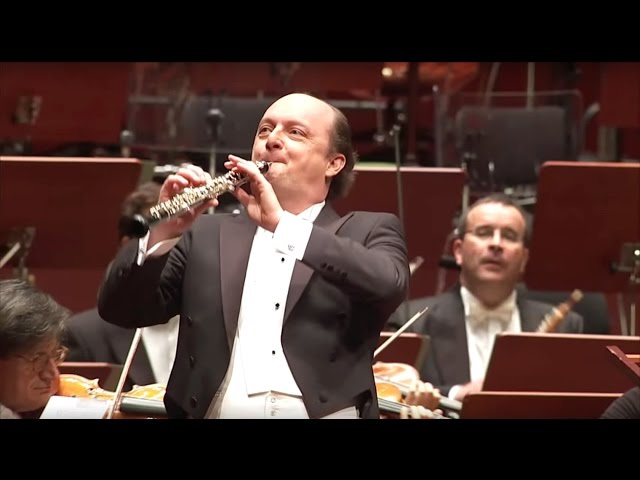
At a glance, the oboe looks similar to the clarinet, so those unfamiliar with them might not be able to tell them apart.
However, beyond their differences in tone color, they also differ greatly in how they produce sound.
While the clarinet uses a single reed, the oboe uses a double reed.
As the name suggests, a double reed produces sound by vibrating two reeds, giving the oboe its light, rounded timbre.
With a wide range spanning three octaves, it’s an instrument whose sound you should experience for yourself! The oboe plays a prominent role in famous works such as Beethoven’s Symphony No.
3 “Eroica” and Symphony No.
5 “Fate.” Oboe solos are particularly compelling, so if you haven’t listened to them yet, why not discover the oboe’s unique charm?
Brass instruments (1–10)
horn

The horn is thought to have originated from the hunting horns used during hunts.
It is known for its mellow tone.
Although it is a brass instrument, it blends well with woodwinds, so it makes sense that the horn—despite being a brass instrument—is included in a woodwind quintet.
Even among brass instruments, the trumpet and trombone have a history of being used in churches, whereas the horn does not, which seems to have given it a more down-to-earth image.
One secret to its soft sound lies in the bell facing backward; if the bell faced forward, the sound would likely be a bit more rugged.
The instrument that primarily plays the melody in pieces like Monster Hunter’s “Proof of a Hero” is precisely this horn!
trumpet

Speaking of the trumpet, it’s surely one of the star instruments in the orchestra.
Its brilliant, bright, and beautiful tone—often heard in fanfares—puts listeners in a cheerful mood.
It consists of a mouthpiece and a body, and sound is produced by vibrating the lips.
By pressing the valve-like button keys, the length of the tubing is changed, altering the pitch.
The trumpet’s predecessor had no valves and could produce only the natural harmonic series.
Valves were invented around 1810, making more complex performance possible.
If you want to hear outstanding technique and the trumpet’s characteristically dazzling tone, we recommend Leroy Anderson’s Bugler’s Holiday and A Trumpeter’s Lullaby.
tuba

Around 1820, a device called the valve was invented for brass instruments, which led to the creation of various new instruments.
The tuba is one of them, and unusually, its exact birth date is known: September 12, 1835.
Before the tuba was born, long and large instruments called the ophicleide and the serpent were used.
With the tuba’s advent, handling must have become considerably easier.
That said, since it produces the lowest notes among brass instruments, its size and weight are quite substantial.
In an orchestra, it takes charge of the low brass part, and it also plays a major role in wind bands.