

![[Orchestra] A List of Instruments Played in an Orchestra: Introduced by Category](https://i.ytimg.com/vi_webp/rXd1S2oiaTg/maxresdefault.webp)
[Orchestra] A List of Instruments Played in an Orchestra: Introduced by Category


Have you ever actually gone to listen to an orchestra perform? I’m sure many people have heard recordings, but there may not be that many who have actually listened in a concert hall.
However, surely everyone has at least seen videos of an orchestra performance, right? Rows of string, woodwind, brass, and percussion instruments are truly overwhelming to behold.
In this article, we’ll introduce all the instruments played in an orchestra at once! We’ll go through each section—strings, woodwinds, brass, percussion, and other auxiliary instruments—so if there’s a particular instrument you want to learn more about, please take your time and have a close look.
String instruments (1–10)
violin

When people think of orchestral instruments, many will first picture the strings.
Among the string instruments classified as the violin family, it can produce the highest register, and its timbre has increasingly been heard not only in classical music but also in popular music such as rock and pop.
The elegant posture and bowing technique may strike many as the very essence of classical music.
Its delicate, transparent tone feels soothing, and it’s an instrument with a storied history that many admire.
In an orchestra, it is divided into first and second parts, with the leader of the section performing as the concertmaster.

viola

The viola is a string instrument characterized by a slightly larger size and a lower timbre than the violin.
Because its range is tuned a fifth lower than the violin, it needs to produce lower tones and thus has a larger, thicker build.
Its strings are longer and thicker than those of the violin, while the bow is generally shorter and heavier.
There are many pieces in which the viola shines—such as Brahms’s Viola Sonatas Nos.
1 and 2 and Schumann’s Märchenbilder—so if you’re interested, be sure to enjoy the beautiful sound of the viola!

cello

The cello, familiar from Kenji Miyazawa’s Gauche the Cellist, is one of the most important instruments in classical music.
It is an indispensable string instrument in orchestral ensembles and takes the low register in chamber groups such as string quartets.
It’s also used in pop and rock, making it an instrument well worth noting! Since it’s large and often played seated, it tends to draw the eye in an orchestra.
Despite its size, its delicate tone is beautiful, and you can hear its sound in famous cello concertos like Dvořák’s Cello Concerto in B minor, Op.
104 (B.191), as well as in Joe Hisaishi’s “Departures.”
double bass
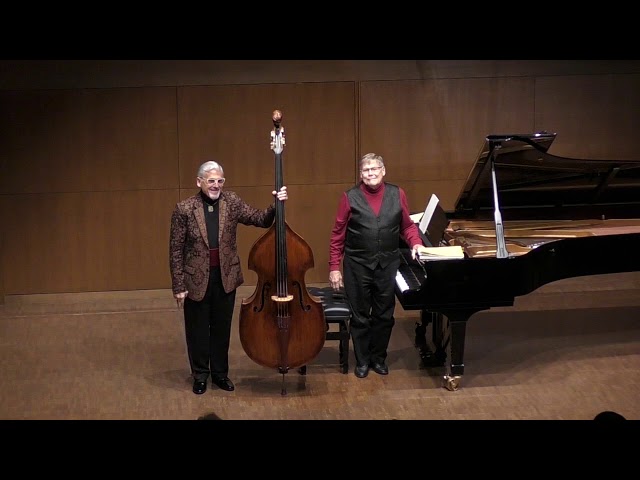
The large string instrument, the double bass, makes a big impact in orchestras, so many of you have probably seen one.
It has four or five strings and is also called the bass.
It’s also known as the wood bass and is often used in folk and country music.
Its hallmark is a thick, low sound, and it can play pitches a full octave below the cello’s lowest note.
There are pieces where the double bass takes center stage, such as “The Elephant” from Saint-Saëns’s The Carnival of the Animals.
If you’re intrigued, why not lend an ear to its deep, resonant tone?
Woodwind instruments (1–10)
contrabassoon

This instrument, known as both the contrafagot and the contrabassoon, produces tones an octave lower than the bassoon.
As is true for all wind instruments, those that play lower pitches require a great volume of breath, so the physical demands of performance can be considerable.
And because of its low register, it rarely features prominent solos.
Developed in the mid-17th century to project a large sound even at low pitches, it has undergone several improvements to reach its current form.
Its rich, sonorous low tones are truly alluring.

bassoon

The bassoon is a woodwind instrument that adds flair to the orchestra with its striking appearance and distinctive timbre.
There are two types, the French system and the German system, and its name is said to come from Old French meaning “bundle of firewood.” It has a wide range and can produce crisp tones even in the low register, giving it a sense of stability.
It’s also said to be played as if singing, and it makes its presence felt in works like Beethoven’s Symphony No.
4.
If you’re curious about the bassoon, there are pieces composed specifically for it—be sure to check them out!
Piccolo

As its name—meaning “small” in Italian—suggests, the piccolo is essentially a smaller version of the flute.
Flutists often double on the piccolo.
It’s said to be harder to play than the flute because its pitch is more difficult to stabilize and both the embouchure and key spacing are tighter.
Thanks to its bright, high, and charming tone, the piccolo frequently takes solos in orchestral works, and there are many pieces—starting with the one in the video—where the piccolo is especially memorable.
In marches and similar pieces, it often has many solos, showcasing its tone and prominent role.