

Helpful for creative dance! Steps and choreography. Tips for dancing cool.


In elementary school, dance is taught as a form of expressive movement, and in junior high school it’s a required subject.
As part of class, “creative dance” may sometimes be assigned as a project.
In this article, we’ll introduce basic steps useful for creative dance, movements that combine those steps, and choreography tailored to different music genres.
If you’re thinking, “I can’t come up with any ideas for creative dance,” this will surely help! We also cover formations for group performances and tips to make your dance look cooler, so be sure to use it as a reference.
- [Dance Basics] Simple Choreography for Middle School Students
- [Must-See for Beginners] Amazing Pop Dance Choreography
- [For Creative Dance] A Collection of Easy-to-Dance Japanese and Western Tracks
- [Easy to Remember] A Collection of Cool Dances Recommended for Girls
- A must-see for street dance beginners: A roundup of basic steps for each genre.
- [Easy-to-dance dance tracks] Gentle K-pop dance numbers
- Dances that elementary school kids can do! Recommended tracks to liven up a school sports day
- [Even Dance Beginners Are Welcome!] Dance Songs You Can Perfectly Copy
- Trendy dance tracks that make you want to move & popular songs gaining buzz on TikTok
- I want to copy it! A cute dance tune. Adorable dance music.
- Japanese dance music you can use for Instagram Stories
- Cool Dance Moves! A Roundup of Popular Girl Idol Groups
- Easy-to-dance songs [Perfect for dance beginners]
Useful for creative dance! Steps and choreography. Tips for dancing cool (21–30)
Kick & Pad Break

Let’s practice one of the basic dance moves: the Kick & Pas de Bourrée.
We’ll do it in eight counts.
First, kick on count 1, then step the same leg back on count 2.
On counts 3 & 4, take small steps to return your feet to an open position, and then repeat the same sequence in the opposite direction.
For the arms, swing both arms side to side, then move them to draw a half-circle over your head.
Once you get used to it, it’s an easy step, and it looks really cool when you work it into fast music.

Simple yet cool choreography
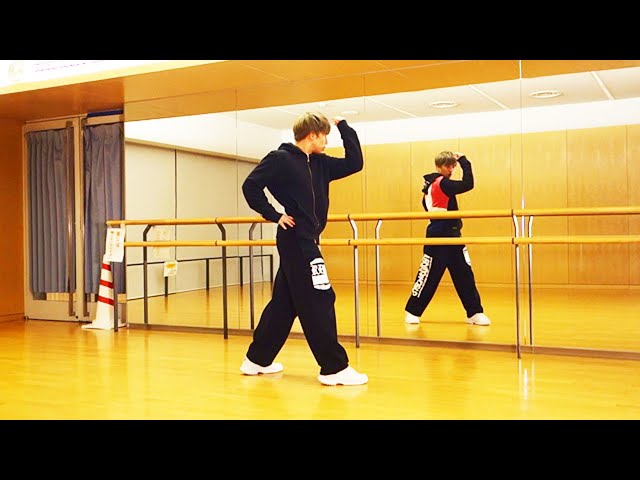
For those who want to dance to cool tracks! Here’s a hip-hop dance routine that’s simple yet stylish.
It uses lots of full-body movements and steps, but it’s beginner-friendly, so try incorporating it into your creative dance choreography.
There’s playful detail with safety in mind—like tapping your heel to your knee at the end of a kick, or making it look like you touch your raised foot without actually doing so.
Dancing with a big smile and a relaxed vibe will make it look even cooler.
Feel free to customize the arm movements as you like.
Useful for creative dance! Steps and choreography. Tips for dancing cool (31–40)
A must-read for elementary and junior high school teachers! 7 essential basic steps

It’s been over ten years since dance became a required subject, yet many teachers are still feeling their way through how to teach it in the classroom.
Those who spent their teenage years before it was mandatory may be unsure about how to teach dance to their students.
In this piece, we introduce the most fundamental types of steps for elementary and junior high school students.
By repeatedly practicing beginner-friendly steps—like the “walk,” which involves lifting the knees high and marching in place, and the “side step,” where you step out one foot at a time and bring the feet together—students can build a foundation for more advanced, specialized steps.
What’s most important is that teachers enjoy dancing together with the children!

In conclusion
Did you find any choreography or ideas that could help with your creative dance? I know coming up with choreography can be challenging, but it might be good to start by building around basic steps and then adapt it to fit the theme you want to express and your original moves. Try creating a piece of creative dance that you’d be excited to perform yourself.